

More news on this day
An emergency move to restore pay for Transportation Security Administration officers is beginning to ease the worst logjams at U.S. airports, but reports indicate that travelers could still face prolonged security delays and an ongoing presence of Immigration and Customs Enforcement agents at checkpoints in the weeks ahead.
Get the latest news straight to your inbox!
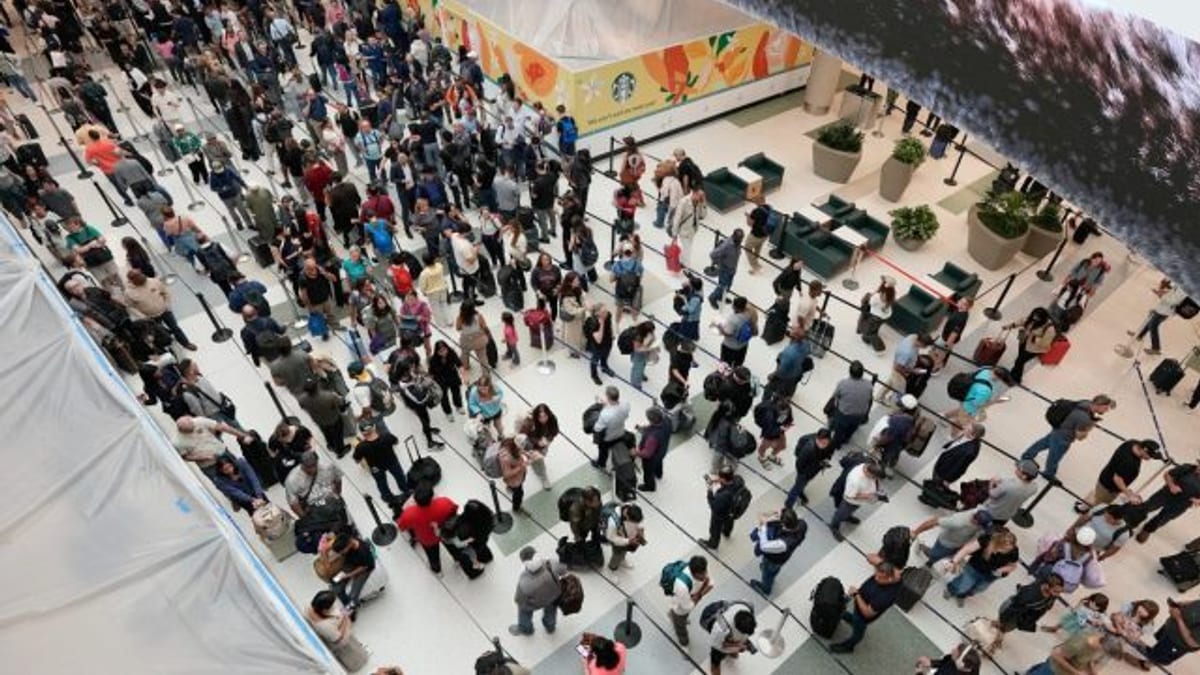
Image by WLNS 6 News
Paychecks restart amid ongoing DHS funding fight
The decision signed on March 27 to redirect Department of Homeland Security money and cover missed paychecks for TSA officers marked a turning point after weeks of mounting disruption. Publicly available information shows that thousands of screeners had been working without pay since funding for much of DHS lapsed on February 14, contributing to higher callouts and staffing gaps at some of the country’s busiest hubs.
In the days since the order, coverage of airport operations indicates that wait times at several major airports have shortened from peak levels seen earlier in March, when travelers in cities such as Atlanta, Chicago and New York reported multi-hour queues. With back pay starting to flow, union leaders and aviation analysts say more officers are likely to return to regular shifts, easing pressure on schedules that had been stretched thin.
Yet the underlying budget dispute in Washington remains unresolved. Reporting on the shutdown notes that while agencies such as ICE and Customs and Border Protection secured longer-term funding under earlier legislation, TSA and other DHS components are still reliant on temporary arrangements. That split funding structure has fueled political contention and left uncertainty about how long emergency pay measures for airport screeners can be sustained.
Travel industry observers warn that as long as the broader DHS appropriations fight continues, the agency’s staffing picture will remain fragile, raising the risk that any new wave of callouts, illnesses or regional weather disruptions could quickly translate into renewed bottlenecks at security checkpoints.
Staff shortages mean delays may linger
Even with paychecks resuming, TSA’s staffing pipeline cannot be rebuilt overnight. Recent coverage of the shutdown’s impact indicates that hundreds of officers have resigned or transferred since the funding lapse began, seeking more stable pay in other parts of government or the private sector. Training replacements for those positions typically takes weeks or months, leaving some airports with enduring gaps on key shifts.
Airport executives and aviation consultants quoted in recent analyses point out that TSA was already operating close to its capacity limits at many large hubs before the shutdown. Seasonal travel surges, combined with higher passenger volumes compared with pre-pandemic levels, had left the system with little slack. The loss of experienced officers during the pay disruption has further thinned the ranks of workers capable of handling the most complex screening duties.
As a result, major airports are continuing to advise travelers to arrive earlier than usual, even as some of the most dramatic scenes of gridlocked security lanes have receded. Public guidance in cities including Phoenix and Pittsburgh suggests arriving at least two to three hours ahead of departure for domestic flights and longer for international trips, acknowledging that staffing levels and wait times can fluctuate from one day to the next.
Experts who track aviation operations also caution that the system now depends heavily on overtime and schedule flexibility from remaining staff. While those stopgaps can smooth operations in the short term, they can also contribute to burnout and future attrition, raising concerns that elevated delay risk could persist well into the spring travel season.
ICE deployment reshapes the airport experience
To compensate for TSA’s shortfalls during the funding lapse, the administration ordered ICE agents to assist at more than a dozen major airports starting in late March. According to published coverage, these deployments include high-traffic hubs such as Los Angeles International, John F. Kennedy in New York, Hartsfield-Jackson Atlanta, Chicago O’Hare, Houston and Miami, with agents visible in terminals, near security queues and at some document-check positions.
Reports from those airports describe ICE personnel checking boarding passes and identification, monitoring lines and providing crowd-control support, while core baggage and body screening functions remain in TSA’s hands. Homeland security veterans quoted in these accounts note that ICE agents receive law enforcement training with an emphasis on immigration and criminal investigations, rather than the highly specialized procedures that govern aviation security screening.
That mismatch has prompted questions about how much the extra agents can actually speed up checkpoint operations. Analyses by policy groups and security experts suggest that while ICE officers can relieve some TSA staff from peripheral duties, they cannot easily step into roles that require certification on X-ray systems, explosives detection equipment or pat-down protocols. In practice, this means that the agents’ presence may change the atmosphere in terminals more than the throughput of the lines themselves.
For many travelers, the sight of immigration enforcement officers stationed near what are normally routine security checks has altered the feel of air travel. Commentaries in outlets focused on civil liberties and travel rights say some passengers, particularly non-citizens and mixed-status families, now view airport visits with heightened anxiety, unsure whether a simple ID check could escalate into a broader immigration inquiry.
Unclear timeline for ICE withdrawal
Despite the move to restore TSA pay, there is little sign that ICE agents will depart from airports immediately. In recent television interviews and written statements, senior administration figures have linked the continued deployment to both TSA staffing levels and what they describe as a heightened threat environment at transportation hubs. These comments suggest that officials intend to reassess the need for immigration agents on a rolling basis rather than setting a firm end date.
Coverage from national and regional outlets indicates that at least some airports are preparing for ICE to remain in place through the busy spring break and early summer travel periods. Local airport authorities in cities where deployments have already begun report that they are in ongoing coordination with federal partners about how agents are positioned, what tasks they perform and how any potential immigration enforcement intersects with passenger rights.
Advocacy organizations and some members of Congress are pressing for clearer limits on the scope and duration of the airport mission. Public statements from civil rights groups argue that without explicit guardrails, the line between transportation security and immigration enforcement risks becoming blurred in ways that could discourage lawful travel and disproportionately affect certain communities.
At the same time, administration allies in Congress point to the visibility of ICE and other federal agents as a reassurance to travelers concerned about safety amid the political standoff over DHS funding. This debate over the appropriate role of immigration authorities at domestic airports is likely to continue even if the immediate shutdown pressures subside.
Travelers navigate a shifting security landscape
For passengers, the combined effect of TSA staffing strains, emergency pay measures and expanded ICE visibility amounts to a rapidly shifting security landscape. Travel publications and legal guides are advising people to build extra time into their itineraries, carry proper identification for all members of their party and be prepared for additional questions at checkpoints, particularly in airports where ICE deployments are active.
Attorneys and advocacy groups focusing on immigration law have begun publishing plain-language explanations of traveler rights in airports, noting that different rules can apply at various points in the journey, from check-in counters to security lanes and international arrival halls. These resources emphasize that while TSA’s core mission remains aviation safety, ICE agents have a separate enforcement mandate that can include questioning individuals about immigration status.
Airlines and airport operators, for their part, are trying to reassure customers while acknowledging that some factors are beyond their control. Corporate statements highlighted in recent coverage stress that carriers have limited influence over how federal security resources are allocated, even as they work to adjust staffing at ticket counters, gate areas and customer service desks to manage the knock-on effects of checkpoint delays.
With political negotiations over DHS funding still unresolved as of early April, there is little consensus on when airport security operations will return to a more predictable footing. For now, publicly available information suggests that while pay relief for TSA officers is an important step toward stability, it is unlikely by itself to eliminate long lines or quickly roll back the expanded footprint of immigration enforcement agents inside U.S. terminals.