

More news on this day
Transportation Security Administration officers are poised to receive paychecks again after emergency action restored their compensation, but a fierce dispute over immigration funding inside the Department of Homeland Security continues to threaten the stability of U.S. air travel.
Get the latest news straight to your inbox!
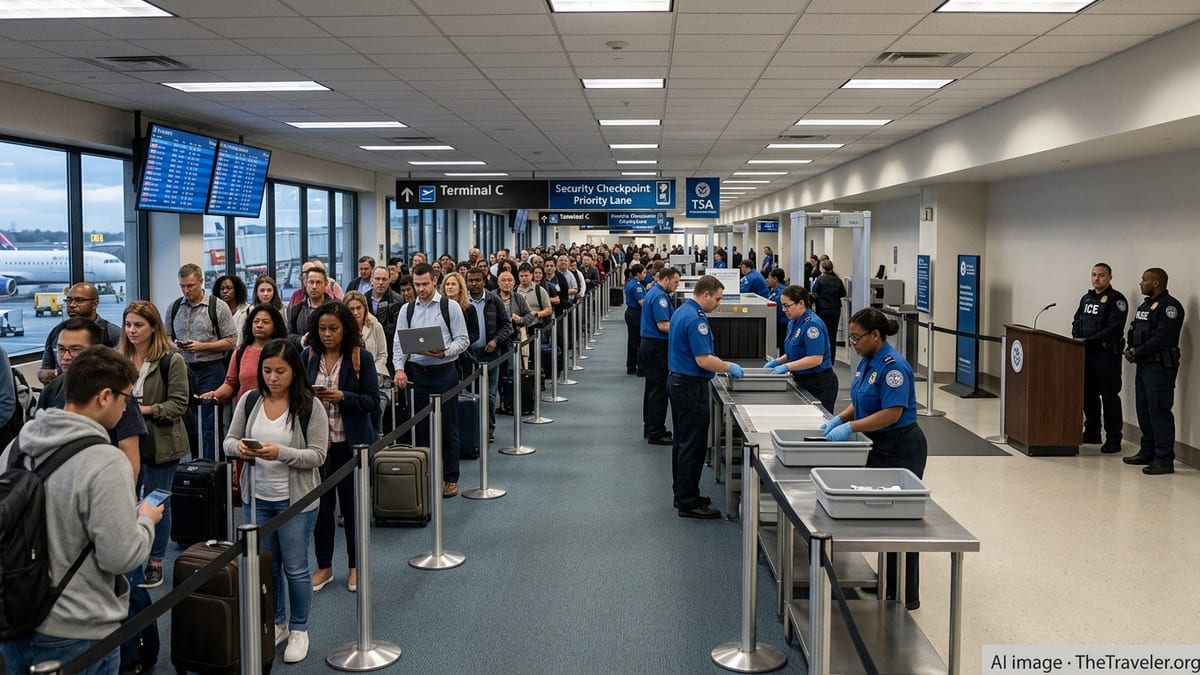
Image by Travel and Tour World – Tourism, Airline, Destination, MICE, Gobal Travel Market, Hotel news that you will find only over here.
Funding Breakthrough Offers Only Partial Relief
After weeks of Transportation Security Administration employees working without pay, the Senate approved funding for much of the Department of Homeland Security, including TSA, while omitting controversial immigration enforcement operations. Publicly available information shows that the agreement cleared the Senate on March 27 through a voice vote, following days of mounting delays and public pressure over deteriorating airport conditions.
The partial funding plan is designed to stabilize aviation security by ensuring that front line screeners once again receive regular paychecks. Reports indicate that the measure came only after travel disruptions escalated and warnings emerged that some airports might have to close security checkpoints if staffing losses continued to climb.
Even with the Senate action, the breakthrough has limits. Travel industry groups and policy analysts note that the bill does not resolve the broader Department of Homeland Security shutdown that began in mid February, leaving large parts of the immigration system in limbo and injecting continued uncertainty into the outlook for spring and summer travel.
According to published coverage, the Senate compromise tracks closely with an earlier bipartisan framework that fell apart in January, suggesting that lawmakers circled back to familiar ground as pressure from airports, airlines and business groups intensified.
Executive Action Moves to Stabilize TSA Workforce
On the same day the Senate approved the partial funding measure, the White House announced an executive order directing the Department of Homeland Security to immediately pay TSA officers, with paychecks expected to resume as early as March 30. Publicly available information shows that this step was framed as an emergency move to relieve growing strain on the aviation security workforce.
For weeks, TSA officers had staffed checkpoints without pay, a situation that labor advocates and travel organizations warned was untenable. Reports indicate that hundreds of officers resigned or found other jobs during the shutdown period, while callout rates surged at some airports, contributing to multi hour lines and sporadic checkpoint closures.
Industry letters sent to congressional leaders in March, including a broad sign on appeal from major travel associations, argued that forcing security staff to work without pay put both safety and the broader travel economy at risk. Those letters pointed to earlier shutdowns that cost billions of dollars in lost travel spending and delayed millions of trips, warning that 2026 could see similar damage if the standoff continued.
The executive order and Senate funding bill are expected to stem the immediate outflow of TSA staff and reduce the risk of widespread checkpoint shutdowns. However, analysts caution that rebuilding morale and staffing levels at chronically stressed airports may take longer, especially at locations that saw the highest quit and absentee rates during the funding lapse.
Immigration Dispute Keeps Homeland Security in Gridlock
Behind the TSA funding breakthrough lies a broader and unresolved clash over immigration enforcement. The current shutdown of the Department of Homeland Security, which began on February 14, centers on disagreements over how to structure and limit operations at Immigration and Customs Enforcement and related agencies.
According to detailed legislative summaries, Senate Democrats and Republicans reached a compromise that separates funding for core security and disaster response functions from money for immigration detention and deportation activities. That approach was intended to restart most DHS operations while negotiations on enforcement changes continue.
The fight did not end with the Senate vote. Publicly available accounts show that House leadership has resisted taking up the Senate bill, instead floating a temporary funding extension that would restore full DHS funding, including immigration operations, for sixty days. That competing approach has deepened partisan divisions and left DHS partially shuttered even as TSA pay is being restored.
Policy analysts say the standoff reflects a broader realignment in immigration politics, with lawmakers debating warrants, detention practices, and limits on enforcement operations near schools, hospitals and other sensitive locations. Until those issues are resolved, the department remains caught between short term stopgaps and longer term structural demands.
Airport Operations Strain Under Prolonged Uncertainty
While the political debate continues, passengers have faced the immediate consequences of an extended Homeland Security funding lapse. Reports from major hubs describe recurring bottlenecks at security checkpoints, as higher than usual sick calls and resignations forced some airports to consolidate lanes or temporarily close screening areas.
Data compiled from government documents and local airport briefings indicate that callout rates at some facilities climbed well above historical norms during March, contributing to waits that stretched to several hours at peak times. Courtesy services and some trusted traveler benefits were also curtailed or temporarily suspended earlier in the shutdown, adding to passenger frustration.
Industry observers note that the timing of the dispute is particularly sensitive, coming just as spring travel ramps up and the United States prepares for a heavy calendar of major events in 2026, including the FIFA World Cup and the semiquincentennial commemorations. Travel organizations argue that any renewed disruption to airport security lines could ripple outward through airlines, hotels and destination cities.
Although the restoration of TSA pay is likely to ease some of the most visible strains, airport leaders remain cautious. Many are planning for continued irregular staffing and advising travelers to arrive earlier than usual, while they monitor whether the political impasse over immigration spills into another round of funding uncertainty later in the year.
Travel Industry Presses for Long Term Stability
As Congress wrestles with how to resolve the remaining DHS shutdown, the travel sector is campaigning for more durable solutions that separate aviation security from recurring political fights. Trade groups representing airlines, airports, hotels and tourism operators have urged lawmakers to treat TSA funding and pay protections as a baseline requirement, regardless of future disputes over immigration policy.
In public letters and policy papers, these groups point to the experience of previous shutdowns, which disrupted millions of trips and eroded traveler confidence. They argue that frequent funding crises make it harder for TSA to modernize screening technology, recruit staff and prepare for surges in international visitors tied to major events.
Some policy proposals under discussion focus on creating automatic funding backstops for essential transportation security functions, ensuring that front line workers are paid even if broader appropriations lapse. Others call for multi year investments in technology and staffing that would allow the agency to better handle peak travel periods without resorting to emergency supplements.
For now, travelers are left navigating a landscape in which TSA compensation is temporarily secured but the larger question of Homeland Security funding remains unsettled. The resolution of the immigration dispute will determine whether the latest steps mark the beginning of lasting stability for air travel or simply another short pause before the next budget confrontation.