

More news on this day
As a partial shutdown of the Department of Homeland Security stretches into a second week, a whiplash series of announcements out of Washington has left U.S. travelers scrambling to understand one basic question: Will TSA PreCheck still work when they get to the airport? For now, officials say the answer is yes, even as broader uncertainty clouds the rest of the aviation security system.
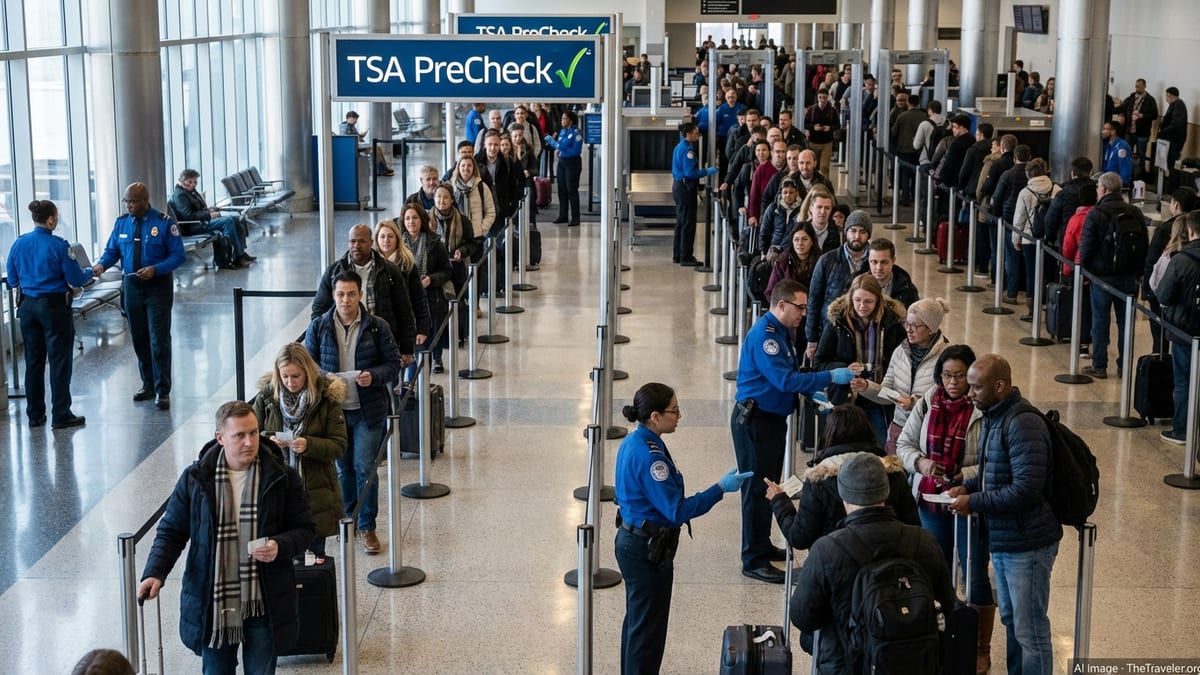
Reversal in Real Time: How TSA PreCheck Survived the Shutdown Scare
On Saturday, February 21, Homeland Security officials said they would suspend TSA PreCheck and Global Entry starting at 6 a.m. Eastern on Sunday, February 22, as the department’s funding lapse dragged on. The move, framed as a way to redirect limited staff and resources to regular security lanes, immediately raised alarms across the travel industry and in Congress. For frequent flyers, it suggested that one of the most visible conveniences in U.S. aviation was about to vanish, potentially overnight.
By early Sunday, however, the picture had changed. After airports reported that PreCheck lanes were still running and carriers warned of potential chaos if they closed, the Transportation Security Administration clarified that PreCheck would “remain operational with no change for the traveling public.” The agency acknowledged that staffing pressures tied to the shutdown could still force case by case adjustments at individual airports, but the dramatic, across the board suspension many travelers feared was suddenly off the table.
The rapid reversal capped a confusing 24 hour stretch that saw major outlets report that trusted traveler lanes were shutting down, only for passengers to arrive at airports and find PreCheck signs lit and queues moving as normal. The back and forth underscored how quickly operational decisions made in Washington can ripple through terminals nationwide, and how political brinkmanship over immigration and homeland security funding can directly affect the travel experience.
Global Entry, the U.S. Customs and Border Protection program that speeds eligible passengers through passport control, has not received the same last minute reprieve. While PreCheck remains in service, CBP is moving ahead with a pause of Global Entry operations as the shutdown continues, leaving international travelers in particular facing longer waits at busy ports of entry.
What Staying Open Really Means for Travelers Right Now
For passengers headed to the airport in the coming days, the key takeaway is straightforward: If you are already enrolled in TSA PreCheck and your membership is valid, you should still be able to use the expedited security lanes as usual. Your PreCheck indicator will continue to appear on boarding passes, and at most major airports those dedicated lanes are expected to be staffed and running, even as the broader shutdown grinds on in Washington.
That continuity matters. PreCheck’s value lies in predictable, shorter and less invasive screening, particularly at peak travel times. Keeping the program open helps prevent the sort of cascading delays that can ripple through entire terminals when trusted traveler lanes are suddenly folded back into standard screening. For business travelers and frequent flyers who have built their routines around the program, the reassurance that it remains operational is significant.
Still, staying “open” does not guarantee identical service at every checkpoint. TSA has made it clear that with most of its workforce deemed essential and working without pay, staffing will be stretched thin. If sick calls increase or local conditions worsen, individual airports may choose to consolidate lanes or temporarily close a PreCheck line, even if the program itself has not been suspended. Travelers could encounter situations where a PreCheck boarding pass leads to a shorter line at one airport and a merged queue at another.
The shutdown also does not erase everyday disruptions already affecting air travel. A winter storm bearing down on the Northeast has already prompted flight cancellations and delays from Boston to New York and Washington, making security just one of several potential chokepoints. In that environment, PreCheck’s continued operation can help mitigate some stress, but it cannot fully insulate travelers from the broader realities of a strained system.
What Will Feel Different at the Checkpoint During the Shutdown
Even as PreCheck survives, travelers should expect a security experience that feels more fragile and more variable than usual. The underlying reality of the shutdown is that thousands of TSA officers and other Department of Homeland Security employees are working without pay. While contingency plans require that most front line screening roles remain staffed, morale and fatigue become serious factors the longer a funding lapse continues.
In practical terms, that could translate into longer lines at certain airports and times of day, particularly in busy hubs where airlines have not adjusted flight schedules to match staffing constraints. Standard security lanes are likely to feel the brunt of any staffing shortfalls, but PreCheck members are not immune. If a checkpoint needs to reassign officers quickly, dedicated lanes may be consolidated or briefly closed, forcing all passengers through a single queue.
Travelers may also notice a quieter presence from non essential or “courtesy” services at the airport. Homeland Security officials have confirmed that certain escorts and special handling protocols, including expedited treatment for VIPs and some government officials, have been curtailed to focus on core screening functions. That shift is designed to preserve as much capacity as possible for the general traveling public, but it is another reminder that the system is operating under abnormal pressure.
For now, aviation security procedures themselves remain unchanged. There has been no indication that TSA is relaxing screening standards or modifying its risk based algorithms because of the shutdown. The primary adjustments are about where officers are assigned and how many lanes can be kept open at once. That means travelers should still plan for the same rules around liquids, electronics and carry on items, regardless of whether they are in a PreCheck or standard line.
Why TSA PreCheck Was Spared While Global Entry Was Not
The split decision to keep TSA PreCheck open while allowing Global Entry to be suspended reflects both political optics and operational priorities. PreCheck is highly visible to domestic travelers and deeply embedded in the day to day workflows of U.S. airports. Closing it outright risked immediate, televised scenes of snaking lines and frustrated passengers, particularly during a period of intense scrutiny on the administration’s handling of immigration and security.
By contrast, Global Entry, while extremely valuable to frequent international travelers, is concentrated at major international gateways and often perceived as an added convenience rather than a core component of domestic security screening. Customs and Border Protection can argue that redirecting staff from trusted traveler kiosks back to standard passport control is a way to protect baseline operations while the shutdown continues.
There is also a financial dimension. Both programs are funded in part by enrollment fees, but PreCheck has a far larger and more immediately affected customer base moving through domestic checkpoints every day. Airlines and airport executives quickly warned that shuttering PreCheck would magnify any storm related delays and could further damage the already fragile relationship between travelers and the federal government after a series of shutdowns in recent years.
The political backlash was swift. Lawmakers on key committees accused the administration of using the threat of travel disruption as leverage in its funding fight, pointing to past shutdowns where air travel snarls helped force an eventual deal. In that context, keeping PreCheck open while trimming back other programs allowed Homeland Security leaders to claim they were protecting everyday travelers, even as they sought to highlight the real world costs of the budget impasse.
Enrollment, Renewals and New Applications: What You Can and Cannot Do
Even as existing PreCheck members continue to use the fast lanes, the shutdown is already reshaping what happens behind the scenes for new applicants and those approaching renewal. Some enrollment centers located in federal facilities may be operating on reduced schedules or temporarily closed if building access is limited. Third party enrollment providers could also face delays in processing if they rely on background checks or systems affected by the funding lapse.
Travelers who had appointment slots booked for fingerprinting or in person interviews, particularly for Global Entry, should be prepared for cancellations or rescheduling. In previous shutdowns, trusted traveler programs faced significant backlogs that persisted long after funding was restored, as agencies worked through months of accumulated applications. A similar pattern could emerge now, especially if the current standoff extends deeper into the spring travel season.
For PreCheck members whose five year memberships are expiring, online renewals are still being accepted, but processing times may fluctuate. Some credit card issuers and travel loyalty programs that reimburse application fees have warned customers that confirmation delays are possible. While members can typically continue using PreCheck for a grace period after submitting a renewal, the current environment makes it more important than ever to apply early rather than waiting until the last possible week.
International travelers considering Global Entry face a more uncertain picture. With that program formally paused, new applications and many scheduled interviews are likely to stall, and approval timelines that already stretched into months may lengthen further. For those planning major overseas trips, it may be wise to assume that Global Entry will not be available in the near term and to plan for standard passport control lines on return to the United States.
How Airlines and Airports Are Responding on the Ground
Across the country, airlines and airport operators spent the weekend adjusting communications and contingency plans to match the shifting guidance from Washington. Once DHS signaled that both PreCheck and Global Entry would be suspended, some carriers began warning customers of possible longer security lines and urging them to arrive even earlier than the traditional two hour domestic and three hour international recommendations.
When TSA clarified that PreCheck lanes would remain open, the message turned more nuanced. Airlines have continued to encourage early arrival, particularly in the Northeast where weather disruptions are compounding the risk of congestion. But they are also emphasizing that existing trusted traveler benefits, including PreCheck boarding pass indicators, remain valid. At major hubs, airport social media feeds have shared real time images and updates from checkpoints to reassure anxious passengers that expedited lanes are functioning.
Behind the scenes, airport security coordinators are working closely with local TSA leadership to calibrate staffing and lane configurations hour by hour. In some terminals, that has meant opening additional general screening lanes in early morning peaks while preserving a single PreCheck lane; in others, reduced overnight traffic has allowed resources to be shifted into daytime shifts to keep trusted traveler queues moving.
Industry trade groups are using the moment to renew longstanding arguments that repeated shutdowns erode confidence in the U.S. aviation system and make it harder to recruit and retain skilled federal security staff. They warn that if shutdowns become a recurring feature of budget politics, even temporary jolts like the near closure of PreCheck can have lasting effects on traveler behavior and on the competitiveness of U.S. gateways compared with international peers.
Practical Tips for Flying With PreCheck During a Shutdown
While travelers cannot control the outcome of congressional negotiations, they can adjust their own behavior to reduce the chances of being caught off guard at the checkpoint. First, even if you have PreCheck, build extra time into your airport arrival, particularly at large hubs or during peak travel windows such as early weekday mornings and Sunday evenings. The program is operating, but staffing shortages or unexpected lane changes could still cause delays.
Second, travel as if you might suddenly find yourself in a standard lane. That means packing liquids, laptops and electronics in a way that allows them to be easily separated if officers direct you into regular screening. In many cases, TSA will still honor the lighter PreCheck protocols, but being prepared for either scenario can keep the line moving and reduce stress if procedures change at the last moment.
Third, monitor communications from your airline and your departure airport on the day of travel. Carriers are increasingly using text alerts and mobile apps to push updates about security wait times and checkpoint changes, while airports post current conditions on terminal displays and public address systems. In a fluid situation like a shutdown, those local updates often give a more accurate picture than high level statements from Washington.
Finally, treat front line officers with patience. The same shutdown that is complicating your travel plans is also affecting their paychecks and schedules. A calm, prepared approach not only helps maintain security but can also make a difficult period slightly easier for the people tasked with keeping the system running under extraordinary strain.