

More news on this day
As U.S. airports brace for record passenger volumes in 2026, travelers are increasingly weighing a trio of fast-lane options at security checkpoints: TSA PreCheck, Clear, and the newest arrival, Touchless ID. Each promises shorter lines and a more streamlined experience, but they work in very different ways and are expanding on different timetables, leaving many fliers unsure which option delivers the best value for their typical trips.
Get the latest news straight to your inbox!
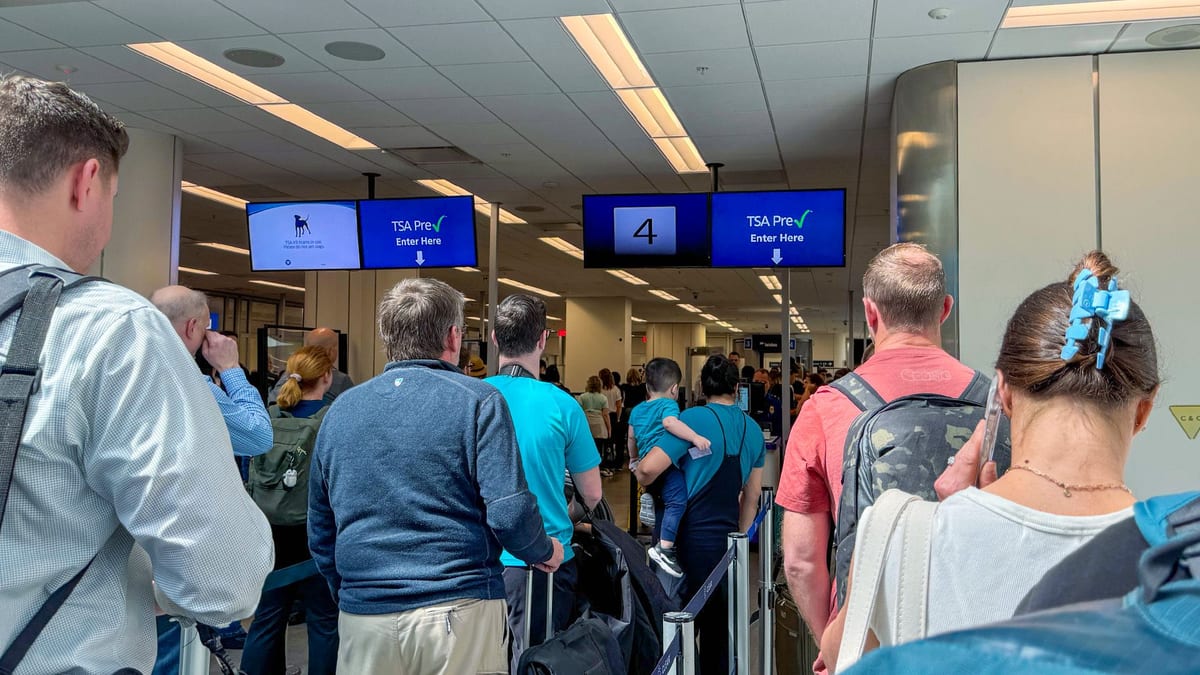
Image by TheTravel
How TSA PreCheck Works In 2026
TSA PreCheck remains the backbone of expedited screening in the United States. The program, administered by the Transportation Security Administration, allows vetted travelers to use special lanes where they typically keep shoes, light jackets, and belts on and leave small electronics and compliant liquids in their bags. Publicly available program information indicates that more than 15 million passengers are enrolled, and that PreCheck lanes are active at most major U.S. airports.
Enrollment requires an online application and an in-person background check with fingerprinting through government-approved enrollment providers, which now include private firms such as Clear, IDEMIA, and Telos. Published federal budget materials show that TSA has continued to fund the expansion of PreCheck access and communications through the 2025 to 2026 fiscal years, signaling that the program is expected to remain central to security operations rather than a short-lived pilot.
For most leisure travelers, the key benefit of PreCheck is predictability. While recent reports of long lines tied to federal funding disputes have affected all passengers, available coverage suggests PreCheck lanes tend to move faster and can be less volatile than standard screening when staffing is tight. The tradeoff is that enrollment can take time, approval is not guaranteed, and the program fee is structured as a multi-year membership instead of a pay-per-trip service.
Clear Plus: Private Fast Lane, Separate From Screening Rules
Clear, marketed as Clear Plus at airports, operates very differently from TSA PreCheck. It is a private biometric identity verification service that uses fingerprints or iris scans to verify a traveler, then escorts them to the front of either the standard or PreCheck physical screening line. Recent consumer travel coverage notes that Clear and TSA are also piloting biometric “eGates” at several major hubs, where Clear members step into a kiosk that performs facial matching before they proceed to the baggage scanners.
Unlike PreCheck, Clear membership is managed entirely by the company and its partners, with annual fees that are typically higher than PreCheck’s per-year cost. Clear often runs discounts through airlines, credit cards, or loyalty programs. However, Clear does not change what happens at the X-ray belt itself. Travelers without PreCheck who use Clear still follow standard screening rules, including taking off shoes in most cases and removing large electronics from carry-ons.
The advantage is pure time savings at crowded checkpoints. Because Clear staff guide members to the front of the queue, the benefit is most noticeable at large hubs during peak times, such as early morning business-bank departures or holiday rush periods. Industry observers point out that when airports are quiet, Clear offers less of an edge, and when security systems face disruptions or shutdown-related slowdowns, Clear members can still be affected if TSA lane capacity is constrained overall.
Touchless ID And The Rise Of Biometric Checkpoints
The newest element in the mix is TSA’s Touchless ID capability for PreCheck passengers. According to technology briefings and recent travel-industry reporting, Touchless ID uses upgraded Credential Authentication Technology devices, known as CAT-2 units, to match a live facial image of the traveler against a stored identity record. Instead of handing over a physical ID and boarding pass, eligible passengers pause briefly at a camera-equipped kiosk, which confirms their identity and flight details digitally.
Publicly available information indicates that TSA has been piloting variants of this approach at select airports since 2022, initially under digital ID terminology tied to mobile driver’s licenses and digital credentials stored in smartphone wallets. By late 2025, Touchless ID for PreCheck had expanded to more than a dozen airports through partnerships with major airlines, with some carriers integrating enrollment options directly into their mobile apps. Recent coverage from regional outlets shows new rollouts continuing in early 2026, with TSA materials pointing to a goal of having Touchless ID available at dozens of airports by later in the year.
Separate from PreCheck-specific pilots, TSA’s broader digital identity effort also includes accepting mobile driver’s licenses and digital IDs stored in device wallets at select checkpoints. Federal documents and technology briefings explain that the agency uses cryptographic keys supplied by states to validate that a mobile credential is authentic, while stressing that travelers are still advised to carry a physical ID because not all checkpoints have compatible equipment and outages can occur.
Where Each Option Is Available, And The Real-World Limits
Availability is a key dividing line among TSA PreCheck, Clear, and Touchless ID. PreCheck lanes now cover the majority of federalized U.S. airports, including most larger regional facilities and virtually all major hubs. Clear’s footprint is narrower but concentrated where demand is highest, such as large coastal and connecting airports. The new biometric eGate pilots reported in 2025 coverage are initially confined to a handful of these very high-traffic locations.
Touchless ID sits somewhere in between. TSA and airline announcements show it is still limited to selected checkpoints and departure halls, even at airports where the feature is technically live. Travelers have reported that in some locations, Touchless ID lanes open only during certain hours or can be closed when staffing is short or equipment is down. Informal accounts posted on consumer forums suggest that when the system is operating smoothly, the identity check can take under a minute, but when kiosks fail or staff are unfamiliar with the process, passengers may be redirected back to standard ID checks.
Digital IDs stored in smartphone wallets are even more unevenly supported. Homeland Security briefings and subsequent commentary make clear that adoption by states and airports remains a work in progress. Some checkpoints have CAT-2 readers that can scan phone-based IDs or digital passports, while others either lack the equipment or have not enabled the feature. Because of this patchwork, travel advisories consistently recommend carrying a physical, Real ID compliant license or passport, even if a digital option appears to be available on paper.
Which To Choose In 2026 Based On Travel Patterns
For most U.S.-based travelers in 2026, TSA PreCheck continues to provide the broadest and most reliable upgrade to the airport experience. Its nationwide footprint, integration with airline boarding systems, and security rules that allow shoes and laptops to stay put in many cases make it especially valuable for families, frequent domestic fliers, and anyone who routinely departs from different airports. The main tradeoffs are the enrollment process and the need to renew every several years, but per-trip costs can be relatively low for those who fly multiple times a year.
Clear is best suited to travelers who regularly use a small set of large hubs where the company has a strong presence and where peak-time lines can stretch for an hour or more. In those environments, skipping to the front of the queue can justify the higher membership cost, particularly when combined with PreCheck so that both the ID check and physical screening stages are expedited. For travelers who mostly use smaller regional airports or who rarely encounter long lines, Clear’s benefits may be less compelling in 2026.
Touchless ID does not function as a stand-alone replacement for PreCheck or Clear, but rather as an enhancement layered on top of existing programs. For enrolled PreCheck travelers flying on participating airlines from airports where the technology is active, Touchless ID can trim additional minutes from the process by eliminating the need to present a document at the podium. However, because availability remains limited and subject to technical hiccups, it is better viewed as a bonus feature than a primary reason to choose one program over another this year.
Looking ahead through 2026, government budget documents and industry analyses suggest that biometric verification will continue to spread across U.S. checkpoints, with more CAT-2 units, expanded Touchless ID lanes, and additional Clear-operated eGates. For now, though, the most practical strategy for many travelers remains straightforward: treat TSA PreCheck as the foundational upgrade, consider Clear if most trips pass through the busiest hubs, and regard Touchless ID and digital IDs as promising but still evolving conveniences rather than guaranteed shortcuts every time you fly.