

More news on this day
A deepening funding fight at the Department of Homeland Security is raising new questions about who will guard America’s airport checkpoints, as reports highlight contingency moves that could bring U.S. Immigration and Customs Enforcement personnel closer to front-line aviation security just as travelers confront longer lines and stricter screening.
Get the latest news straight to your inbox!
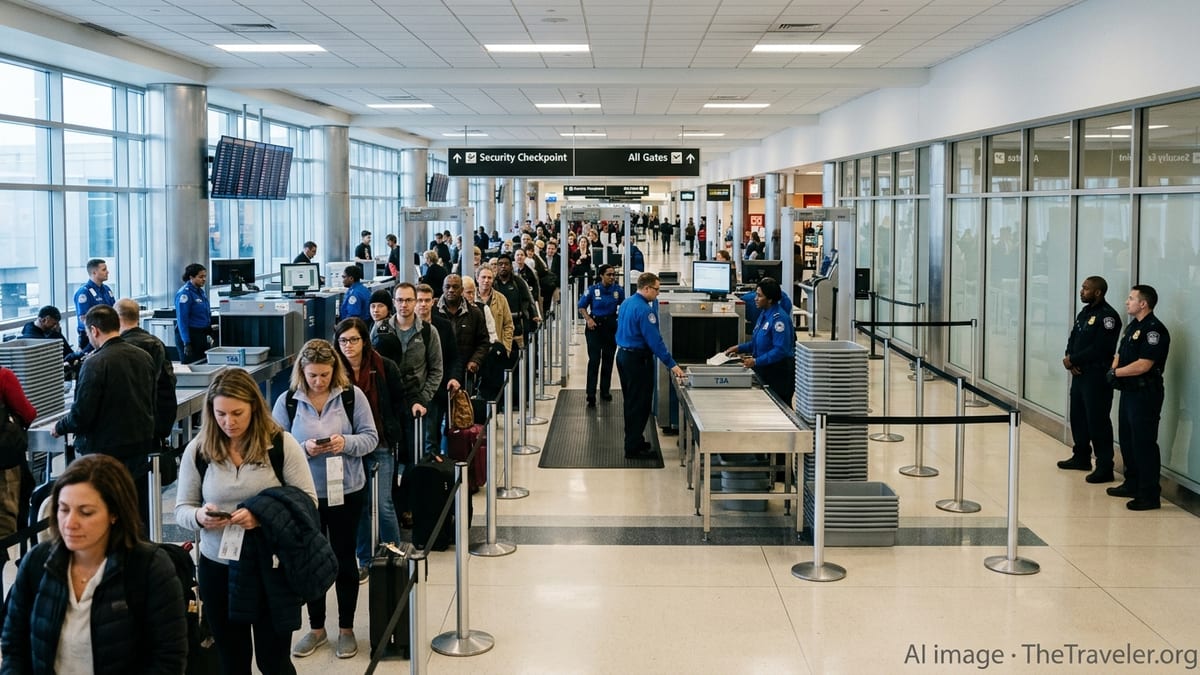
Shutdown Politics Put Airport Security Under New Pressure
The current partial shutdown of the Department of Homeland Security has left the Transportation Security Administration in a familiar bind: passenger screening must continue, but much of the workforce is either unpaid or operating with curtailed support. Publicly available shutdown plans classify TSA’s checkpoint operations as essential for the safety of life and protection of property, meaning lanes stay open even when funding lapses.
Recent coverage of the impasse in Congress indicates that lawmakers remain deadlocked over immigration and enforcement policy, particularly around funding for ICE and Customs and Border Protection, while agencies such as TSA and the Federal Emergency Management Agency are pulled into the same budget standoff. Analyses of past and present shutdowns show that more than 90 percent of DHS staff can be kept on the job, but pay for many of them is delayed, heightening the risk of attrition, sickouts and staffing gaps at the very moment demand for travel is strong.
Travel-industry observers note that this combination of constrained budgets, heavy traffic and political pressure is reviving a once-theoretical question: if TSA screeners cannot fully staff checkpoints, will other DHS law enforcement personnel be shifted into airports to keep security lines moving?
Why ICE Is Suddenly Part of the Airport Conversation
ICE is not designed as an airport screening agency. Its primary missions are immigration enforcement, detention and removal operations, and criminal investigations related to cross-border crime. Under normal circumstances, TSA handles passenger and baggage screening while air marshals and airport police provide additional layers of security away from the checkpoint.
However, presidential statements during previous shutdown showdowns have floated the idea of deploying ICE officers in airports to backfill security functions or increase enforcement visibility. A widely reported remark from a prior administration linked the use of ICE officers in airports directly to a standoff over DHS funding, signaling that staffing and enforcement tools at transportation hubs could be reshuffled in a political crisis.
Current budget reporting underscores a different but related dynamic: while TSA workers have repeatedly faced stretches of unpaid duty during funding lapses, ICE and Border Patrol agents have, in some recent shutdowns, continued to receive pay through separate funding decisions. That asymmetry has fueled speculation that, if TSA’s attrition worsens, DHS leadership might lean on comparatively better-funded enforcement components, such as ICE or CBP, as a reserve pool for certain security tasks.
Policy documents and watchdog reviews also describe broader DHS “surge” concepts, including volunteer forces and cross-component support for operations when one part of the department faces unusual strain. While these plans are typically framed around border surges or disaster response, the same mechanisms could, at least in theory, be adapted to aviation security if TSA’s staffing picture deteriorates sharply.
What a Shift to ICE Support Could Mean for Travelers
For most passengers, the most noticeable effect of the current shutdown has been uncertainty around wait times, closures of some lanes, and temporary suspensions or slowdowns in programs such as TSA PreCheck and Global Entry enrollments. Travel advisories and shutdown explainers emphasize that standard screening continues, but with fewer resources for overtime, training, and noncritical functions, airports have less flexibility to absorb spikes in demand.
If DHS were to assign ICE personnel to support airport security, travelers could see changes that go beyond longer lines. ICE uniforms and insignia at or near checkpoints would likely alter how some passengers experience the screening process, especially noncitizens and mixed-status families. Civil-liberties advocates have previously raised concerns that blending immigration enforcement roles with aviation security could chill travel or deter some people from flying, even when they have a legal right to do so.
Security experts note that airport screening is a specialized function that relies on dedicated training, certification and constant practice to maintain effectiveness. Any expanded presence of ICE staff in terminals would most plausibly be framed as supplemental, such as assisting with perimeter security, secondary inspections coordinated with TSA, or handling immigration-related issues that arise during the screening process, rather than replacing certified screeners outright.
Even without a formal reassignment, the perception that ICE’s footprint in airports might grow during a shutdown is already shaping traveler behavior. Travel forums and social media posts show some passengers arriving far earlier than usual, reconsidering connections through the busiest hubs, or opting for airports that rely on private contractors operating under TSA’s Screening Partnership Program, which can be insulated from some federal staffing turbulence.
Inside TSA’s Strain: Staffing, Morale and Long-Term Risks
Federal watchdog reports and independent analyses over the past year have documented chronic staffing shortages, frequent overtime, and high turnover among Transportation Security Officers. Shutdown periods magnify those pressures as screeners work without paychecks, fielding anxious travelers while juggling their own financial obligations.
During earlier shutdowns, news outlets documented spikes in unscheduled absences at major airports, leading to lane closures and, in a few cases, temporary checkpoint shutdowns. Commentaries on the current impasse point to similar warning signs, with employees describing mounting stress and uncertainty around when back pay will arrive and whether additional shutdowns could occur in the months ahead.
Labor analysts caution that repeated reliance on unpaid “essential” work undermines TSA’s ability to recruit and retain staff, especially given competition from private-sector security jobs that may offer more predictable schedules or higher pay. If experienced screeners decide to leave, rebuilding that expertise could take years, potentially encouraging policymakers to lean more heavily on other DHS components, including ICE, during future crises.
At the same time, Congressional research on DHS funding patterns shows that every shutdown places significant administrative and financial burdens on the department, diverting attention from long-term modernization of screening technology, risk-based security programs and workforce development efforts that are critical to maintaining both safety and efficiency at airports.
How Travelers Can Prepare for Tighter, Less Predictable Screening
While there is no formal nationwide directive placing ICE agents at passenger screening lanes, the convergence of a DHS shutdown, political focus on immigration enforcement, and chronic TSA understaffing means air travelers cannot assume business as usual. Public shutdown guidance repeatedly urges passengers to anticipate longer lines and potential last-minute changes to checkpoint configurations as airports juggle staffing and demand.
Travel planning recommendations from airlines and airport authorities generally align on a few themes during periods of heightened uncertainty: arrive earlier than normal, especially for morning and late afternoon departures when lines tend to peak; allow extra buffer time for connections; and watch for airport-specific advisories about checkpoint closures or modified hours. At some hubs, travelers may also see a greater law-enforcement presence in public areas of the terminal, reflecting broader DHS security posture rather than a change in who, exactly, inspects carry-ons.
For frequent travelers, membership in trusted traveler programs remains valuable, but the current environment has highlighted that services such as expedited lanes, enrollment centers and interview appointments can be paused or slowed when funding is in question. Flyers who rely on these perks are being encouraged by travel experts to have a backup plan in case they are temporarily routed through standard screening lines.
As the shutdown drags on and debates over DHS funding priorities continue, the prospect of ICE agents playing a more visible role in airport security has become a symbol of the broader uncertainty hanging over U.S. aviation. For now, passenger screening remains firmly in TSA’s hands, but every missed paycheck and every strained shift at the checkpoint keeps the possibility of deeper structural change in the nation’s airport security model on the table.