

More news on this day
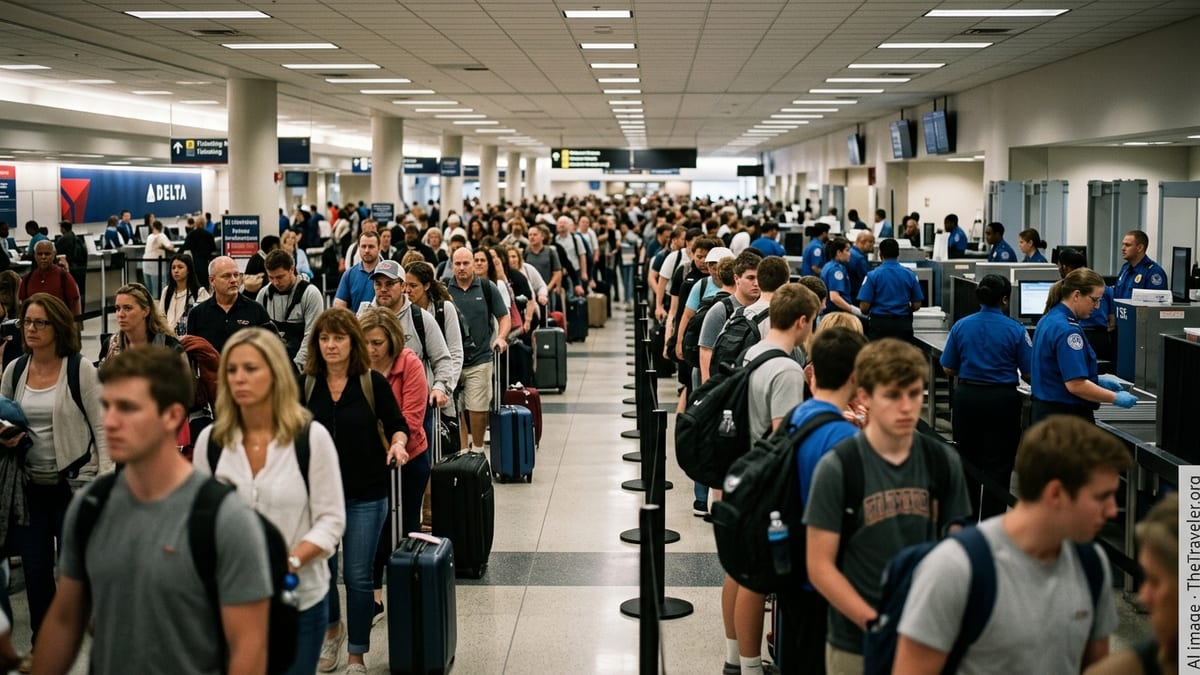
Spring break flyers passing through New York’s John F. Kennedy International and Hartsfield Jackson Atlanta International are encountering chaotic scenes, with reports of security lines stretching for hours as a Transportation Security Administration staffing crunch collides with one of the busiest travel periods of the year.
Get the latest news straight to your inbox!
Staffing Crisis Meets Spring Break Surge
Publicly available information shows that a partial federal government shutdown that began on February 14 has significantly reduced the number of TSA officers available to screen passengers. Without paychecks for weeks, hundreds of officers have resigned nationwide, while others are calling out or seeking temporary work elsewhere, deepening the shortages just as spring break travel ramps up.
Coverage from national and local outlets indicates that the impact has been especially acute at major hubs such as JFK and Atlanta, which rely on large numbers of front line screeners to keep lines moving. At both airports, social media posts, local reporting and crowdsourced wait time trackers describe snaking queues that fill concourses, wrap into ticketing halls and, at times, spill toward terminal entrances.
The timing is particularly difficult for leisure travelers. Airlines and airport data show that March is one of the heaviest months for domestic passenger volumes, with college students, families and tour groups all converging on peak morning and early afternoon departure banks. With fewer officers on duty and more people in line, typical security waits of 15 to 30 minutes have, at times, ballooned to multiple hours.
Travel industry analysts note that the current disruption follows years of uneven recovery in aviation staffing after the pandemic, leaving many operations with less slack to absorb sudden shocks. The shutdown has effectively removed what little flexibility remained in TSA scheduling, exposing choke points at the country’s busiest gateways.
Scenes on the Ground at Atlanta’s Hartsfield Jackson
Hartsfield Jackson Atlanta International, the world’s busiest airport by passenger volume, has emerged as a flashpoint. Local coverage in Atlanta, combined with first hand traveler reports, describes weekend and Monday morning lines that stretch from central checkpoints deep into the terminal, with some travelers citing waits of three to five hours during peak periods and occasional references to even longer delays.
Travelers posting to public forums over the past several days describe arriving three or more hours before departure and still having to race to gates. Some accounts from Atlanta note that general security lines at the domestic terminals have, at times, nearly reached exterior doors, while wait time displays inside the airport have fluctuated rapidly as officers are shifted between checkpoints.
Airport messaging and local media guidance now encourage passengers to arrive at Atlanta at least three hours before domestic flights and four hours or more before international departures, especially for early morning and late afternoon banks when spring break traffic is heaviest. Flyers using TSA PreCheck or Clear report somewhat faster processing, but even those premium lanes have seen waits of 60 minutes or longer during the worst surges.
Despite the strain, many traveler accounts also describe checkpoint staff in Atlanta working at maximum capacity, with nearly all lanes open when personnel are available. Line control teams have been actively reconfiguring queues, redirecting passengers between main, north, south and international checkpoints and using stanchions to keep walkways clear while lines snake through the terminal.
JFK Confronts Gridlock in Key Terminals
At New York’s JFK, reports indicate that extended delays have concentrated in certain terminals, particularly those serving large carriers and popular leisure routes. Public posts from Sunday describe Terminal 5, a major hub for domestic and Caribbean flights, as especially overwhelmed, with at least one widely shared account citing security waits around three hours in the early afternoon.
Travelers at JFK report confusion as lines have grown so long that the starting point is sometimes unclear, with queues looping around check in islands and merging into one another. In some cases, crowding has made it difficult for passengers with later flights to navigate around those already standing in security lines, heightening anxiety for those unsure whether they are in the correct queue.
Unlike Atlanta, where multiple centralized checkpoints can be used for different concourses, JFK’s terminal by terminal layout can limit flexibility when staffing is tight. If a given terminal’s checkpoint is short staffed, passengers have fewer alternate screening options, increasing the risk that backlogs will persist for hours. Travelers report that, depending on time of day, some terminals still experience relatively normal waits, while others devolve into gridlock.
Airlines operating at JFK have been issuing general advisories urging passengers to arrive significantly earlier than usual and to complete online check in and bag tag printing before reaching the airport. Nevertheless, for those flying during peak spring break windows, even early arrival has not always guaranteed a stress free experience at security.
How the Shutdown and Resignations Feed the Delays
National reporting on the Department of Homeland Security shutdown indicates that more than 300 TSA officers have left their jobs since mid February, aggravating what was already one of the federal government’s highest attrition rates. Because these positions require training and background checks, replacing lost staff cannot happen quickly, leaving many airports with chronic gaps in their rosters.
The loss of paychecks has also increased unscheduled absences among those who remain. Officers facing rent, child care and other expenses are turning to gig work or temporary jobs, reducing their availability for overtime shifts that might otherwise help cover spring break peaks. Some airports have responded by closing selected checkpoints or reducing operating hours for certain lanes, concentrating the remaining staff at fewer screening points.
Published coverage suggests that federal agencies are attempting to ease pressure by shifting personnel and, in some cases, deploying other homeland security staff to assist with non screening support roles in airports. However, these measures cannot fully substitute for trained TSOs at the scanners and inspection stations. As a result, throughput per checkpoint remains constrained compared with normal conditions.
Analysts reviewing historical security delay data note that even modest reductions in available screening positions can have outsized effects in hub airports where flights depart in tightly clustered banks. When departure schedules, spring break demand and staffing shortfalls align unfavorably, the result is exactly what many travelers are now documenting at JFK and Atlanta: highly variable waits that can jump from under an hour at one moment to several hours a short time later.
What Travelers Can Do Before Their Spring Break Flight
Given the current environment, publicly available guidance from airlines, airports and travel experts converges on a single central recommendation for JFK and Atlanta: arrive much earlier than usual. For domestic flights during the shutdown, many advisories now suggest planning to be at the airport at least three hours before scheduled departure, and even earlier if traveling in large groups or checking multiple bags.
For international flights, particularly those leaving in morning and late afternoon peaks, four hours or more is increasingly being recommended. Travelers should build in additional buffer time to account for potential ground transportation delays around busy terminals, congestion at airline check in counters and the time required to move between security and distant gates.
Passengers with TSA PreCheck, Clear or airline priority access may experience shorter waits than general screening, but current reports from both JFK and Atlanta indicate that even these lanes can become heavily backed up when staffing is thin. Travelers are being advised to monitor airport and airline communications on the day of departure, review delay and wait time information where available and consider shifting to less busy times of day when possible.
In the near term, relief is likely to depend on resolution of the federal funding impasse and the ability of TSA to stabilize and rebuild its workforce. Until then, those heading out for spring break through JFK or Atlanta should prepare for uncertainty at the checkpoint, pack patience alongside their boarding passes and treat early arrival as essential travel gear rather than a luxury.