

More news on this day
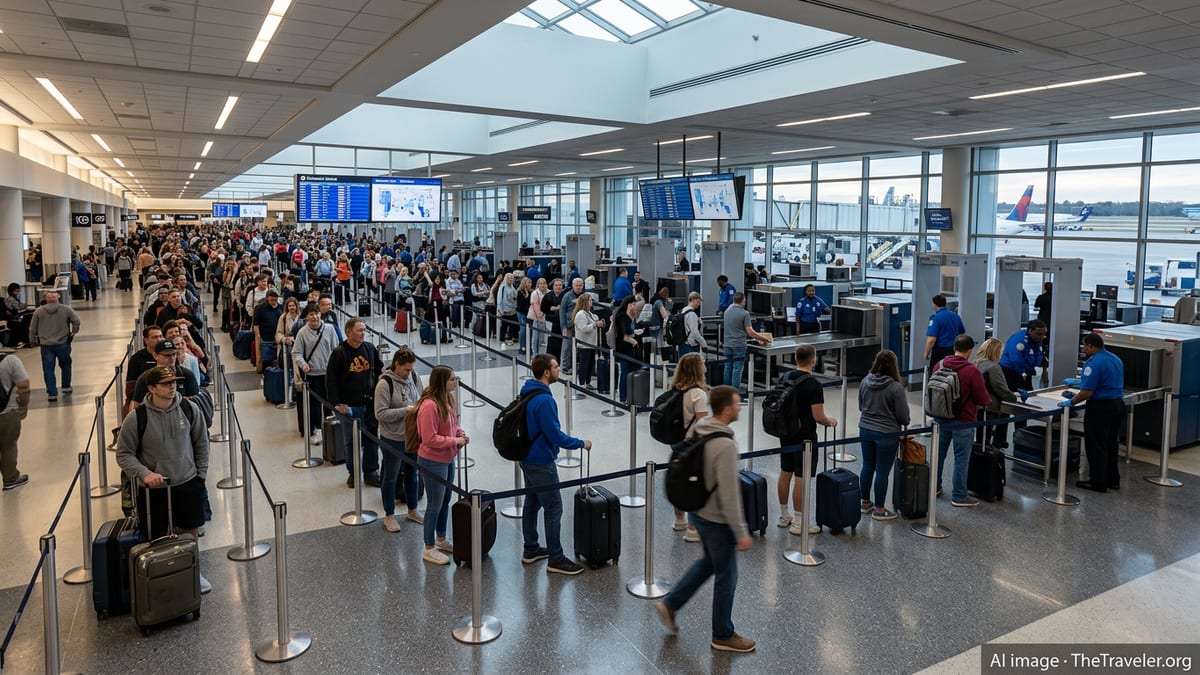
A partial shutdown of the US government is colliding with peak spring break travel, with staffing shortfalls at Transportation Security Administration checkpoints fueling hourlong security lines, missed flights and growing uncertainty for passengers across the country.
Get the latest news straight to your inbox!
Shutdown Strains TSA as Peak Travel Season Arrives
The current funding lapse at the Department of Homeland Security, which began on February 14, has left tens of thousands of Transportation Security Administration officers working without pay while airport crowds swell for spring break and major sporting events. Publicly available information from aviation groups and federal agencies indicates that most TSA staff are classified as essential and required to report for duty, but unpaid work and mounting financial pressures are driving higher-than-normal absences at some airports.
Recent coverage from national and local outlets describes a patchwork of conditions. Many airports continue to report routine screening times, yet others are experiencing sudden spikes in wait times as officers call out or seek temporary second jobs. Industry analyses of past and present shutdowns suggest that even modest staffing gaps can ripple quickly through the system when traveler volumes surge, particularly at large hubs and busy regional airports.
Travel organizations and airline trade groups have warned for weeks that a shutdown during March would test the resilience of airport security operations. A joint statement from major travel and aviation associations in February urged policymakers to secure stable funding for TSA and air traffic control, arguing that the industry is still rebuilding reliability and traveler confidence after years of pandemic disruption and summer operational meltdowns.
Hours-Long Security Lines at Key Airports
The most dramatic effects so far have been concentrated at a handful of airports where TSA staffing appears especially tight. Reports from Houston cite three-hour security lines at Hobby Airport over the past week, with travelers queueing into terminal lobbies and missing flights despite arriving well ahead of departure times. Local coverage notes that security waits at the city’s larger Bush Intercontinental Airport have also ballooned at times, particularly during early morning and late afternoon peaks.
Similar scenes have been documented in New Orleans and Atlanta, where travelers have described waits exceeding an hour to clear checkpoints during busy periods. Social media posts and local reporting relay images of snaking lines at domestic terminals and secondary concourses that are typically less congested. In some cases, airlines have delayed departures to accommodate passengers stranded at security, adding to gate-area crowding and aircraft congestion on the tarmac.
By contrast, other major hubs have so far avoided the worst of the disruption. Airports serving Dallas, Washington, Baltimore and Richmond have reported manageable lines and near-normal throughput, even as passenger volume climbs. Airport officials in these locations attribute the relative stability to flexible staffing plans, staggered shift changes and the ability to open additional lanes quickly when lines begin to build.
The uneven impact underscores how vulnerable certain facilities can be to localized staffing issues. Airports with tighter security footprints, limited checkpoint space or historically lean TSA staffing patterns appear more exposed when a federal funding lapse coincides with a seasonal travel rush.
Flight Delays Mount as Security Bottlenecks Grow
While weather remains a major factor in recent flight disruptions, security bottlenecks linked to the shutdown are increasingly contributing to delays and missed connections. Flight-tracking data and airline updates over the past several days show clusters of hold-ups at airports where TSA lines have stretched longest, adding stress to a network already managing storms and heavy traffic.
Published coverage from national news outlets notes that delays have been most acute at large connecting hubs, including those in New York, Chicago and Atlanta, where a single missed bank of departures can cascade throughout an airline’s network. When large numbers of passengers arrive late to the gate because of security queues, carriers face difficult choices between holding flights and protecting on-time performance metrics.
In addition to TSA staffing, broader federal workforce pressures are playing a role. Air traffic controllers, like TSA officers, are required to work through the shutdown, and professional associations have repeatedly warned about chronic understaffing. Analyses of previous shutdowns show that even small increases in controller absences or training backlogs can reduce capacity at already constrained facilities, leading to ground stops, reroutes and longer taxi times when demand is highest.
Aviation economists point out that these compounding factors can quickly erode the reliability gains airlines have worked to rebuild. Delays and cancellations not only disrupt immediate travel plans but can also prompt travelers to rethink future trips, particularly those involving tight connections or smaller regional airports with fewer backup options.
Spring Break Travelers Face Tough Choices
For millions of Americans heading out on long-awaited vacations, the convergence of a government shutdown and spring break has created an unusually uncertain travel landscape. Travel advisor guidance circulated in recent weeks urges clients to arrive at airports earlier than usual, monitor flight status obsessively and build extra time into itineraries, especially when connecting through known hotspots.
Advisory documents from national travel associations suggest that travelers departing from airports already linked to extended security waits should plan to arrive three to four hours before departure for domestic flights, and even earlier for international journeys. Families traveling with children, large groups and those checking bags are especially encouraged to pad their schedules, given the added time required at check-in and boarding.
Many travelers are also rethinking the value of expedited screening programs. The shutdown led to temporary suspensions of new enrollments and renewals for programs such as Global Entry and TSA PreCheck, though some services have recently been restored. Existing members generally continue to access dedicated lanes, which can substantially shorten wait times at affected airports, but new applicants face uncertainty about when approvals will be processed.
Travel industry commentary indicates that the psychological impact of the disruptions may be as significant as the operational effects. After several years of volatile schedules, changing entry rules and high fares, some leisure travelers are wary of yet another variable outside their control. Others are choosing to drive to nearby destinations or book nonstop flights from smaller airports that have so far avoided major delays.
Airlines and Travel Industry Press for Lasting Fix
Airlines, airports and travel industry groups are increasingly vocal about the broader risks of repeated funding lapses for the US aviation system. In recent days, chief executives of major carriers have publicly called on Congress to restore full funding for the Department of Homeland Security and ensure that TSA officers, air traffic controllers and other critical personnel are paid during any future budget standoffs.
Policy papers and testimony submitted to recent congressional hearings highlight the economic stakes. Research commissioned by national travel organizations estimates that shutdown-related disruptions have already cost airlines and the broader tourism sector hundreds of millions of dollars in lost revenue, rebooking expenses and reduced demand. Analysts warn that prolonged instability could undermine the United States’ competitiveness as an international travel destination.
Aviation and travel coalitions are also reviving proposals to insulate key security and safety functions from the annual budget cycle. Ideas under discussion range from placing TSA funding on a multi-year authorization, to dedicating existing aviation security fees more directly to frontline operations, to allowing more airports to contract private screeners under federal oversight. Proponents argue that such changes could reduce the likelihood that political impasses in Washington translate into chaos at airport checkpoints.
For now, however, travelers remain caught in the middle. With no immediate resolution to the shutdown in sight, publicly available forecasts suggest that TSA staffing pressures and associated delays could persist or worsen through the remainder of March. As airlines, airports and travel advisors scramble to adjust, the coming weeks may offer a stark test of how much disruption the system can absorb before travelers start changing their plans in greater numbers.