

More news on this day
Passengers flying through Philadelphia International Airport are facing new disruption as a deepening Transportation Security Administration staffing crisis, fueled by the protracted federal government shutdown, has prompted the temporary closure of the main security checkpoint in Terminal C.
Get the latest news straight to your inbox!
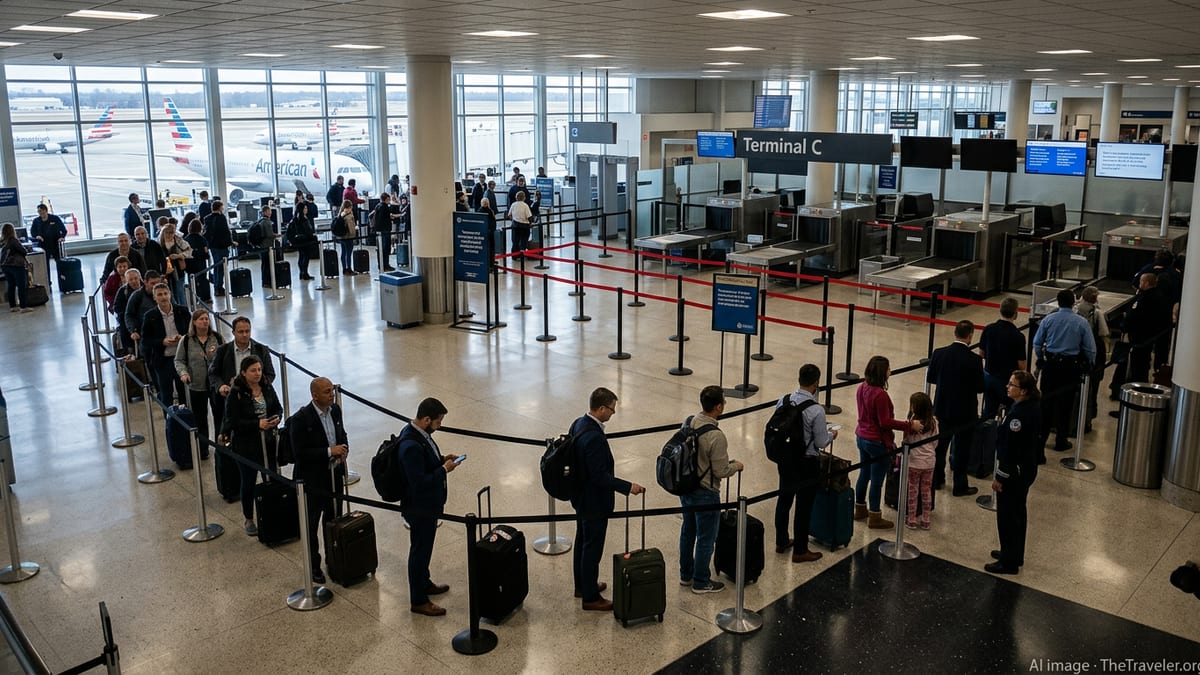
What Is Happening at Terminal C
Terminal C at Philadelphia International Airport, a key hub for domestic operations and a major base for American Airlines, has become the latest flashpoint in the aviation fallout from the federal government shutdown. The TSA has temporarily closed the primary security checkpoint serving Terminal C, citing an acute shortage of screening officers willing or able to continue working without reliable pay.
The closure does not mean that all flights from Terminal C are canceled, but it is severely constraining how passengers can access their gates. Many travelers are being funneled through other terminals’ checkpoints and then redirected airside back to Terminal C, adding complexity and uncertainty to the journey. Airport officials have described the measure as a last resort, implemented after weeks of mounting callouts and staffing gaps.
The move follows weeks of warnings from aviation unions and industry groups that unpaid security personnel and other critical workers were reaching a breaking point as the shutdown dragged on. While TSA officers are deemed essential and must report to work, the lack of paychecks has led to a growing number of sick calls and resignations, eroding the agency’s ability to maintain normal operations at busy hubs like Philadelphia.
Officials have emphasized that the closure is described as temporary, but there is no firm timeline for restoring full operations at Terminal C. The duration will depend on both the resolution of the budget impasse in Washington and the TSA’s success in rebuilding reliable staffing levels at the airport.
How the Government Shutdown Is Driving the Crisis
The federal government shutdown has put extraordinary strain on the aviation system, and TSA is at the heart of that pressure. Screeners are required to work without pay during a shutdown, ultimately receiving back pay only once funding is restored. For many front line employees at Philadelphia International Airport, the second missed paycheck marked a tipping point, making it increasingly difficult to cover rent, child care and transportation costs to get to work.
As financial stress grows, more officers have been calling in sick, seeking temporary work elsewhere or simply leaving their jobs. Although TSA is attempting to shift personnel among checkpoints and rely on overtime, the pool of available staff at Philadelphia has eroded to the point that operating all checkpoints safely and efficiently is no longer possible. The decision to shutter Terminal C’s main checkpoint is a direct consequence of those staffing realities.
The shutdown’s aviation impact is not limited to security lines. Air traffic control training and hiring are curtailed, airport planning and grant programs are delayed, and federal safety inspections are slowed. However, TSA’s daily face-to-face role with passengers makes its strain highly visible. Philadelphia’s experience is part of a broader pattern in which larger and busier airports are being forced to consolidate checkpoints or reduce operating hours as the shutdown continues.
Industry leaders and travel groups have warned that if the political stalemate persists, more airports could see rolling closures or restricted screening operations. That prospect has raised alarms among airlines serving Philadelphia, which fear that prolonged disruption at a major connecting hub could ripple across their national networks.
What Travelers Should Expect at Philadelphia International
For now, flights at Philadelphia International Airport are continuing to operate, but passengers should brace for longer walks, unfamiliar routing through the terminals and potentially extended wait times at security. With Terminal C’s primary checkpoint offline, many travelers departing from C may be asked to clear security at neighboring terminals before proceeding to their gates through airside connectors.
Airport staff and airline agents are working to direct passengers to the correct checkpoints, but travelers should build in significantly more time than usual, particularly at peak morning and late afternoon periods. Two to three hours for domestic departures and even longer for international flights is becoming a prudent guideline while the shutdown-induced staffing crunch persists.
Screening options such as TSA PreCheck are subject to change day by day, depending on staffing levels at individual checkpoints. Some expedited lanes may be consolidated or temporarily closed, even when signs remain in place, and travelers could be routed through standard lanes despite their enrollment status. Clear and other trusted traveler services are also affected whenever their dedicated lanes depend on TSA officers who are in short supply.
Passengers connecting through Philadelphia should pay close attention to gate change announcements and plan extra time when moving between terminals, especially if re-screening is required. Families, passengers with reduced mobility and those traveling with significant carry-on baggage should factor in the additional stress and time associated with more congested checkpoints.
Impact on Airlines and the Wider Travel Network
The closure of Terminal C’s main checkpoint and the broader TSA staffing shortfall have created operational headaches for airlines at Philadelphia International. Carriers are working to adjust check-in and boarding times, reassign staff to help manage lines and rebook passengers who miss flights because of unexpected security delays.
While most flights are still departing, the margin for error in the schedule has narrowed. A surge of late-arriving passengers can quickly overwhelm a consolidated checkpoint, creating knock-on delays for boarding and departure. Airlines that rely heavily on Philadelphia as a connecting hub are closely monitoring security wait times throughout the day and, in some cases, proactively warning customers to allow extra time.
Beyond the airport itself, the situation in Philadelphia feeds into a national picture of vulnerability in the aviation system during protracted budget crises. Airlines, airports and unions are once again pressing lawmakers to prioritize stable funding for TSA and air traffic control, arguing that the current disruption highlights how essential these services are to the basic functioning of domestic travel and the broader economy.
Travel industry analysts note that even if the shutdown were resolved quickly, it could take weeks for staffing and schedules at Philadelphia to fully normalize. Recovering from attrition, clearing training backlogs and restoring employee morale are longer-term challenges that will shape the airport’s reliability well beyond the immediate political standoff.
Practical Tips for Passengers Flying Through PHL
Travelers with upcoming flights from Philadelphia International Airport should treat the Terminal C closure and TSA staffing shortage as a serious but manageable complication. The most important step is to arrive earlier than usual and to check flight status frequently through airline apps or alerts, since gate assignments and boarding times may shift as airlines adapt to conditions on the ground.
Where possible, passengers may want to avoid checking bags at the last minute, as longer lines at both ticket counters and security checkpoints can compound delays. Packing light, using mobile boarding passes and being prepared to remove electronics and liquids quickly at screening can help keep lines moving in a strained environment.
Families and travelers with special assistance needs should contact their airline ahead of time to confirm any available support for navigating between terminals and through potentially crowded checkpoints. While airport and TSA staff are working under intense pressure, they remain the primary resource for real-time guidance on which checkpoints are open and how best to reach your gate.
Until Congress reaches a funding agreement and TSA can stabilize staffing at Philadelphia, conditions at Terminal C and across the airport are likely to remain fluid. For now, patience, extra planning and a close eye on airline communications are the most effective tools passengers have to navigate the evolving situation.