

More news on this day
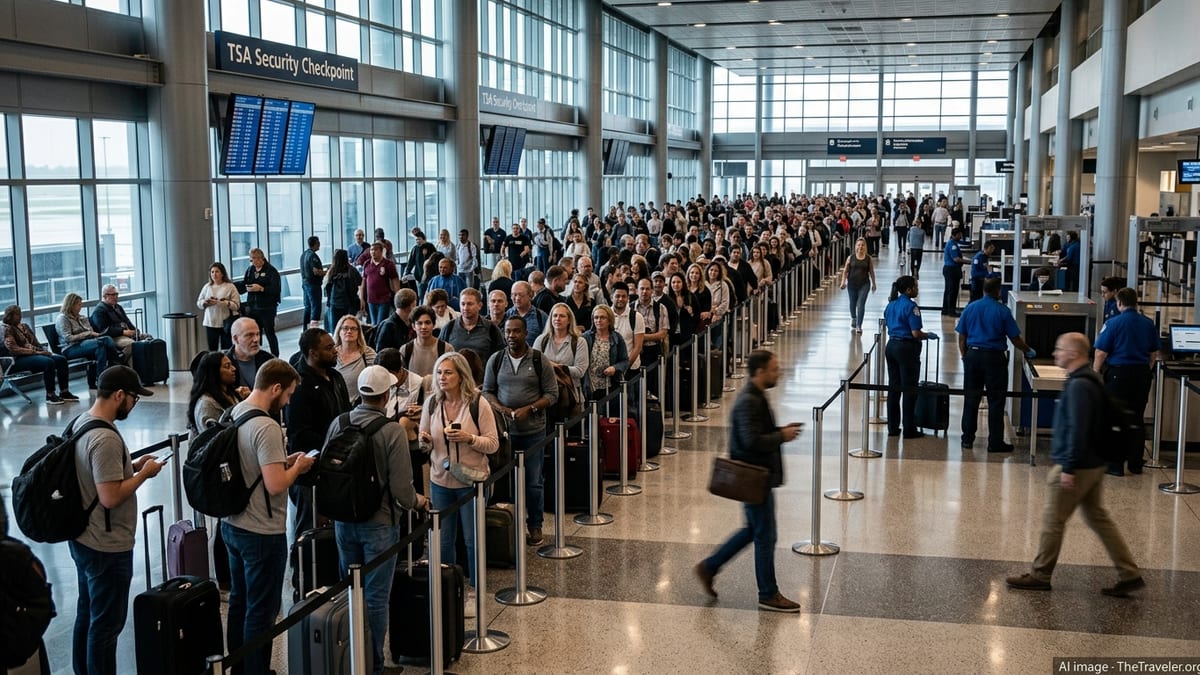
Louis Armstrong New Orleans International Airport is seeing intermittent hourslong waits at security checkpoints as a federal funding lapse fuels a nationwide Transportation Security Administration staffing crunch, leaving New Orleans travelers facing unpredictable delays and missed flights.
Get the latest news straight to your inbox!
Federal Shutdown Ripples Into Airport Security
Publicly available information indicates that the current partial federal government shutdown, which has halted pay for many Transportation Security Administration employees, is straining security operations at airports across the United States. TSA officers are required to continue working but are not receiving full paychecks, a situation that has coincided with rising reports of staffing gaps and longer lines at several major hubs.
Coverage of the funding standoff describes increasing attrition within TSA, with hundreds of officers reportedly leaving their jobs since the shutdown began in February. The agency has historically struggled with high turnover and comparatively low wages, and the loss of staff in recent weeks appears to be amplifying those long-standing challenges. As the shutdown stretches into late March, concerns are growing that the impacts on passenger screening could intensify.
Nationally, reports point to a patchwork of conditions at airport checkpoints, with some facilities experiencing wait times exceeding two hours while others see relatively normal traffic depending on staffing levels and time of day. The uneven picture has made it difficult for travelers to predict how early they need to arrive, particularly at busy origin airports such as New Orleans.
New Orleans Confronts Surging Wait Times
At Louis Armstrong New Orleans International Airport, anecdotal accounts and local coverage describe dramatic swings in security wait times in recent weeks. On some peak days, travelers have posted images and descriptions of lines stretching from the main checkpoint area back into the parking garage, with reported waits of two hours or more for standard screening. In several cases, passengers indicated that they narrowly caught flights or missed departures despite arriving what would typically be considered early.
Local discussion forums have referenced a shortage of active screening lanes at certain times, with observers noting that a number of x-ray machines and screening positions appeared idle while lines grew. These reports suggest that the bottleneck is driven less by checkpoint infrastructure and more by the available number of officers who can staff each lane under the current constraints.
At the same time, some travelers have described much smoother experiences on other days or during off-peak hours, reporting that they cleared New Orleans security in as little as five to fifteen minutes. This volatility in wait times has become a defining feature of the current disruption, complicating efforts by passengers to plan their arrival times and by airlines to maintain on-time departures.
Spring Travel Demand Adds Pressure at MSY
The staffing pressures at New Orleans are coinciding with a seasonal surge in passenger volumes. The airport typically experiences elevated traffic in March due to spring break, regional festivals and major sporting events that bring visitors through the city. This year, the demand spike is overlapping with reduced staffing flexibility at TSA, intensifying the strain on checkpoint operations.
Reports on daily airport conditions indicate that the heaviest congestion at Louis Armstrong New Orleans International often occurs in the early morning wave between roughly 5 a.m. and 7 a.m., when multiple departures are scheduled in a short window. Travelers have described a “surge” effect during these hours, with large numbers of passengers converging on a security workforce that is already stretched thin by unpaid overtime and attrition.
Later in the day, conditions appear more variable. Some midmorning and afternoon periods have seen lengthy lines, while others have moved relatively quickly when additional officers were available or flight schedules were lighter. The irregular pattern underscores how sensitive the checkpoint has become to small changes in staffing or schedule disruptions, especially when combined with the broader national pressures on TSA.
Travelers Adjust Strategies Amid Uncertainty
In response to the unpredictable conditions, New Orleans travelers are adjusting their routines. Social media posts and local message boards increasingly emphasize the need to arrive significantly earlier than usual, with some frequent flyers recommending a buffer of at least two to three hours before departure for standard screening. Passengers with TSA PreCheck or other expedited programs have reported comparatively shorter waits, though even those lanes have occasionally seen backups during the worst congestion.
Some travelers are modifying their flight choices, opting for departures outside the early morning peak when possible or allowing longer layovers to reduce the risk that an outbound delay from New Orleans will jeopardize onward connections. Others are shifting ground transportation plans, budgeting more time to reach the airport amid concerns that security lines could stretch into adjacent areas like parking structures or ticketing halls.
The uncertainty is also affecting visitor perceptions of the airport. New Orleans serves as both a leisure gateway and a business travel hub, and prolonged stories of long security lines can shape how the airport is viewed compared with competing regional gateways. For now, the experience appears highly dependent on timing, luck and the day-by-day staffing picture.
Outlook for New Orleans Travelers
Looking ahead, the trajectory of delays at Louis Armstrong New Orleans International is closely tied to developments in Washington. Publicly available information suggests that a resolution to the federal funding lapse would restore pay to TSA officers and could help stem the current wave of resignations, potentially stabilizing staffing levels over time. Until that occurs, screeners at New Orleans and elsewhere are likely to remain under pressure from mandatory overtime and elevated passenger volumes.
Travel advocacy groups and industry observers are highlighting the situation in New Orleans as an example of how airport operations can be quickly disrupted when a critical federal function is constrained. The airport has invested in a modern terminal and expanded checkpoint infrastructure in recent years, but those improvements depend on adequate staffing to deliver consistent throughput.
For passengers in the near term, the practical guidance emerging from recent reports is straightforward: build in extra time, especially for early morning departures; monitor airline communications for any schedule adjustments; and be prepared for conditions at New Orleans security that can shift from brief waits to hourslong lines depending on the day. Until TSA staffing stabilizes, long delays at the airport’s checkpoints are expected to remain a recurring risk rather than an isolated event.