

More news on this day
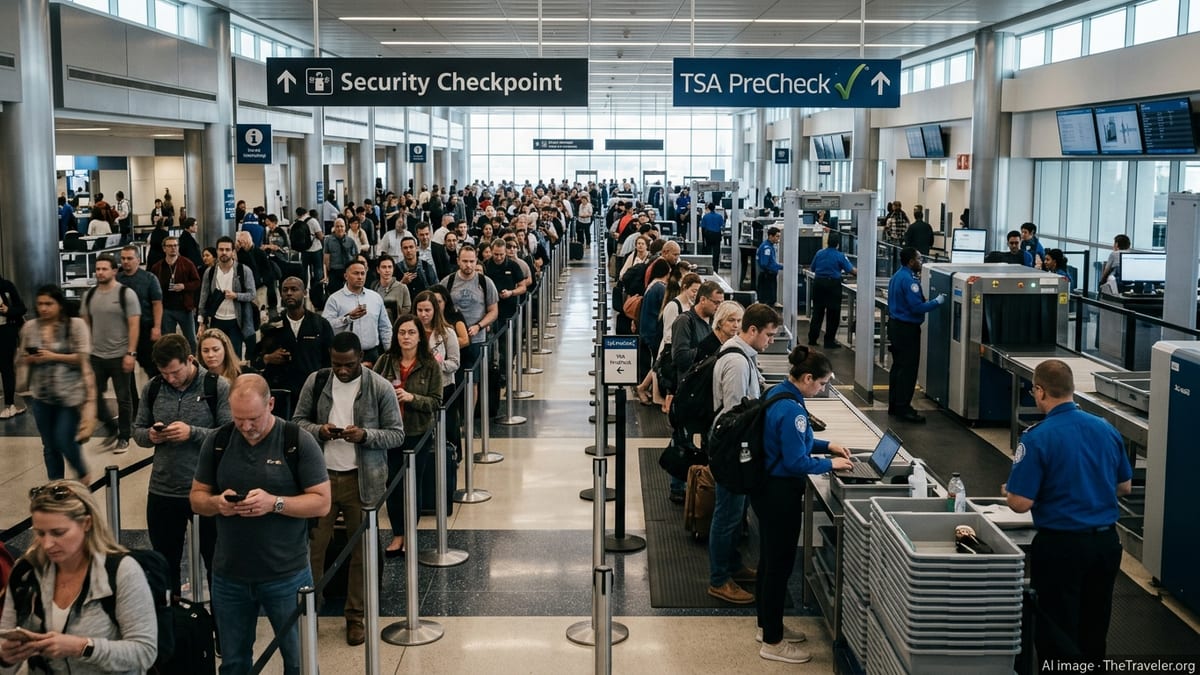
Staffing shortages at the Transportation Security Administration are turning routine trips through U.S. airports into an increasingly unpredictable experience, with wait times swinging from minutes to hours depending on the day, airport and time of travel.
Get the latest news straight to your inbox!
Why TSA Staffing Is Under Strain Now
Transportation Security Administration officers are designated essential workers, which means checkpoints remain open even when broader federal operations are disrupted. During the latest federal funding standoff, that designation has translated into thousands of screeners working without full pay or with uncertainty about when they will be compensated. Publicly available information shows that this has intensified preexisting retention problems at the agency, where turnover has historically outpaced much of the federal workforce.
Reports indicate that financial stress is driving some officers to reduce shifts or seek temporary work elsewhere, directly affecting how many screening lanes can open at any given time. In recent weeks, national coverage has documented cases where hundreds of officers have resigned since the most recent shutdown period began, compounding a long-running challenge of keeping front-line positions filled at busy hubs.
Even before the current turmoil, federal oversight reports pointed to structural issues inside TSA, including mandatory overtime, difficulty securing leave, and persistent concerns about pay, recognition and workplace culture. Those factors have made it harder to build a stable workforce precisely as passenger volumes keep climbing toward or above pre-pandemic records. The result is a system that can function smoothly on one day, then struggle visibly the next when just a small share of employees are absent.
TSA leadership has highlighted earlier efforts to address these issues, including a 2023 shift to a new pay system modeled on the broader federal scale and aggressive hiring campaigns in major markets. Those measures did help bring attrition down from prior highs. However, the current funding uncertainty and policy changes affecting labor rules have introduced new instability, and the agency is again being tested at the security checkpoint.
Airports Feeling the Most Pressure
The impact of TSA staffing gaps is not evenly spread across the United States. Large hub airports that already operate at or near capacity, particularly in rapidly growing metro areas, are seeing the most volatile wait times. Recent national coverage has highlighted Houston, Atlanta and Dallas Fort Worth as examples, with reports of lines stretching to two, three or even four hours at peak moments before dropping to near-zero waits later the same day.
Airports that serve as major connecting hubs are especially sensitive, because even small reductions in available screeners can force managers to close some lanes or entire checkpoints. That pushes more passengers into fewer lines, quickly lengthening queues. In some instances, smaller checkpoints or terminals have been temporarily shut, concentrating traffic into a central checkpoint that struggles to absorb the surge.
By contrast, some mid-sized airports with more modest schedules have largely avoided the worst disruptions. Coverage of Colorado Springs, for example, notes relatively short lines while larger regional hubs face rolling backups. These airports benefit from fewer simultaneous departures and a passenger base that often arrives earlier and moves through more quickly, easing the strain on limited staff.
Geography and travel season also play a role. Spring break, holiday peaks and major events amplify the problem at leisure-heavy gateways such as those in Florida, Las Vegas and parts of California. In these locations, a combination of full flights, inexperienced travelers and fewer security officers has led to inconsistent but sometimes dramatic delays at screening points.
Which Travelers Are Hit Hardest
Not all passengers feel the consequences of TSA staffing shortages in the same way. Travelers relying on standard security lanes are the most exposed, since any reduction in open checkpoints or lanes is usually felt there first. Families with young children, infrequent flyers and travelers unfamiliar with security procedures can be particularly affected, both because they move more slowly and because they are more likely to arrive with less time to spare.
Business travelers and frequent flyers enrolled in expedited programs such as TSA PreCheck have, in many cases, continued to see relatively short waits even when regular lines stretch far. Recent accounts from busy hubs describe situations where the standard queue approaches three hours while expedited lanes remain under 15 minutes. However, publicly available guidance from airport and local officials has begun warning that if staffing levels deteriorate further, dedicated lanes could be scaled back or temporarily closed, narrowing that advantage.
International travelers face a related set of pressures when they connect through crowded U.S. gateways. While Customs and Border Protection, not TSA, oversees passport control, broader federal staffing issues have contributed to longer lines at both security and immigration in some airports. Industry groups note that visitors arriving from overseas are encountering one to two hour waits at certain times of day, complicating tight connections and increasing the risk of missed onward flights.
Passengers with disabilities or mobility challenges can experience disproportionate disruption. Security procedures often take longer for travelers who require additional screening or assistance, and when staff are stretched thin, the time needed to coordinate support services can expand. Advocacy organizations have raised concerns that inconsistent staffing makes it harder to uphold accessibility standards that airports and airlines have pledged to meet.
How Staffing Shortages Change the Travel Experience
The most visible sign of TSA staffing shortages is the length of the line, but the effects ripple through the entire airport experience. Airlines report more cases of passengers missing flights despite arriving well in advance, especially in the early morning when multiple departures compete for the same checkpoint capacity. When that happens, rebooking can be complicated by already full flights, turning a long wait at security into an overnight stay or a lost day of vacation or work.
Inside the checkpoint itself, fewer officers can mean slower processing for carry-on bags, more frequent bottlenecks at bag-search stations, and less flexibility to redirect passengers when equipment needs recalibration or secondary screening. Even short outages of a single X-ray machine can cascade into significant delays when there are no spare staff available to open another lane.
The unpredictability is increasingly shaping how travelers plan. Publicly available wait-time data from airports and third-party apps show wide fluctuations even within the same day, leading many passengers to arrive much earlier than they would have a year or two ago. For some, that means sacrificing work hours or adding hotel stays to avoid early departures that feel risky in the current environment.
Retailers and restaurants inside terminals are also feeling the effects. When long security lines form outside the checkpoint, passengers spend less time and money in post-security concessions. Conversely, when lines suddenly clear after staffing levels improve later in the day, concourses can become crowded at once, putting pressure on gate areas and amenities that were quiet only an hour earlier.
What Travelers Can Expect in the Months Ahead
Looking forward, several trends are likely to determine how strongly TSA staffing shortages continue to affect U.S. airports. Passenger volumes are expected to remain high through 2026, with domestic leisure travel holding steady and international demand continuing to rebound. At the same time, the federal government is still working through broader workforce policies, including an ongoing hiring freeze and cost-cutting mandates that limit how quickly agencies can fill vacancies.
TSA has outlined plans to keep recruiting aggressively, particularly in high-cost urban areas where competition from private employers is intense. Previously announced pay adjustments and hiring incentives have helped draw more applicants, and internal data released in 2024 showed attrition rates improving from earlier years. Whether those gains can be sustained under current budget constraints and evolving labor rules is an open question that will shape checkpoint performance at the nation’s busiest hubs.
Airport authorities and local partners are also exploring operational workarounds. Some are adjusting terminal layouts to ease bottlenecks, investing in more advanced screening technology designed to speed passenger throughput with fewer manual bag checks, or adding signage and staff to help organize lines more efficiently. These efforts can soften the impact of staffing gaps, but they cannot fully replace a sufficient number of trained officers at the checkpoint.
For now, travelers can expect continued unevenness. On some days and at some airports, security may still resemble the relatively quick experience many remember from before the recent funding battles. On others, particularly at peak travel times and major hubs, the same trip may involve long queues, anxious glances at departure boards and a much tighter margin for making a flight. Until federal labor and budget disputes are resolved in a more durable way, the security line will remain one of the least predictable parts of air travel in the United States.