

More news on this day
Record air travel and renewed strains on Transportation Security Administration staffing are combining to create long, unpredictable security lines at some U.S. airports, leaving travelers asking which hubs are hardest hit and how to plan around the delays.
Get the latest news straight to your inbox!
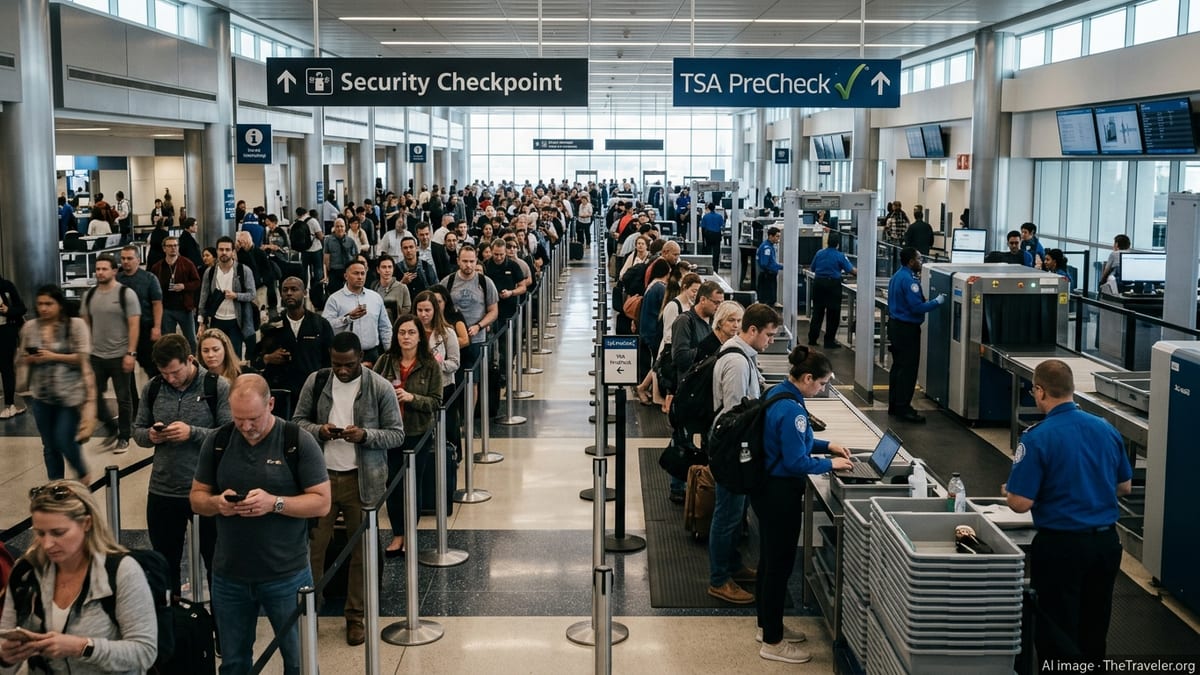
Record Passenger Volumes Meet a Stretched Workforce
Passenger traffic in the United States has pushed beyond pre‑pandemic levels, with federal data showing multiple new daily screening records in 2024 and 2025 at TSA checkpoints nationwide. The agency has reported some of its busiest days on record as holiday weekends, summer travel periods and school breaks bring sustained crowds through airport security.
At large hubs such as Atlanta, Dallas Fort Worth, Denver, Los Angeles and Chicago, industry summaries indicate that checkpoint volumes have climbed sharply, testing security operations even during normal conditions. Local airport authorities in cities including Seattle, Las Vegas, Kansas City and New Orleans have reported record or near‑record annual passenger totals, adding to the pressure.
While TSA implemented a new compensation plan in 2023 that narrowed a long‑criticized pay gap with other federal agencies, publicly available figures show that the agency is still working through years of high turnover and low morale. The result is a workforce that has grown more stable in some locations but remains vulnerable to disruption when funding or scheduling pressures rise.
The recent partial federal government shutdown that began in mid‑February 2026 has intensified those vulnerabilities. Published coverage indicates that hundreds of officers have resigned since paychecks were halted, compounding staffing challenges just as spring break crowds arrive.
Where Security Lines Are Longest Right Now
Recent reports from national outlets point to major hubs in Texas and along key leisure corridors as among the most affected during the current funding standoff. At Houston’s primary airport, travelers faced hourslong security waits on some March mornings before lines suddenly eased later in the day, illustrating how quickly checkpoint conditions can shift.
Coverage from other markets describes similar spikes, with some checkpoints temporarily closing at busy airports when there are not enough officers to keep all lanes open. In these cases, standard lanes can back up even as trusted traveler or PreCheck queues continue to move relatively quickly, creating a perception of uneven impact among passengers.
Airports serving heavy spring break and holiday traffic, including gateways to Florida, the Gulf Coast and major resort destinations, have also seen intermittent crowding as seasonal peaks collide with staffing gaps. Industry forecasts for the Labor Day and Thanksgiving periods in 2025 already highlighted record national volumes, and early 2026 patterns suggest that demand has not abated.
By contrast, smaller regional airports with growing but still modest traffic have, in some instances, reported smoother operations. In places such as Colorado Springs and certain secondary airports in the Midwest and Mountain West, shorter lines and less congestion are being cited as selling points for travelers willing to connect through smaller hubs.
Who Is Hit Hardest by TSA Staffing Shortages
The impact of TSA staffing shortfalls is not distributed evenly across travelers. Passengers departing from large hub airports at peak times remain the most exposed to long waits, particularly early morning and late afternoon bank periods when many flights depart in tight waves. Families, occasional travelers and international visitors who are unfamiliar with airport layouts or security procedures often feel the disruption most acutely.
Business travelers and frequent flyers enrolled in expedited screening programs are somewhat shielded, as PreCheck lanes have generally maintained shorter waits even on difficult days. However, publicly available information indicates that these services are not immune to disruption. Local officials in some cities have warned that PreCheck operations could be scaled back or paused if staffing deteriorates further, which would reduce one of the key pressure valves in the system.
Workers on the front lines also bear a significant share of the strain. Despite the 2023 pay adjustments, union statements and government employment data reflect that TSA officers still face challenging schedules, mandatory overtime during peak seasons and limited flexibility. When a funding lapse interrupts pay, some employees turn to secondary jobs or cut back hours, directly affecting checkpoint capacity.
Communities that rely heavily on tourism can see broader economic effects when bottlenecks grow severe. Long lines and missed flights during holiday periods can deter repeat visits or push travelers to alternative airports and destinations that advertise shorter waits and more predictable experiences.
Long‑Term Structural Pressures on TSA Staffing
Even outside moments of political gridlock, TSA staffing levels are shaped by structural factors that are slow to change. The hiring pipeline for new officers involves background checks, medical screening and training that can stretch over many months. Current and former employees posting publicly online have described lengthy onboarding timelines, which make it difficult to quickly increase staffing at airports where demand spikes.
Historically, TSA has struggled with higher attrition than many other federal agencies, driven by relatively modest pay, physically demanding work and irregular hours. While the 2023 compensation overhaul appears to have reduced annual attrition rates, union leaders and workforce advocates have continued to warn that funding uncertainties could reverse those gains if pay or benefits are put back into question.
At the same time, technology upgrades intended to speed screening, such as computed tomography scanners for carry‑on bags and more widespread use of credential authentication, are rolling out unevenly across the country. Larger airports with more resources and higher volumes tend to receive new equipment sooner, but they also confront the largest crowds. Smaller facilities may lag in technology but benefit from shorter lines that mask underlying staffing tightness.
Industry analyses also point to demographic pressures, including retirements among experienced officers and competition from private‑sector employers offering higher wages in strong local job markets. These trends have made it more difficult for TSA to maintain robust staffing at certain urban and resort‑area airports where cost of living is high.
What Travelers Can Expect in the Months Ahead
As of late March 2026, the immediate outlook for TSA staffing depends heavily on how long the current federal funding impasse persists. If the shutdown continues, observers expect more officers to reduce hours or leave, raising the risk of additional checkpoint closures and extreme wait times at some busy hubs.
Even once funding is restored, the effects of this period are likely to linger. Previous shutdowns have been followed by elevated attrition as employees seek more stable employment, suggesting that certain airports could face protracted staffing gaps during the rest of the year. That risk is particularly acute ahead of the summer travel season, when volumes typically surge.
For travelers, this environment means increased uncertainty and a widening gap between airports and time periods with relatively smooth screening and those with significant delays. Security wait times can vary dramatically from one day to the next, and even within the same day, as staffing levels and passenger flows fluctuate.
Publicly available guidance from airlines, airports and travel industry groups increasingly emphasizes conservative planning: arriving earlier than usual at major hubs, monitoring airport and airline advisories before departure and building extra buffer time into connections at congested airports. Until TSA staffing stabilizes and funding debates recede, passengers flying through the busiest U.S. airports should be prepared for a security experience that is more unpredictable than in past years.