

More news on this day
Security lines at major U.S. airports stretched for hours over the weekend as Transportation Security Administration staffing shortages, worsened by an ongoing Department of Homeland Security shutdown, began to significantly disrupt air travel at the start of the busy spring break season.
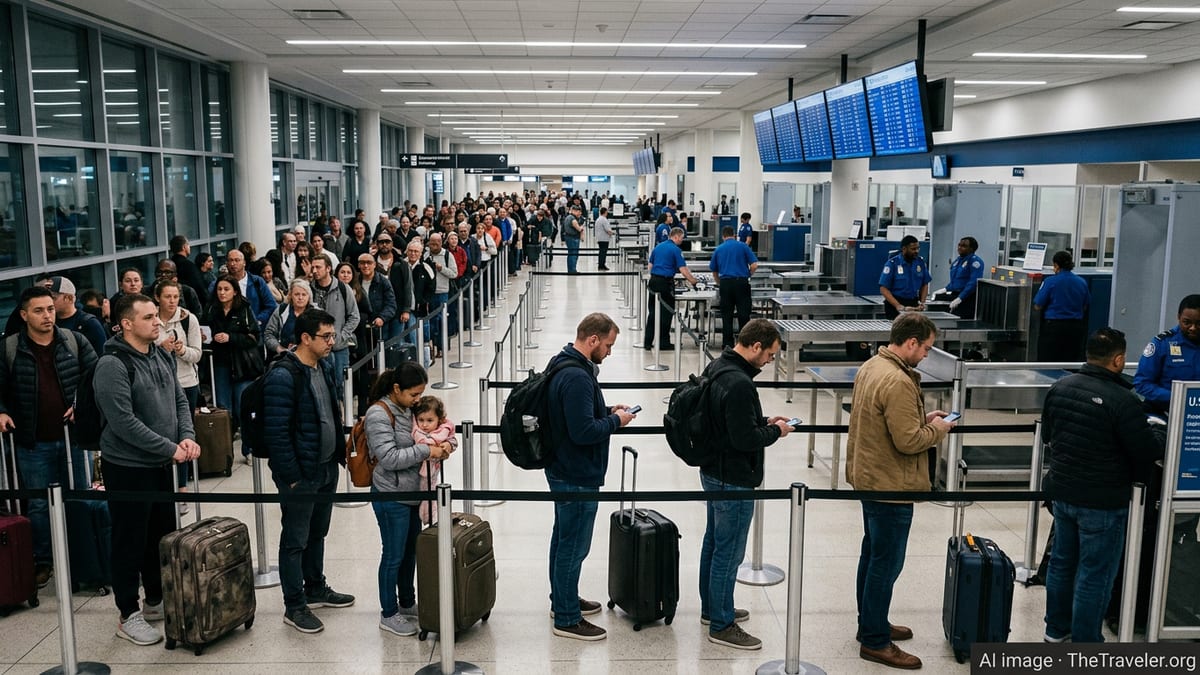
Hours-Long Lines Snarl Spring Break Travel
From Houston to New Orleans, travelers arriving at airports on Sunday reported security waits of up to three hours, forcing many to miss flights and rebook at already crowded hubs. At Houston’s William P. Hobby Airport, estimated standard security wait times peaked around three to three and a half hours on Sunday evening, according to airport officials, who urged passengers to arrive as much as four to five hours before departure as crowds swelled with spring break traffic.
In New Orleans, Louis Armstrong New Orleans International Airport warned of “longer-than-average” lines and advised passengers to reach the terminal at least three hours before their scheduled flights. Officials cautioned that wait times could reach two hours or more and signaled that the situation is likely to persist through the week as federal funding for Homeland Security remains stalled.
Although the longest lines were reported in Houston and New Orleans, aviation officials and travelers described elevated wait times at checkpoints around the country. The impact has been especially acute at airports serving leisure travelers, where a surge in family and student traffic is colliding with thinner TSA staffing at checkpoint lanes.
The delays add to broader operational strains in the system, including recent weather-related disruptions at major hubs such as Atlanta, compounding missed connections and crowding at departure gates as passengers wait for rebooked flights.
DHS Shutdown Pushes TSA Officers to the Brink
The growing disruption is the most visible consequence to date of the partial shutdown at the Department of Homeland Security, which began on February 14 after Congress failed to reach a compromise on immigration and border enforcement provisions tied to the agency’s funding. TSA officers, deemed essential employees, are required to report to work but are not being paid, with many now facing their first full missed paycheck.
Homeland Security officials have warned that the pay interruption is driving increased absenteeism as officers struggle with rent, childcare and commuting costs. In some locations, union representatives say, officers are calling in sick or seeking temporary work elsewhere to bridge the gap, leaving local TSA teams scrambling to staff all security lines during peak travel periods.
TSA leadership has already acknowledged that the agency entered this shutdown period with a fragile workforce. In testimony to Congress last month, the agency’s top official noted that more than 1,100 transportation security officers resigned in October and November 2025 during a previous 43-day government shutdown, a departure surge of more than 25 percent compared with the same period a year earlier. Those losses, combined with chronic hiring and retention challenges, have left many airports operating with minimal staffing buffers.
Industry analysts say the current shutdown is compounding years of pressure on TSA’s front line, where relatively low pay, demanding schedules and high stress have made it difficult to keep checkpoints fully staffed even in normal times. The sudden loss of pay during the DHS funding lapse, they warn, risks accelerating departures just as travel volumes climb toward their seasonal peak.
Travelers Face Uncertainty and Missed Flights
For passengers, the practical effect of the staffing crunch is a new level of uncertainty around even routine domestic trips. Social media feeds filled over the weekend with photos of snaking queues at security, with some travelers in Houston reporting lines wrapping through the terminal and into adjacent corridors as officers attempted to process passengers as quickly as possible.
Many airlines have begun issuing their own advisories, encouraging customers to arrive earlier than usual and to monitor airport security wait times closely. But as checkpoint lines lengthen and departure boards fill with delayed or missed flights, carriers are also dealing with the knock-on effect of rebooking large numbers of travelers into already crowded schedules, especially on popular vacation routes.
Families traveling with small children and infrequent flyers appear to be among the hardest hit, often arriving with the standard two-hour buffer only to find that security lines alone can exceed that window. At some airports, customer service agents reported scrambling to move affected passengers to later flights, while others were left to try again the following day.
Travel advisers are now urging passengers to build in additional time, consider early morning departures when possible and take advantage of any available trusted traveler programs. However, even expedited lanes are seeing pressure as more passengers attempt to bypass the most congested checkpoints, and processing of new applications for some programs has been slowed by the same DHS funding constraints.
Industry and Local Officials Warn of Wider Impact
The aviation and travel industry is growing increasingly vocal about the potential economic fallout if the shutdown drags on. Airport operators warn that prolonged delays at security could dampen discretionary travel, particularly for short leisure trips where an additional few hours spent in line may push travelers to postpone or cancel plans.
Tourism leaders in destinations like New Orleans and Houston fear that headlines about three-hour security waits could discourage would-be visitors at the start of a crucial spring and early summer travel window. Local businesses that rely on convention traffic and weekend getaways worry that even a brief period of chaos at checkpoints can have an outsized impact on hotel bookings, restaurant reservations and event attendance.
At the same time, air carriers and airport executives are lobbying lawmakers to resolve the funding standoff, emphasizing that TSA officers are a critical linchpin in the nation’s travel infrastructure. Industry groups have also mobilized to support unpaid officers, organizing food drives, emergency grants and other assistance programs in an effort to ease financial strain and keep as many workers on the job as possible.
Local officials, including mayors in affected cities, have echoed those concerns, pointing out that airport disruption quickly ripples through the broader regional economy. They argue that even as political leaders in Washington debate broader policy issues, the immediate effects are being felt by workers and travelers far from the Capitol.
What Travelers Should Expect in the Days Ahead
With no clear timeline for restoring Homeland Security funding, aviation experts say travelers should brace for continued volatility at security checkpoints in the coming days. As more TSA employees miss full paychecks, absences could rise further, particularly at high-cost urban airports where officers are already stretched thin.
Airports have limited short-term options to ease the strain, beyond adjusting staffing schedules, opening additional lanes when possible and coordinating with airlines to spread departures more evenly across the day. Some are deploying extra customer service staff to help manage lines, answer questions and direct passengers to less crowded checkpoints within the terminal complex.
For now, travel planners are advising passengers to arrive at least three hours before domestic flights and even earlier for international departures out of the hardest-hit airports. They also recommend checking security wait time tools on airport and airline apps, packing as lightly as possible to move quickly through screening, and preparing for the possibility of missed connections if lines surge unexpectedly.
Unless Congress and the White House reach a funding agreement that reopens Homeland Security and restores full pay for TSA’s workforce, the long lines now confronting travelers in Houston and New Orleans are likely to spread to more airports, turning the spring break rush into a broader stress test for the nation’s aviation system.