

More news on this day
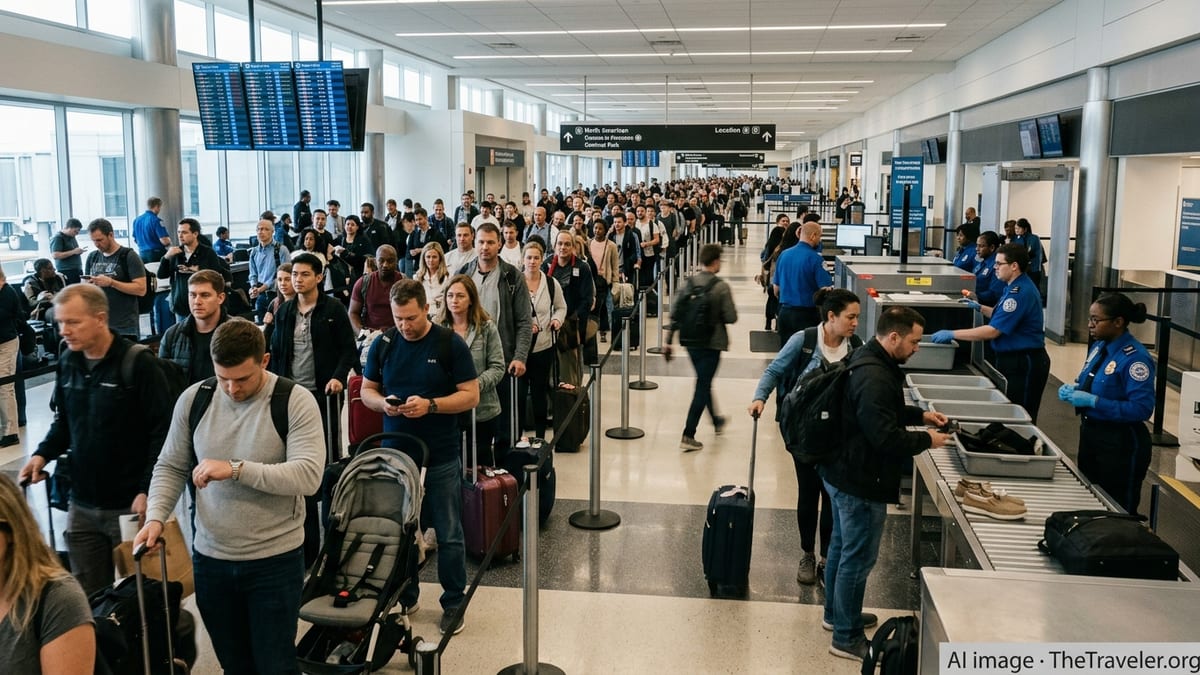
Air travelers across the United States are encountering massive security-line backups, with reports of waits stretching for several hours at major hubs as record passenger volumes collide with persistent Transportation Security Administration staffing constraints.
Get the latest news straight to your inbox!
Record Passenger Volumes Collide With Limited Staffing
Across the United States, airport security checkpoints are straining under unprecedented traffic. Publicly available federal data and industry analyses show that TSA screened more than 900 million passengers in 2024, a new high, and then surpassed that record in 2025 as demand for both business and leisure travel kept rising. Several of the busiest days for air travel on record have occurred within the past two years, including multiple dates when more than 3 million people were screened in a single day.
While the Transportation Security Administration workforce has expanded compared with the immediate post‑pandemic period, the pace of hiring has struggled to keep up with the surge in passenger volumes. Budget documents and agency briefings describe plans to grow the screening workforce by only a few percentage points per year, even as traffic has climbed faster at many airports. Travel industry groups note that checkpoint capacity has not increased at the same rate as demand, creating bottlenecks at peak hours.
The result is a widening gap between the number of travelers trying to move through security and the number of officers available to staff lanes. Airports that once considered a 20 to 30 minute wait excessive are now regularly posting wait estimates of 60 to 90 minutes or longer during morning and evening banks of departures. Social media posts, airline advisories and local news reports collectively point to a national pattern of recurring gridlock at checkpoints.
Shutdown Fallout and Regional Hotspots for Disruption
Recent federal funding disruptions have further exposed vulnerabilities in the system. During the 2025 government shutdown, staffing shortages attributed to unpaid or unavailable federal workers were linked to extensive delays at airports including Boston, Chicago, Denver, Houston, Las Vegas, Nashville, Newark, Orlando, Philadelphia, Phoenix and Washington. Publicly available accounts from that period describe partial closures of checkpoints and consolidations of screening lanes that sharply reduced throughput.
More recent reporting on the 2026 partial shutdown and broader Department of Homeland Security constraints indicates that similar staffing pressures continue to flare at unpredictable times. Some major hubs have at times been forced to operate only a fraction of their security lanes early in the morning, producing multi‑hour queues that stretch into ticketing halls and curbside areas. Travelers at Houston’s George Bush Intercontinental, for example, have described waits approaching four hours when several checkpoints were closed for much of the day.
These disruptions do not affect every airport equally. Smaller and mid‑sized airports that have posted record passenger numbers, from Northwest Arkansas to Jacksonville, often rely on relatively lean TSA teams. When a handful of officers call in sick or are reassigned, the impact on wait times can be immediate and severe. At the same time, major hubs like Chicago O’Hare, Las Vegas and Miami are handling record volumes that leave little margin when staffing falls short of plan.
Why TSA Staffing Has Lagged Behind Demand
The roots of the current strain extend back several years. TSA has long grappled with high turnover, relatively low starting pay compared with other federal law enforcement and private sector security jobs, and the demands of shift work that begins before dawn and runs late into the night. Oversight testimony and budget justifications in recent years have highlighted efforts to raise pay and improve retention, but those measures are playing out gradually.
At the same time, the travel industry’s rebound from the pandemic has been faster and stronger than many early forecasts anticipated. Data from federal transportation agencies show that domestic air travel exceeded pre‑2020 levels in 2023 and continued to climb in 2024 and 2025, outpacing the time required to recruit, train and deploy new screeners. Even with workforce increases at headquarters and in the field, staffing models that were calibrated for lower volumes have struggled to keep pace with sustained record traffic.
Travel advocacy organizations and airport operators have repeatedly called attention to staffing shortfalls not only at TSA but also at Customs and Border Protection, which handles international arrivals. Policy documents circulated by national travel groups in 2024 and 2025 describe shortages of screening and inspection personnel as a key driver of one to two hour waits at peak times, particularly for inbound international flights. Although separate from TSA, those bottlenecks add pressure to shared terminal spaces and heighten the perception of widespread breakdowns in airport processing.
Impact on Travelers: Missed Flights and Extended Travel Days
For passengers, the staffing problems translate into profoundly longer travel days. Airlines and airports across the country are now urging domestic travelers to arrive at least two hours, and often three hours, before departure, even at times of day that were once considered relatively quiet. For international flights, recommendations have stretched to three or even four hours in some markets where security and passport control delays are most acute.
Reports from major hubs describe security queues wrapping around check‑in islands, snaking through parking structures and, in some cases, backing up to curbside drop‑off zones. Families traveling with young children and passengers with tight connections have been particularly affected, as a single lengthy wait at security can unravel carefully planned itineraries. Even those enrolled in expedited programs such as TSA PreCheck have encountered slowdowns when dedicated lanes are closed or merged with standard screening due to staffing limitations.
The ripple effects extend beyond individual inconvenience. Long lines at checkpoints frequently force airlines to delay departures to accommodate late‑arriving passengers, particularly during peak holiday periods. Those delays cascade through tightly scheduled networks, adding pressure to already congested air traffic routes. Travel advisors report that some customers are opting for off‑peak flight times or alternative airports in an effort to avoid the worst of the congestion, reshaping demand patterns in subtle but significant ways.
How Airports and Travelers Are Responding
Airports and airlines are responding with a mix of operational workarounds and long‑term investments. Many terminals are reconfiguring layouts to provide more space for queuing, installing additional signage to direct passengers to underused checkpoints and expanding partnerships with private security or biometric verification providers where regulations allow. Airport construction programs funded in part by recent federal infrastructure legislation include redesigned security halls intended to accommodate more lanes and smoother passenger flows.
In the near term, however, relief is limited. Public information from TSA and the Department of Homeland Security emphasizes that staffing allocations are tied to federal appropriations cycles and formal workforce models, which cannot be adjusted overnight. Travel industry groups continue to press for additional funding to hire more screeners and customs officers, arguing that long waits at airports risk dampening the broader recovery in tourism and business travel.
Until those structural changes take hold, travelers are being advised through airline alerts, airport announcements and news coverage to build significant extra time into their journeys. That often means arriving earlier than in past years, using mobile check‑in to bypass ticket counters where possible, and remaining flexible about routing when severe delays are reported at specific hubs. With passenger counts still trending upward and staffing only slowly expanding, forecasts suggest that extended waits at US airport security checkpoints are likely to remain a defining feature of air travel in the coming months.