

More news on this day
Security lines at several major U.S. airports stretched to three hours or more this weekend, as a partial federal government shutdown left tens of thousands of Transportation Security Administration officers working without pay just as the spring travel rush hits its peak.
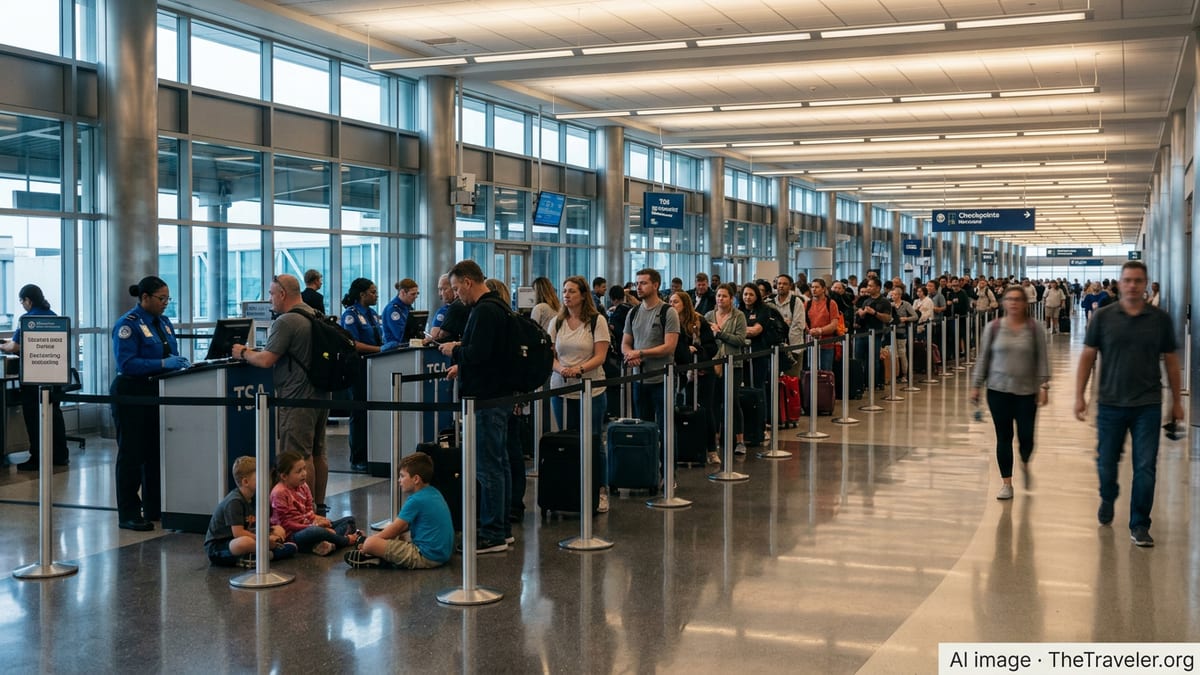
Three-Hour Lines Turn Spring Break Travel Into an Ordeal
On Sunday, March 8, wait times at some U.S. airport security checkpoints ballooned to around three hours, according to airport officials and federal data, snarling the start of the busy spring break period. At Houston’s Hobby Airport, travelers reported lines snaking well past airline check-in counters and looping through terminal corridors as security processing slowed to a crawl.
Local outlets in Houston described “monstrous” queues at Hobby, with airport authorities warning that Transportation Security Administration staffing levels were fluctuating from shift to shift because of the shutdown. Passengers posting on social media said they had missed flights despite arriving at the airport more than two hours early, while others described scenes of families picnicking on the floor in security lines that barely moved.
Nearby George Bush Intercontinental Airport also urged passengers to arrive significantly earlier than usual, cautioning that TSA throughput could vary dramatically during the day. Officials there projected about 2.2 million passengers moving through Houston’s airports during the March 5 to March 16 spring break period, a three percent increase over last year, magnifying the effect of even modest staffing gaps.
The strain has not been limited to Texas. In New Orleans, Louis Armstrong International Airport warned of extended delays amid what officials described as a wave of unscheduled absences and sickouts by security officers. Informal reports from travelers suggested that lines there were routinely pushing beyond two hours during peak times, forcing airlines to delay some departures as they waited for passengers stuck at checkpoints.
Shutdown Leaves TSA Screeners Working Without Pay
The immediate cause of the turmoil is the ongoing lapse in funding for the Department of Homeland Security, which has left the TSA operating without its normal appropriation. Roughly 50,000 front-line airport security screeners are categorized as essential personnel and are therefore required to report for duty, but they are currently receiving only partial pay or no pay at all.
Union representatives say that reality is taking a mounting toll on the workforce, particularly at already understaffed airports. Officers facing rent, childcare and other bills are picking up temporary side jobs or calling in sick to search for paid work, contributing to absenteeism spikes that are directly reflected in checkpoint performance. At several hubs, only a subset of available lanes have been open during busy morning and evening banks.
The current disruption comes on the heels of a 43-day government shutdown in late 2025 that also affected aviation security. In testimony to lawmakers last month, TSA’s top official said that more than a thousand transportation security officers quit during the earlier standoff, a more than 25 percent jump in departures compared with the same period a year earlier. That attrition has left the agency entering this latest funding crisis with less margin for error.
Security experts warn that repeated shutdowns could have a lasting impact on the TSA’s ability to recruit and retain qualified screeners for one of the most critical roles in the U.S. travel system. With private-sector employers raising wages in a tight labor market, the prospect of working unpaid through periodic political standoffs is making the job harder to sell.
Suspended Trusted Traveler Programs Compound Delays
Adding to the frustration for frequent travelers, key trusted traveler programs that normally help thin out lines have been curtailed as the shutdown drags on. The Department of Homeland Security has announced pauses or cutbacks in processing for TSA PreCheck and Global Entry, and some airports have reported intermittent closures of PreCheck lanes as staffing is consolidated.
That means many passengers who are accustomed to shorter, faster-moving security queues are suddenly funneled into standard lines. At airports where PreCheck users once represented a sizable share of throughput, the shift has effectively shifted a heavy load back onto the regular lanes, intensifying backups for everyone.
The patchwork nature of the disruptions has created confusion. In some major hubs, PreCheck remained open during certain hours but was shuttered at others, catching travelers off guard. Airline agents and airport social media feeds spent the weekend fielding a steady stream of questions from passengers trying to determine whether their usual expedited options were available before they set out for the airport.
Industry groups say the loss of predictability is especially damaging for business travelers and families planning complex itineraries with tight connections. With security processing times now swinging widely based on time of day, location and staffing, travel advisors have begun recommending domestic flyers treat every trip as if they were traveling at the height of a holiday weekend.
Airlines and Airports Scramble to Contain the Fallout
Faced with growing lines and fraying tempers in terminals, airports and airlines have moved quickly to implement damage-control measures. In Houston, airport managers deployed additional customer service staff to manage crowd flow, answer questions and help reroute late-arriving passengers to later flights when possible. They also opened overflow queuing areas to keep backed-up lines from blocking concourses and concessions.
Carriers, meanwhile, have been issuing flexible rebooking waivers for some affected airports, allowing travelers to shift flights without penalty when security delays make their original plans infeasible. Several airlines have quietly urged customers to avoid tight connections through the most impacted hubs and to build in longer buffers between flights.
However, there is only so much the private sector can do to mitigate a problem rooted in federal staffing and funding. While airlines can adjust schedules and airports can tweak layouts, only the TSA can operate the screening equipment that stands between passengers and the secure side of the terminal. That constraint has led some aviation analysts to warn that, if the shutdown persists, carriers may be forced to reduce peak-hour departures at the worst-hit airports simply to align with what checkpoints can reliably process.
The broader economic ripple effects are also becoming harder to ignore. Trade associations representing hotels, attractions and destination marketers say they are already fielding reports of travelers canceling or shortening trips because of uncertainty over airport conditions, an ominous sign with peak spring and summer seasons on the horizon.
Travelers Adjust Plans as Uncertainty Grows
For now, passengers are adapting in real time. Social media feeds from airports around the country are filling with advice from recent travelers, many of whom recommend arriving at least three hours before departure for domestic flights at large hubs and even earlier for international journeys. Some report shifting to first flights of the morning in hopes of beating the worst of the midday bottlenecks.
Others are exploring alternatives to flying altogether for shorter distances, choosing to drive or take trains where feasible rather than risk missing events, cruises or nonrefundable reservations. Travel agents say demand for nonstop flights, which eliminate the risk of missed connections, has spiked in the past week even when those itineraries come at a premium.
Despite the frustration, most travelers interviewed in terminals expressed sympathy for unpaid TSA officers on the front lines of the disruption. Many described officers as professional but visibly exhausted, juggling stepped-up workloads and tense interactions while shouldering their own financial uncertainty.
With Congress still deadlocked over a deal to restore full funding, there is little clarity on how long the current wave of airport disruption will last. Until there is a breakthrough in Washington, officials warn that security lines will likely remain unpredictable from one airport and one day to the next, leaving travelers to build caution and extra time into every trip.