

More news on this day
Security lines topping three hours at some U.S. airports are the most visible sign yet of the ongoing Department of Homeland Security shutdown, as Transportation Security Administration staffing strains collide with the start of spring break travel.
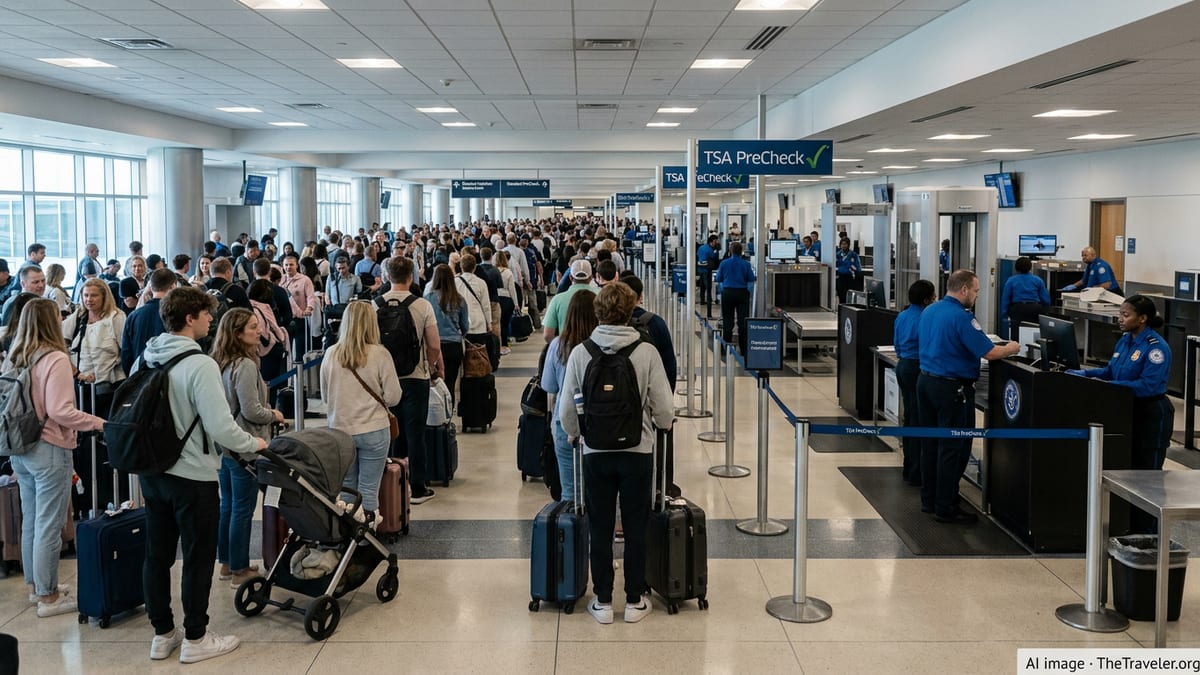
How the DHS Shutdown Is Disrupting Airport Security
The current funding lapse for the Department of Homeland Security, now in its third week, has forced the agency to keep tens of thousands of TSA officers on the job without pay while curtailing overtime and some ancillary services. That combination is beginning to ripple through airport security checkpoints nationwide, particularly at busy hubs and leisure gateways.
Unlike a full federal shutdown, core airport security operations continue, but the system is operating with less flexibility. Sick calls, staff burnout and limits on overtime are leaving some checkpoints thinly staffed at peak hours. Internal briefings circulated late last week warned that financial strain on front line personnel could translate into higher absenteeism and longer passenger queues if the stalemate in Washington continues.
Airports and airlines had signaled concern for days that the funding impasse would collide with the spring break surge. Over the weekend, those fears materialized at several major stations as TSA struggled to keep all lanes open and to redeploy staff quickly enough to absorb sudden waves of travelers.
Where Lines Are Longest Right Now
Houston’s William P. Hobby Airport has become the flashpoint of the crisis, with reported TSA waits reaching about three hours on Sunday afternoon. Photos shared by passengers showed queues snaking out of the security hall and into the parking structure as airport social media accounts repeatedly ratcheted up their guidance, first advising travelers to arrive early, then three to four hours ahead, and finally four to five hours before departure.
Across town at George Bush Intercontinental Airport, wait times have been more variable, ranging from near normal to extended delays depending on the time of day. Local officials cautioned that conditions could change quickly from shift to shift as staffing fluctuates and peak travel periods hit.
New Orleans’ Louis Armstrong International Airport also reported “longer than average” lines attributed to a shortage of TSA agents tied to the shutdown. Travelers there have been urged to arrive at least three hours early for domestic flights, with social media posts warning that delays as long as two hours at the main checkpoint are possible during busy stretches.
Industry analysts note that while the most extreme backups are concentrated at a handful of airports, the underlying pressures are national. Smaller and mid sized airports may see more modest queues, but many are operating with less redundancy than usual, meaning that even a small disruption can cascade into significant delays.
Why Wait Times Are Rising So Quickly
Several factors are combining to push TSA wait times sharply higher. First is the basic arithmetic of staffing. With DHS operating under a shutdown, TSA is constrained in how much overtime it can authorize, and some part time workers are facing scheduling uncertainty. At the same time, officers working without pay are absorbing their own financial stress, which experts say can affect morale and increase the likelihood of unscheduled absences.
Second, the shutdown has temporarily disrupted trusted traveler programs at some locations. Earlier in the funding crisis, DHS moved to suspend new enrollments and renewals for TSA PreCheck and Global Entry, and several airports have reported intermittent closures of PreCheck lanes. When frequent travelers who normally clear security in minutes are forced into standard lines, it adds volume to checkpoints that are already stretched.
Finally, timing is amplifying the impact. The early March period marks the start of spring break for many U.S. school districts and universities, when leisure travel typically spikes. Load factors on popular routes to and from sun destinations are already high, leaving little slack in airport infrastructure. When those fuller flights meet reduced staffing flexibility, even routine hiccups such as secondary screening or a bag recheck can add minutes that quickly compound across a long line.
What Travelers Should Do Before Heading to the Airport
Travelers flying this week are being urged to build in significantly more time for security screening, especially if they are departing from airports that have already reported long lines. Houston’s Hobby Airport is advising passengers to arrive four to five hours before departure, a window that may feel extreme but reflects the three hour waits documented on Sunday. In New Orleans, local guidance is generally three hours for domestic flights and even earlier for international departures.
Even where lines have not yet reached those levels, travel planners recommend adding at least one extra hour beyond what you would normally allow for TSA. That buffer is particularly important for early morning and late afternoon departures, when business travelers, vacationers and connecting passengers often converge at the checkpoints.
Experts also emphasize the importance of monitoring conditions in real time. The official MyTSA mobile app provides historical and crowd sourced wait time estimates, while many airport operations centers now push live queue updates through their own apps and social media feeds. Because conditions can change rapidly, checking both your airline’s notifications and your departure airport’s alerts on the morning of travel can help you decide whether to leave even earlier than planned.
Once at the airport, passengers can help speed the process by being fully prepared for screening. That means keeping identification and boarding passes ready, packing liquids and electronics so they can be removed quickly if required, and wearing easily removable shoes and minimal metal items. While these steps will not solve structural staffing shortages, TSA officials say they can shave precious seconds off each screening and reduce the chances of bottlenecks at the x ray belts.
How Long Could the Disruptions Last?
The outlook for relief hinges largely on negotiations in Washington. Lawmakers remain locked in a dispute over immigration and border enforcement provisions tied to the DHS appropriations bill, and there has been little public sign of a breakthrough in recent days. Each additional week without full funding compounds financial pressure on TSA officers and other Homeland Security personnel, raising concerns among union leaders about retention and fatigue.
Travel industry groups have stepped up pressure on Congress and the administration, warning that prolonged security delays could dent the broader economy during a year when U.S. tourism demand is expected to be robust. Airlines and airport operators are urging policymakers to prioritize stable funding for TSA, arguing that repeated shutdown threats undermine traveler confidence and complicate long range planning for infrastructure and staffing.
If the stalemate continues, transportation analysts caution that sporadic pockets of severe disruption could spread to more airports, particularly as peak spring break and early summer travel dates approach. In past shutdowns, some airports experienced temporary lane closures or partial terminal shutdowns when staffing levels fell too low to safely operate all checkpoints.
For now, travelers are advised to assume that today’s longer waits may persist for days, and to treat official guidance from their departure airports as a minimum rather than an upper bound. Until DHS receives full year funding and TSA can restore normal staffing patterns and trusted traveler services, security lines in parts of the United States are likely to remain longer, slower and less predictable than usual.