

Tsilivi Beach on the Greek island of Zakynthos is one of the Ionian’s most reliable all-rounders. A broad arc of golden sand, shallow turquoise water and a long waterfront of cafes, hotels and water sports centers make it a favorite with families, couples and anyone who wants an easy-going beach with plenty to do.
This guide walks through everything you need to know about swimming, water sports and the most family-friendly spots, plus practical tips to help you plan your day on the sand.
Getting Oriented: Where Tsilivi Beach Is and What to Expect
Tsilivi Beach, also known as Planos Beach, sits on the northeast coast of Zakynthos, roughly 5 kilometers north of Zakynthos Town. The resort has grown rapidly in recent years from a quiet village into one of the island’s main holiday hubs, second only to Laganas in size and nightlife, but it still feels more relaxed and family-focused than the party resorts in the south.
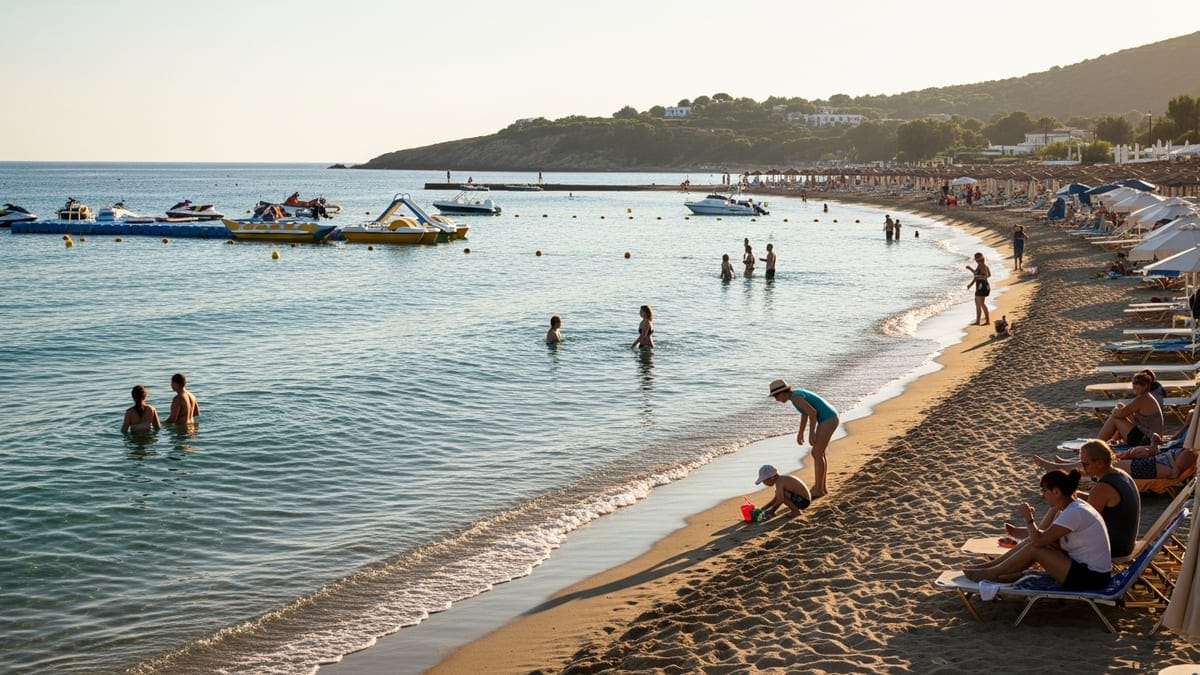
The main beach is a long, gently curving bay with fine golden sand and shallow, typically calm water. The shoreline is lined with hotels, beach bars and tavernas, with narrow access lanes and paths leading down from the main resort road. Behind the seafront, the town of Tsilivi stretches inland with accommodation, shops and restaurants, but the waterfront itself is dominated by low-rise buildings and clusters of sunbeds.
Tsilivi holds a Blue Flag for water quality and environmental management, a formal recognition that the sea is clean, facilities meet certain standards and the beach is regularly maintained. This, combined with the shallow gradient and lifeguard presence in high season, makes it particularly attractive for visitors looking for a safe swimming environment.
From Zakynthos International Airport, Tsilivi is about a 20 minute drive. Official taxis from the airport typically charge around 20 euros for the 9 to 10 kilometer trip, with shared shuttles and private minibuses also available for larger groups. Local KTEL buses run several times a day between Zakynthos Town and Tsilivi, with an indicative fare of about 2 euros each way, so it is realistic to stay elsewhere on the island and visit Tsilivi Beach for the day.
Swimming Conditions and Best Spots on the Sand
Swimming is the main reason most people come to Tsilivi Beach. The bay is sheltered and the seabed slopes very gradually, so you can often walk for tens of meters before the water reaches chest depth. This long, shallow shelf keeps the sea warmer than on more exposed stretches of coast, and the water temperature is usually comfortable for swimming from May through October.
In the central section of the beach, in front of the larger hotels and organized beach clubs, you will find the fullest range of services and the most people. Here, the sand underfoot is soft and fine, ideal for beach games and paddling. The shallow water lends itself to gentle activities like tossing a frisbee, playing paddleball or simply floating, and even on days when light winds pick up there is rarely a strong swell.
If you prefer a slightly quieter swim, walk toward either end of the bay. At the eastern side, near the rocky headlands, the seabed may have patches of pebbles but the water can feel a little clearer and there is often more space between sunbeds. To the west, where the coastline starts to curve toward neighboring beaches and small coves, you can sometimes find small, semi-organized stretches with fewer businesses and a more low-key feel.
Most of the beach is organized, with rows of sun loungers and umbrellas belonging either to independent operators or to nearby bars and restaurants. Renting a set of two sunbeds and an umbrella typically costs in the region of 7 to 15 euros per day, depending on location and the standard of the establishment. Some venues may waive or reduce the fee if you order food and drinks. There are also pockets of free beach where you can lay down your own towel and umbrella, especially around the transitions between one business and the next.
Water Sports, Boat Trips and Active Fun
Tsilivi is one of the liveliest water sports hubs on Zakynthos. Along the central section of the beach you will find operators offering a full menu of activities, including jet skis, water skiing, wakeboarding, banana and other inflatable rides, pedal boats, stand-up paddleboards and parasailing. The calm bay is an advantage here, especially for first-timers who might be nervous about choppy conditions.
Prices vary from operator to operator and depend on the length of the ride or rental, but you can expect short banana rides and other inflatables to be among the more affordable thrills, while parasailing and jet skiing will be at the higher end. It is common practice for centers to display prices on boards along the beach; staff are usually happy to explain options and any safety requirements before you commit.
Beyond fast-paced thrills, there are more relaxed ways to get onto the water. Pedal boats are widely available, some equipped with slides that drop directly into the sea, which children in particular tend to love. Kayaks and stand-up paddleboards allow you to explore the coastline at your own pace, especially early in the morning or late in the afternoon when the sun is less intense and the water is glassy calm.
Tsilivi is also a launch point for boat trips around Zakynthos. Local excursion companies and small-boat captains promote trips to the famous Shipwreck Beach (Navagio), the Blue Caves and the marine park in the south where you can look for caretta-caretta loggerhead turtles. Some tours collect guests directly from the beach by small transfer boat, while others depart from nearby ports but are sold through the offices and kiosks scattered along the main street and seafront.
Family-Friendly Facilities, Play Areas and Tsilivi Waterpark
Tsilivi has built much of its reputation on being welcoming to families. The combination of a long, shallow beach, accessible facilities and a compact resort layout makes it easy for parents to manage a beach day without feeling overwhelmed. Many seafront tavernas and cafes are used to hosting guests with children and offer kids’ menus, high chairs and shaded seating close to the sand.
On and off the beach, you will find small playgrounds attached to hotels and restaurants, mini-golf courses and game arcades that keep younger visitors occupied once they tire of the water. In the evening, the main street becomes a relaxed promenade where families stroll, browse souvenir shops and stop for ice creams. Unlike in Laganas, nightlife in Tsilivi is vibrant but not usually excessively loud along the family-oriented stretches, and many bars focus on live music or sports screens rather than late-night clubbing.
A major attraction for families is Tsilivi Waterpark, located a short walk or quick shuttle ride from the main hotel clusters. The park features a dedicated shallow area for young children with water toys, small slides and splash features, along with larger slides such as multi-lane racers, a Black Hole and a Turbolance-style chute for older children and adults. There is also a lazy river and sunbed areas for parents who prefer to supervise from a distance.
Tsilivi Waterpark operates seasonally, generally opening in May and running through the main summer months. Facilities include lifeguards, changing rooms, showers, lockers, first-aid, snack bars and a main restaurant-bar. For many families, combining a morning on the beach with an afternoon at the waterpark, or vice versa, creates a balanced day of both natural and structured water play.
Safety, Accessibility and Practical Tips
Tsilivi’s Blue Flag status indicates a commitment to cleanliness and safety, but it is still important to observe standard seaside precautions. In high season there are lifeguards stationed on key sections of the beach during the day, typically between late morning and early evening. Always swim within the designated areas and pay attention to any colored flags that indicate changing sea conditions.
The shallow gradient can sometimes create a false sense of security. While waves are usually small, offshore winds can occasionally pick up, especially in the afternoon. Inflatables, including lilos and toy boats, can drift quickly if pushed beyond the swim zone, so supervising children closely remains essential. For anyone with sensitive feet, a pair of light sea shoes can be useful, particularly near the edges of the bay where pebbles or occasional rocks appear.
Accessibility along the beach varies. Many of the larger seafront hotels, such as those directly on the sand, have ramps, accessible toilets and level access from their properties to the sunbed areas. However, independent visitors may still encounter uneven paths, short flights of steps or soft sand that can be challenging for wheelchairs or strollers. Checking with your chosen accommodation in advance about specific access routes to the beach can prevent surprises on arrival.
Public facilities such as showers and toilets are scattered along the shore, sometimes operated by individual businesses and sometimes more public in character. If you are using the sunbeds or buying food and drinks from a particular bar or restaurant, you will normally have access to their restrooms and, in some cases, basic changing areas. Carry small change in euros for any pay toilets or for lockers at the waterpark, and bring a light cover-up to move comfortably between beach and village streets.
Eating, Drinking and Beachfront Atmosphere
Food and drink are a major part of the Tsilivi Beach experience. The seafront is lined with tavernas offering classic Greek dishes, from grilled fish and seafood to moussaka, souvlaki and salads. Many restaurants have open terraces that overlook the sand, allowing parents to linger over a meal while children play in the shallows within sight.
Beach bars and cafes provide lighter fare such as sandwiches, snacks, smoothies and cocktails, along with coffee and cold drinks throughout the day. During the hottest hours, these shaded spots become social hubs where visitors escape the sun, use the Wi-Fi and watch sports on television. In the late afternoon, the mood softens as people gather to enjoy the changing colors over the sea, and some bars transition to a more lounge-like, music-led atmosphere without tipping into a full party scene.
If you prefer a quieter or more local-feeling meal, stepping one or two streets back from the beachfront often leads to smaller tavernas and family-run restaurants. Prices here can be slightly lower than on the prime waterfront, and the ambience more traditional. It is common for wait staff to welcome families warmly, and early diners in the evening will usually find plenty of space both indoors and on outdoor terraces.
For self-caterers, Tsilivi has several supermarkets, bakeries and fruit shops within walking distance of most accommodations. Stocking up on bottled water, fresh fruit and simple picnic ingredients can keep beach days flexible and help manage costs, especially for larger groups. Just remember to dispose of rubbish responsibly or take it back with you to help maintain the cleanliness standards that underpin the beach’s Blue Flag recognition.
Getting To and Around Tsilivi Beach
Reaching Tsilivi Beach is straightforward whether you are based in the resort or elsewhere on Zakynthos. If you are staying in Tsilivi itself, many hotels and apartments are within a short walk of the sand, often down small lanes that emerge between buildings directly onto the beach. The fairly compact layout means that it rarely takes more than 10 to 15 minutes on foot to reach the water from most parts of the resort.
From Zakynthos Town, the local KTEL bus connects to Tsilivi several times a day on weekdays. Current timetables typically show departures from town in the early morning, late morning and mid-afternoon, with corresponding return journeys later in the day. Tickets are inexpensive and can be purchased on board. Services may be reduced or altered outside the main tourist season, so it is wise to confirm the latest times locally once you arrive on the island.
Taxis are plentiful both in Zakynthos Town and in Tsilivi, with a dedicated taxi rank and firms offering 24-hour service. For visitors arriving by air, a straightforward taxi ride from the airport is often the easiest option, especially if you are traveling with children or luggage. Pre-booked transfer services and shuttle buses are also widely available through hotels and tour operators, offering fixed prices and, in some cases, child seats on request.
Car and scooter rentals are another flexible way to reach Tsilivi and explore the island. The roads between Zakynthos Town and Tsilivi have been improved but can still be narrow and twisting in sections. Parking near the beachfront can be tight in high season, so aim for earlier arrival if you are driving and be prepared to walk a short distance from your car to the sand. Driving also gives you the chance to combine a Tsilivi beach day with visits to nearby villages, viewpoints and other beaches further along the coast.
The Takeaway
Tsilivi Beach delivers a classic Greek island formula with a distinctly family-friendly twist. The combination of a spacious, sandy bay, shallow and usually calm water, ample facilities and a lively but not overwhelming resort atmosphere makes it one of Zakynthos’s most versatile strands. Whether your priority is safe swimming for children, high-energy water sports or simply an organized beach with everything close at hand, it is difficult to go wrong here.
With thoughtful planning you can tailor Tsilivi to your style. Base yourself in a seafront hotel and drift between pool, beach and taverna, or visit on a day trip using the bus network or a rental car from elsewhere on the island. Mix unhurried mornings in the shallows with an afternoon at Tsilivi Waterpark, or book a boat trip to explore the better-known sights of Zakynthos before returning to the reliable comforts of the resort.
Above all, Tsilivi Beach succeeds because it is easy. Everything you need is within walking distance, from sunbeds and showers to snacks and excursions. The water is forgiving for less confident swimmers, the town is accustomed to families and first-time visitors, and the infrastructure is developed without completely overpowering the natural appeal of the bay. For many travelers, that balance makes Tsilivi the beach they keep coming back to whenever they return to Zakynthos.
FAQ
Q1. Is Tsilivi Beach suitable for young children and non-swimmers?
Yes. The water remains shallow for a long distance from the shore, the sea is usually calm and there are lifeguards on duty in high season. This makes it a comfortable option for young children, older travelers and anyone who prefers to stay where they can stand.
Q2. When is the best time of year to swim at Tsilivi Beach?
The main swimming season typically runs from May to October, when sea temperatures are warm and most facilities are open. July and August are the busiest months, with the liveliest atmosphere, while May, June, September and early October tend to offer a quieter feel and slightly cooler but still pleasant water.
Q3. How much do sunbeds and umbrellas cost on Tsilivi Beach?
Prices vary depending on the operator and location, but as a guide many sets of two sunbeds and an umbrella cost around 7 to 15 euros per day. Premium beachfront venues or areas attached to upscale hotels may charge more, while some tavernas reduce or waive the fee if you eat or drink with them.
Q4. What kinds of water sports are available?
Tsilivi offers a broad range of water sports, including jet skiing, water skiing, wakeboarding, parasailing, banana and other inflatable rides, pedal boats, kayaks and stand-up paddleboards. Activities are generally bookable directly with the centers along the beach, often without the need to reserve far in advance.
Q5. Is Tsilivi Beach accessible by public transport?
Yes. Local KTEL buses connect Zakynthos Town and Tsilivi several times daily on weekdays, with a journey of around 15 to 20 minutes. Tickets are inexpensive and can be bought on board. Timetables can change seasonally, so it is advisable to check current schedules once you arrive.
Q6. Are there changing rooms and showers on the beach?
Basic shower facilities are available at several points along Tsilivi Beach, often attached to beach bars and restaurants. Many establishments also provide toilets for customers and some have simple changing areas. Dedicated public changing cabins are less common, so some visitors change at their accommodation or use sarongs and towels.
Q7. Can I visit Tsilivi Waterpark from the beach area without a car?
Yes. Tsilivi Waterpark is located within the resort and is accessible on foot from many hotels and apartments. From the main beachfront strip it is usually a short walk or a brief taxi ride, depending on where you are staying. The park is signposted around town and hotel receptions can provide directions.
Q8. What should I bring for a day at Tsilivi Beach?
Essentials include sunscreen, hats, swimwear, a light cover-up, water or reusable bottles, and any personal medications. Sea shoes can be useful but are not essential for most of the sandy central bay. Families often appreciate bringing small beach toys, floatation aids for children and a dry change of clothes for after swimming.
Q9. Is Tsilivi noisy at night if I stay near the beach?
The seafront has a lively evening atmosphere, with music from bars and restaurants, but it is generally more relaxed and family-oriented than the party zones in Laganas. Noise levels depend on the exact location of your accommodation. If you are sensitive to sound, consider choosing a hotel slightly set back from the busiest strip or request a room facing away from the main road.
Q10. Can I combine Tsilivi with other beaches and attractions on Zakynthos?
Very easily. From Tsilivi you can join boat trips to Shipwreck Beach, the Blue Caves and the marine park, or drive to other beaches such as Alykes, Alykanas or the southern bays. The resort’s central position, bus connections and plentiful rentals make it a convenient base for broader exploration while still enjoying the comforts of a well-organized beach each day.