

More news on this day
Weather disruptions and staffing challenges at Tucson International Airport on March 8 have triggered a fresh wave of delays and cancellations, leaving travelers stranded from Arizona to major U.S. hubs including Atlanta, Houston and Dallas as airlines work to rebuild fragile weekend schedules.
Chain Reaction From Tucson to Major U.S. Hubs
By Sunday afternoon, Tucson International Airport had reported at least four delayed departures and seven cancellations, according to airline and flight-tracking data, a modest number on paper that nevertheless proved enough to disrupt tightly wound spring break schedules. With many Tucson flights serving as feeders into major national hubs, each disruption translated into missed connections and rolling delays across the network.
Connections through Atlanta, Houston and Dallas were among the hardest hit. Several Tucson departures bound either directly for these hubs or for cities that funnel into them faced weather holds, crew timing issues and ground delays, compounding disruption already affecting the Southeast and Texas due to storms and heavy traffic.
For travelers, the impact was immediate. Passengers who had planned same-day connections to cities across the Midwest and East Coast reported being rebooked for late-night or next-day departures, while others were advised to overnight in hub cities as airlines struggled to find spare aircraft and rested crews.
Weather Turbulence Across Texas and the Southeast
The trouble at Tucson came as parts of Texas and the Southeast were already dealing with volatile weather and operational constraints. In Houston, officials at George Bush Intercontinental warned of FAA ground delays and longer-than-usual waits as wind, rain and hail moved through the region, stretching departure and arrival banks and forcing airlines to slow the pace of operations.
Dallas-area airports were still recovering from Saturday storms that prompted temporary ground stops and hundreds of delays, leaving aircraft and crews out of position ahead of Sunday’s schedules. That created a difficult backdrop for Tucson-originating flights that rely on Dallas Fort Worth and Dallas Love Field to move passengers onward to smaller regional markets.
Farther east, Atlanta Hartsfield Jackson, the country’s busiest hub, continued to manage residual congestion tied to earlier thunderstorms and high traffic volumes heading into spring break. Even relatively short weather holds in Atlanta translated into late inbound aircraft for Tucson services, setting off a familiar pattern of late turns and missed crew connections.
Stranded Passengers Face Long Lines and Limited Options
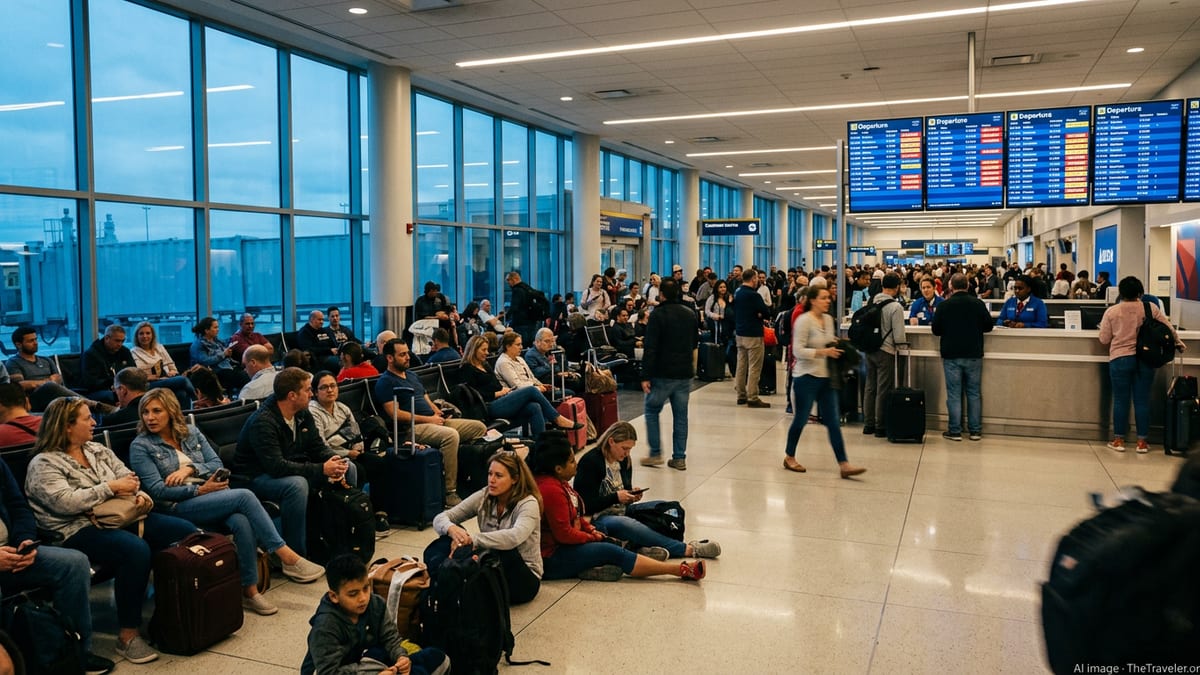
Inside Tucson International’s terminals, the weekend disruptions were most visible at departure gates and customer service desks. Lines for rebooking stretched down concourses at peak times on Sunday, as travelers sought alternative routings through any hub that still had seats available. Agents juggled phone calls with other stations, trying to find space via Phoenix, Denver, Los Angeles and Las Vegas when direct connections through Texas and the Southeast were no longer viable.
Families heading out on long-planned spring break trips were among the most affected. With resort stays and vacation rentals locked to specific dates, even a single-day delay meant lost nights at the destination and rearranged plans. Some passengers chose to rent cars and attempt long overnight drives from Phoenix or other nearby airports rather than wait for the next available flight.
Airlines operating from Tucson offered standard disruption support, including hotel and meal vouchers in limited cases, but many travelers reported that available rooms near key hubs quickly filled. Those arriving late into Atlanta or Houston often faced the choice of sleeping in terminal seating areas or paying out of pocket for scarce hotel space farther from the airport.
Airlines Adjust Schedules as Spring Break Begins
Sunday’s turmoil unfolded just as the U.S. air travel system moves into one of its busiest periods of the year. With spring break traffic ramping up across multiple regions and a partial federal government shutdown stretching TSA staffing in some cities, carriers have little slack to absorb weather shocks or staffing gaps without knock-on effects.
At Tucson, airlines trimmed frequencies and consolidated lightly booked flights in an effort to restore schedule integrity by late Sunday and early Monday. Some early-morning Monday departures were proactively delayed or retimed to allow aircraft repositioning from affected hubs, a tactic intended to avoid another day of cascading cancellations.
Industry analysts note that secondary airports such as Tucson often feel the strain of nationwide disruptions more acutely. When storms or staffing issues hit major hubs, carriers typically prioritize maintaining mainline trunk routes, which can mean regional and mid-sized city flights are among the first to be cut or combined. That can leave travelers in places like Tucson with fewer same-day alternatives when things go wrong.
What Travelers Should Do If Their Flight Is Affected
With delays and cancellations still possible into the night across the southern United States, airlines and airport officials are urging travelers to check their flight status frequently and build in additional time for check-in and security screening, particularly at busy hubs in Texas and the Southeast. Same-day schedule changes have become common as carriers respond to evolving weather and air traffic control restrictions.
Passengers whose flights are delayed or canceled are being encouraged to use airline mobile apps and text alerts where available, which can often process rebookings faster than in-person counters. For those already at the airport, customer service desks remain an option, but lines can grow quickly when multiple flights are affected at once.
Travel experts suggest that anyone with a tight connection through Atlanta, Houston or Dallas over the next 24 hours consider earlier departures or alternative routings where possible. As Tucson’s disruptions ripple outward, a small amount of extra planning could make the difference between a smooth start to spring break and an unplanned night in a crowded terminal.