

More news on this day
TUI is ramping up capacity for Summer 2026, responding to record early demand with 68 additional flights and ten thousand new seats to leading Mediterranean beach resorts and holiday destinations across Europe.
Get the latest news straight to your inbox!
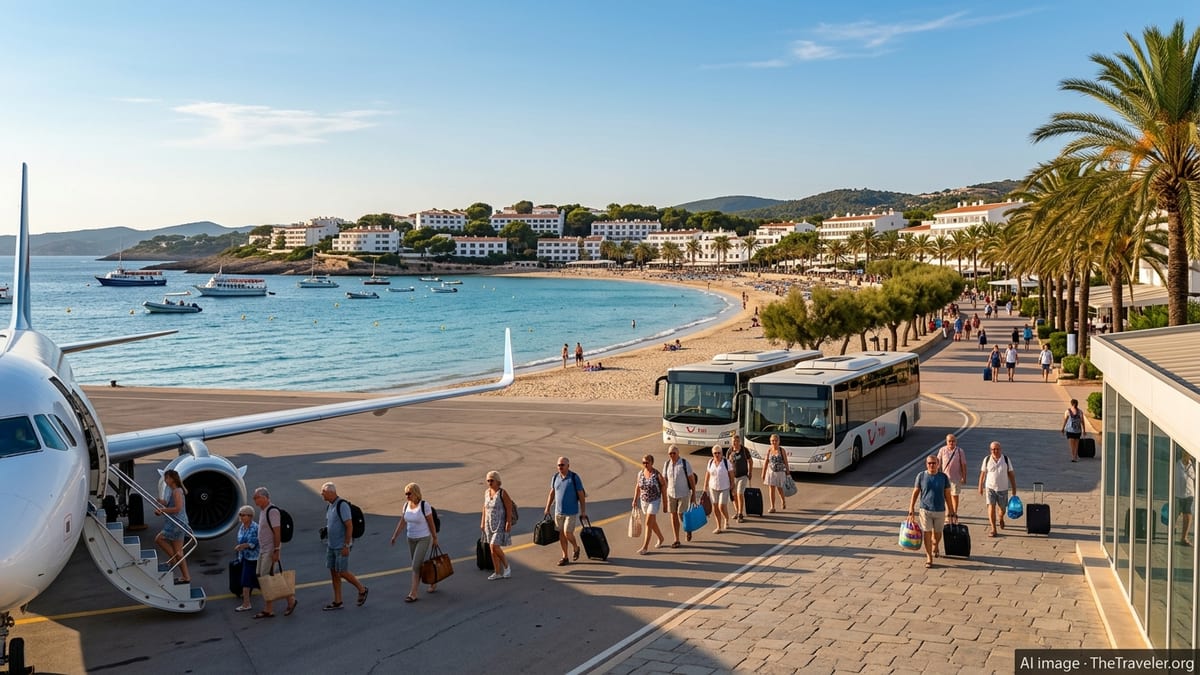
Record Demand Ahead of the 2026 Peak Travel Season
Publicly available trading updates and industry coverage indicate that TUI is entering Summer 2026 on the back of consecutive record financial years and strong pre-bookings across its key European markets. Booked revenue for 2026 is reported ahead of the previous year in both the United Kingdom and Germany, with demand focused on short and medium haul leisure routes to the Mediterranean.
Across Europe, tourism volumes are tracking at or above pre-pandemic highs, with Spain, Italy, France, and Germany collectively accounting for hundreds of millions of overnight stays. This broader backdrop of robust travel appetite is feeding directly into tour operators’ order books, creating pressure on capacity for popular school holiday periods and peak summer weeks.
For TUI, the Mediterranean remains the core of its summer portfolio. Recent company reports highlight Greece, the Balearic Islands, Türkiye, mainland Spain, the Canaries, Egypt, and Cape Verde as standout performers in both completed seasons and forward bookings. The decision to deploy 68 extra flights and thousands of additional seats into Summer 2026 schedules is framed as a response to this sustained momentum rather than a short-term spike.
Industry analysts note that the pattern of early bookings for 2026, particularly out of Germany, mirrors or exceeds earlier record years. This is especially apparent for classic sun-and-sea destinations, where package holidays and charter flights remain a preferred option for families and cost-conscious travelers seeking price certainty amid fluctuating airfares.
Germany, Spain, and Greece Dominate Holiday Choices
Germany is emerging as a particularly powerful engine of demand for TUI’s Summer 2026 program. Trade-focused reports on the German market describe “spectacular” early bookings, with Mediterranean escapes featuring prominently in customer preferences. Greece, Türkiye, Egypt, and Italy appear among the top choices, joined by perennial favorites in Spain and the Balearics.
Spain’s tourism sector has itself set new records, welcoming tens of millions of international visitors in 2025 and underscoring its position as one of the world’s most visited destinations. Germany and the United Kingdom remain among the largest source markets for Spanish resorts, feeding high demand for seats into coastal gateways such as Mallorca, the Costa del Sol, and the Canary Islands. TUI’s added flights are expected to lean heavily on these routes to ease pressure on peak departure dates.
Greece continues to rank among the top Mediterranean destinations for travelers from Western Europe, supported by strong brand recognition of islands such as Crete, Rhodes, Kos, Corfu, and Zakynthos. Research from Greek tourism bodies and European trade associations consistently places Greece in the top tier of summer choices, particularly for German and British package holiday customers. TUI’s capacity increases for Summer 2026 align closely with these trends, directing more seats toward Greek island airports and mainland coastal resorts.
In parallel, the wider Mediterranean is capturing a growing share of demand from value-driven travelers. Türkiye, Egypt, and parts of Italy are highlighted in TUI’s own reporting as benefitting from customers seeking all-inclusive products and competitive pricing compared with some eurozone hotspots. Additional flights into these markets are expected to support both new hotel openings and expanded partnerships with existing resort brands.
New Capacity Targets Beach Resorts and Family Holiday Hotspots
The 68 extra flights and ten thousand additional seats are being deployed to reinforce TUI’s core short and medium haul network rather than to pioneer entirely new long-haul destinations. Available information suggests that the bulk of the extra capacity will be focused on high-frequency leisure routes from northern and western Europe to Mediterranean beach resorts, especially during school holidays and shoulder weeks in June and September.
In practical terms, this means more departures from key source markets such as Germany and the United Kingdom to high-demand resort regions, including the Balearic and Canary Islands, coastal Spain, Greek islands, and established Turkish Riviera hubs. The objective is to smooth out bottlenecks where specific dates, such as late July and early August, have historically sold out quickly or commanded significant price premiums.
For families, the extra capacity may translate into a broader choice of departure airports and times on peak travel days. TUI has a history of adjusting flight programs to match demand at regional airports, and published schedules for earlier seasons indicate a willingness to upgauge aircraft or layer in additional rotations where bookings justify it. The 2026 expansion appears to follow this pattern, prioritizing routes where sell-out risk is highest.
Resort operators across the Mediterranean have been gearing up for another busy summer, adding room inventory and amenities to capture returning and first-time visitors. TUI’s move to increase seat capacity supports this investment cycle, helping hotels and local tourism businesses maintain high occupancy while offering customers more flexibility on length of stay and midweek versus weekend travel patterns.
Implications for Pricing, Availability, and Sustainability
The addition of 68 flights and ten thousand seats is expected to have a moderating effect on prices at the very top of the season, although industry observers caution that overall travel costs remain higher than before the pandemic due to fuel, wage, and airport fee increases. More capacity during peak weeks can reduce the likelihood of last-seat surcharges, but strong demand means that early booking remains advisable for travelers targeting specific resorts or school-holiday windows.
For TUI, the incremental flights also help protect market share in an increasingly competitive landscape where low-cost carriers and other tour operators are aggressively chasing the same Mediterranean leisure travelers. By locking in extra capacity, the group aims to secure more package holiday bookings that combine flights, hotels, transfers, and excursions under one contract, a model that can be attractive for budget planning and financial protection.
At the same time, the rapid return to record tourism volumes has revived debates about environmental impact and overtourism in fragile coastal communities. TUI and other large operators have highlighted investments in more efficient aircraft, better load factors, and curated excursions designed to spread visitor flows beyond the most crowded hotspots. Industry reporting suggests that a growing share of Mediterranean product is being marketed with an emphasis on responsible travel, from supporting local suppliers to encouraging off-peak travel.
While the extra flights for Summer 2026 will inevitably add to overall aviation emissions, some analysts point out that consolidated charter operations to large resorts can be more efficient on a per-passenger basis than fragmented point-to-point travel. The extent to which capacity growth can be reconciled with climate goals remains a central question for European tourism policy as demand continues to rise.
Travelers Face a Busy but Well-Supplied Summer 2026
For holidaymakers in Germany, Spain, the United Kingdom, and other European markets, TUI’s capacity expansion signals a busy but relatively well-supplied peak season ahead. Extra seats to the most sought-after Mediterranean destinations should provide more choice on travel dates, lengths of stay, and resort combinations, particularly for families and groups booking traditional package holidays.
Published coverage of booking trends for Summer 2026 suggests that Greece, Spain, and Türkiye will once again headline the season, with strong showings from Egypt, Italy, and island destinations across the Balearics and the Canaries. Within this landscape, TUI’s 68 additional flights are a tactical adjustment, designed to capture outsized demand while reinforcing the company’s position as a dominant player in European leisure travel.
As airlines and tour operators finalize their schedules, airports across Germany, Spain, Greece, and neighboring countries are preparing for another year of heavy passenger flows. Investments in terminal upgrades, digital check in, and ground handling are intended to ease congestion, but travelers are still being encouraged to allow extra time at key hubs during the busiest weekends.
With pre-bookings for many beach resorts already strong, industry observers expect the Summer 2026 travel season to test the capacity of airlines, hotels, and local infrastructure across the Mediterranean. TUI’s decision to deploy dozens of extra flights and thousands of seats is one of the clearest signals yet that the appetite for sun, sea, and sand holidays shows little sign of cooling.