

More news on this day
TUI Airline has expanded its next-generation narrowbody fleet with the delivery of a second Boeing 737 MAX 8 under a lease from global aircraft investment manager ABL Aviation, a move designed to bolster the carrier’s operational reach while cutting fuel burn and emissions across key leisure routes.
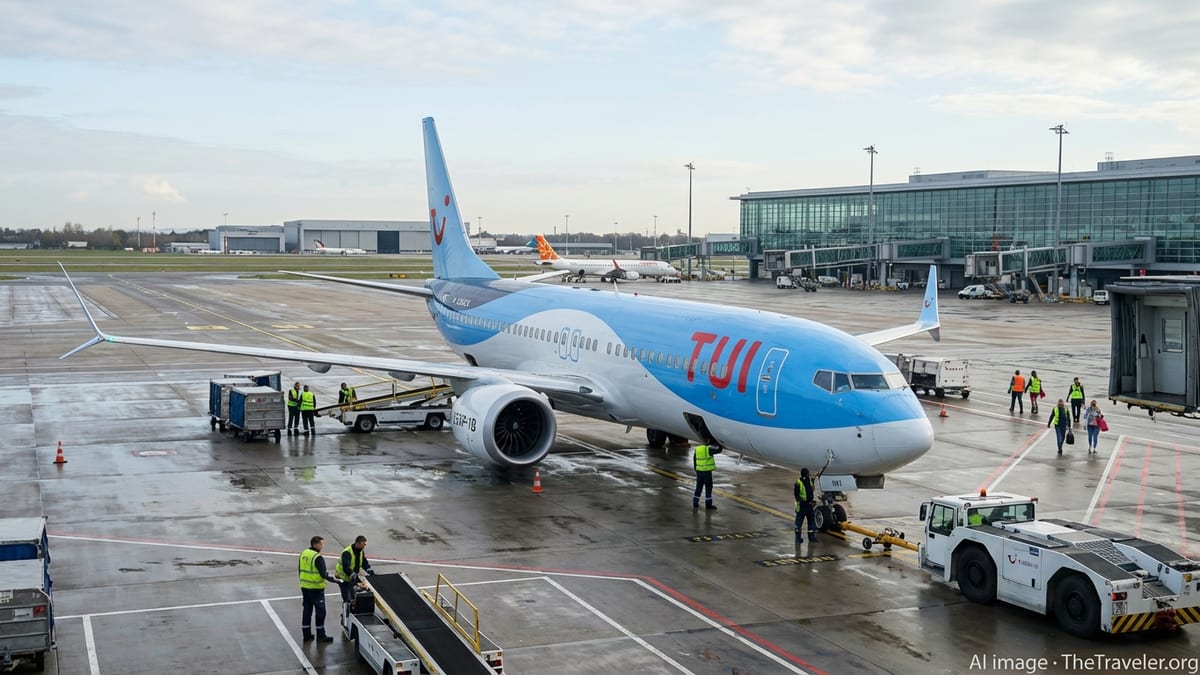
Strategic Lease Deepens Partnership Between TUI and ABL Aviation
The latest aircraft joins TUI’s growing 737 MAX 8 fleet as part of a broader renewal strategy aimed at phasing in more efficient narrowbodies across its European airlines. ABL Aviation, which has been steadily increasing its portfolio of new-technology aircraft with top-tier carriers, structured the transaction as a long-term operating lease tailored to TUI’s seasonal demand profile and network growth plans.
For ABL Aviation, the second placement with TUI underlines its role as an active player in the European leisure segment at a time when tour operators are seeking flexible financing options to support capacity growth. The lessor has emphasized its focus on aircraft that combine strong residual value prospects with clear environmental advantages, positioning the 737 MAX 8 as a core asset type in its global mandate.
The deal also reflects a wider trend in the post-pandemic market, where airlines continue to rely on sale-and-leaseback and operating lease structures to secure aircraft without committing large amounts of balance sheet capital. By pairing TUI’s scale and network with ABL Aviation’s access to institutional funding, both sides are aiming to capture renewed demand for package holidays across Europe, North Africa and the Eastern Mediterranean.
Boost to Network Flexibility and Seasonal Capacity
The arrival of the second 737 MAX 8 is expected to enhance TUI Airline’s operational reach on high-density leisure routes, particularly from key source markets such as Germany, the United Kingdom, the Netherlands and Belgium. With its extended range and higher fuel efficiency compared with previous-generation 737-800s, the aircraft gives planners more flexibility to schedule longer sectors and optimize aircraft rotations during peak summer months.
TUI’s tour-operator model relies on the ability to ramp capacity quickly in line with holiday demand, while maintaining tight control over unit costs. The 737 MAX 8’s lower fuel burn and improved economics per seat support that objective, helping the airline to deploy additional frequencies to popular destinations or open marginal routes that become viable with more efficient aircraft.
The added capacity also strengthens TUI’s resilience against operational disruptions. With a larger pool of common-type aircraft, the group can more easily swap units across its various airline subsidiaries, smoothing irregular operations caused by weather, air traffic control constraints or maintenance events. This multi-operator flexibility is central to TUI’s integrated model, in which flights, hotels and cruise products are sold as part of bundled holiday packages.
Eco-Friendly Advancements at the Core of Fleet Renewal
Environmental performance is a central pillar of the 737 MAX 8’s appeal for TUI and ABL Aviation alike. The type offers double-digit reductions in fuel consumption per seat compared with older narrowbodies, alongside lower carbon dioxide emissions and a quieter noise footprint on take-off and landing. These attributes are critical for operators serving noise-sensitive European airports and for meeting tightening emissions disclosure requirements.
For TUI, which has made public commitments to cut the carbon intensity of its operations, the steady introduction of new-technology aircraft is one of the most visible levers it can pull. The 737 MAX 8’s advanced CFM LEAP engines, aerodynamic improvements and cabin efficiency features all contribute to a reduced environmental impact on busy holiday routes that see consistently high load factors during the summer season.
ABL Aviation, meanwhile, has highlighted the sustainability profile of its portfolio as a competitive differentiator with investors. By backing aircraft like the 737 MAX 8, the firm can demonstrate alignment with environmental, social and governance criteria that are increasingly important for institutional capital providers. Placing a second MAX 8 with TUI strengthens that narrative while satisfying demand from an operator that has a clear pathway for deploying the aircraft efficiently.
Passenger Experience and Onboard Comfort Upgrades
Beyond operational and sustainability gains, the new aircraft is expected to bring a tangible uplift in passenger experience on TUI’s short and medium-haul network. The 737 MAX 8’s redesigned cabin, including modern overhead bins, quieter engines and contemporary lighting, offers a more comfortable environment for leisure travelers heading to sun and city destinations.
TUI has been progressively harmonizing its onboard product across its fleet, and the additional MAX 8 allows the group to offer more flights with its newest cabin standard. Features such as improved seat ergonomics, integrated power options and enhanced cabin ambience are key differentiators in a market where travelers are increasingly sensitive to comfort, even on flights of just a few hours.
The aircraft’s efficiency also supports competitive pricing. Lower operating costs can help TUI keep holiday package prices attractive while absorbing higher input costs in areas such as airport charges and labor. For customers, the combination of modern cabins and stable pricing can make scheduled flights with TUI’s airlines more compelling compared with low-cost rivals on overlapping routes.
Positioning for Growth in a Recovering Leisure Market
The second 737 MAX 8 from ABL Aviation arrives as the European leisure market continues to normalize after several volatile years. Demand for beach holidays and city breaks has remained robust, and airlines and tour operators have been rebuilding capacity to pre-crisis levels while fine-tuning their route maps to reflect shifting travel patterns.
TUI’s decision to deepen its commitment to the MAX 8 platform signals confidence in sustained demand and in the type’s long-term economics. With a substantial 737 MAX order pipeline across the group and ongoing training partnerships to support its crews, the airline is positioning itself to operate a leaner, more standardized fleet that can serve a wide geographic footprint efficiently.
For ABL Aviation, the transaction showcases its ability to execute cross-border deals involving new-technology aircraft with major European customers. As lessors compete to place their latest-generation assets, securing repeat business with an established leisure operator like TUI helps underpin utilization and supports future fundraising for additional investments in fuel-efficient fleets.