

More news on this day
TUI River Cruises has named British travel professionals Paula Burgess and Mark Sage as godparents of its new river vessel TUI Aria, pairing the ceremonial appointment with the launch of expanded European itineraries designed to capture growing demand for shorter, more flexible river cruise holidays.
Get the latest news straight to your inbox!
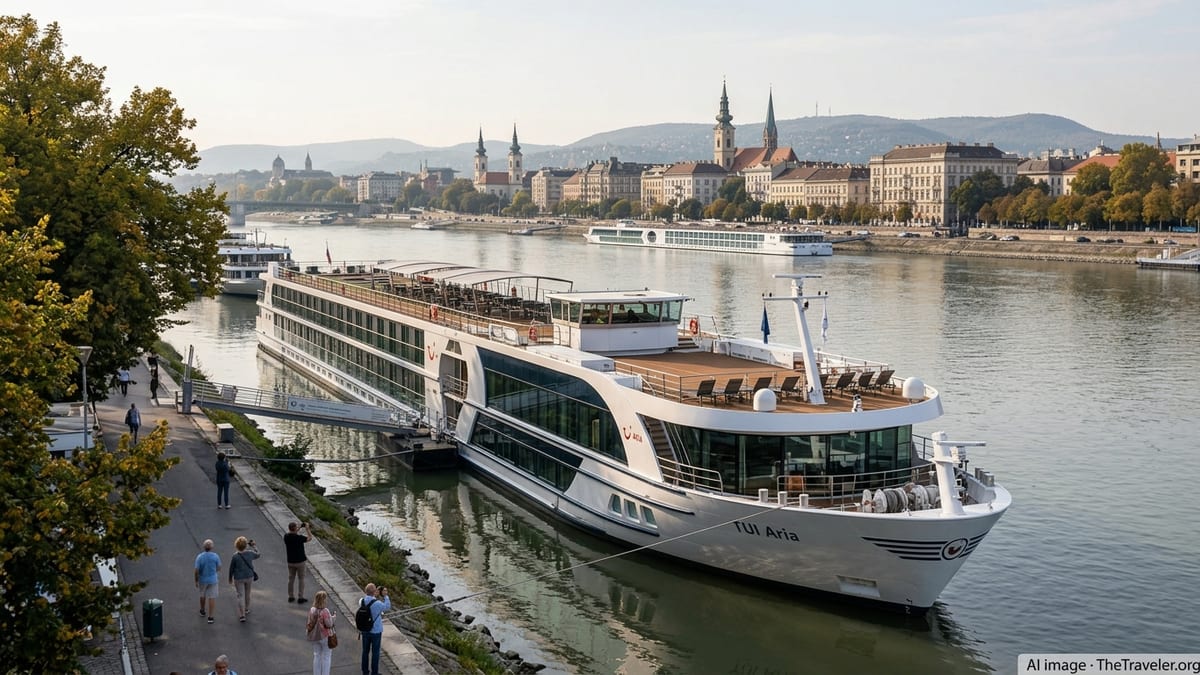
New Godparents For TUI’s Latest River Vessel
According to recent trade coverage, TUI River Cruises has selected Paula Burgess and Mark Sage as godparents for TUI Aria, the latest ship to join the company’s European river fleet. The appointment follows a common cruise industry tradition in which notable travel figures are chosen to symbolically bless a vessel and support its introduction to the market.
Publicly available information indicates that Burgess and Sage are well known within the United Kingdom travel trade, reflecting TUI River Cruises’ strategy of working closely with agency partners as it grows its dedicated river product. Their involvement with TUI Aria is being presented as both a ceremonial milestone and a signal of continued investment in the brand’s trade relationships.
The naming reinforces TUI’s broader effort to differentiate its river offering from its ocean cruise sister brands, focusing on contemporary interiors, relaxed onboard ambiance and itineraries aimed at both first-time and returning river cruisers. Industry reports suggest that the company views TUI Aria as a key platform for testing new routes and seasonal products across mainland Europe’s most popular waterways.
Expanded Focus On Danube And Rhine Itineraries
Recent river cruise program updates show that TUI is placing particular emphasis on the Danube and Rhine, two of Europe’s busiest and most competitive river corridors. Coverage in trade publications notes that TUI’s existing fleet has already begun expanding operations on these routes, with TUI Aria expected to reinforce that presence.
New itineraries are described as a mix of classic capital-to-capital cruises and shorter, regionally focused sailings that highlight cities such as Vienna, Budapest, Cologne and Amsterdam. The program is structured to appeal to travellers looking for cultural city breaks combined with the convenience of unpack-once river cruising, while still fitting into typical European holiday timeframes.
TUI’s approach places strong emphasis on seasonal variation, with routes tailored to spring tulip viewing in the Low Countries, summer cultural events along the Danube and autumn wine regions bordering the Rhine. Industry analysis suggests that this targeted seasonality is intended to maximise ship utilisation and broaden the product’s appeal beyond traditional, week-long sailings.
Shorter Festive And Winter Sailings Target New-To-River Guests
Trade reports from mid-2024 highlighted TUI River Cruises’ move into shorter four- and five-night festive cruises, particularly on the Danube and Rhine during the winter market. TUI Aria is expected to support this strategy, with program details pointing to itineraries built around central European Christmas markets and New Year city celebrations.
These condensed sailings are being positioned as an accessible entry point for guests who are curious about river cruising but reluctant to commit to longer itineraries. By combining popular seasonal events with the comfort of a river vessel, TUI aims to attract both couples and small groups seeking an alternative to land-based city breaks.
The winter routes also support a broader industry trend of extending the traditional river cruise season beyond the peak spring and summer months. Analysts note that operators increasingly view festive markets and off-season cultural experiences as effective tools for filling ships at times when European land tourism is typically quieter.
Competitive Landscape In Europe’s River Cruise Market
Europe’s river cruise sector remains one of the most crowded segments of the cruise industry, with long-established brands operating extensive fleets on the Danube, Rhine, Main and other major waterways. Published market guides and executive overviews list TUI River Cruises alongside a range of specialist operators and larger international groups competing for similar source markets.
Within this environment, the introduction of TUI Aria, supported by recognisable trade-facing godparents, is viewed as part of TUI’s effort to consolidate its position. The company is leveraging its wider brand recognition, package holiday expertise and distribution network to attract travellers who might otherwise choose city breaks, escorted tours or ocean cruises.
Observers of the sector note that river cruise customers are increasingly seeking flexible durations, clear pricing and immersive shore experiences rather than purely traditional coach excursions. TUI’s evolving itinerary design, as seen in the programming around TUI Aria, appears aligned with these preferences, blending classic sightseeing with opportunities for independent exploration in port.
What TUI Aria Signals For Future River Cruise Development
Industry commentary suggests that the launch of TUI Aria is likely to influence how TUI prioritises future ship deployments and refits across its river fleet. By testing new routes, shorter sailings and seasonal concepts, the company can adjust its offering in response to booking patterns and feedback from both guests and travel agents.
The appointment of Paula Burgess and Mark Sage as godparents underlines the importance of the trade channel in that process. Their association with the ship is expected to support promotional campaigns, familiarisation activity and wider awareness of TUI River Cruises’ evolving portfolio among frontline sellers.
More broadly, the developments around TUI Aria indicate ongoing confidence in the long-term prospects of European river cruising, despite increased competition and changing traveller expectations. As operators refine itineraries and product positioning, ships like TUI Aria are likely to serve as testbeds for innovations in onboard experience, shore programming and year-round deployment strategies.