

More news on this day
TUI Cruises has cancelled a series of Middle East repositioning voyages after the closure of the Strait of Hormuz and escalating regional tensions left two of its ships stranded in the Gulf, prompting widespread schedule changes and fresh uncertainty for cruise travelers worldwide.
Get the latest news straight to your inbox!
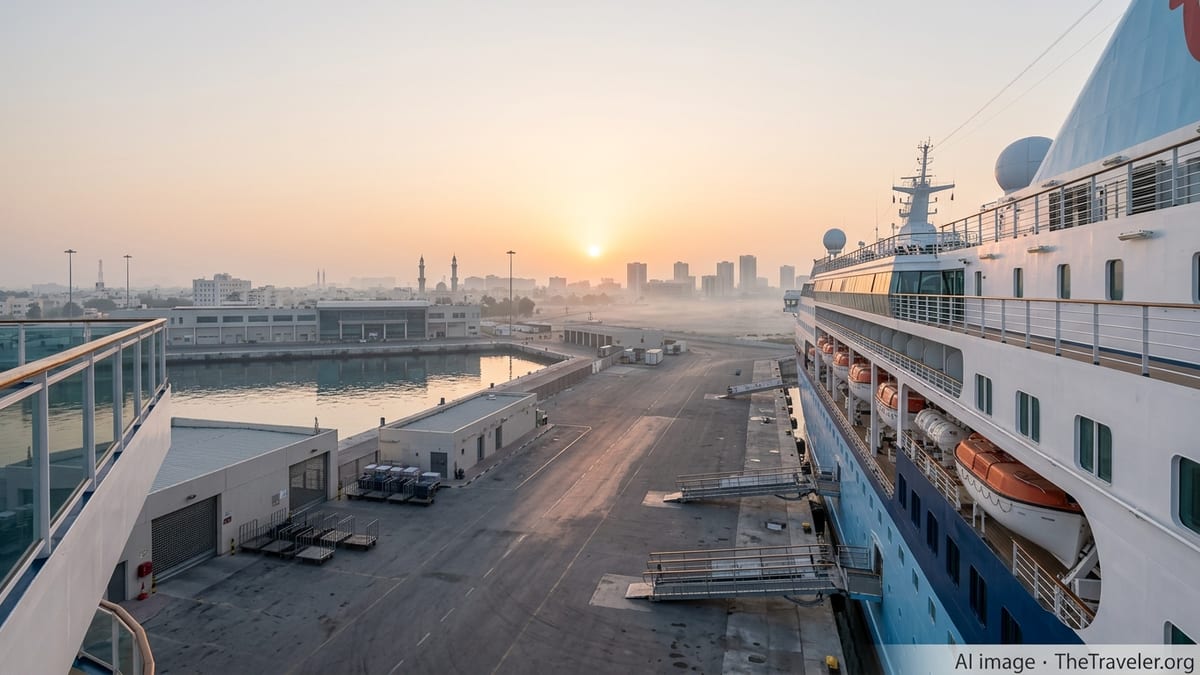
Middle East Crisis Forces Rapid Rethink of TUI Schedules
Publicly available information shows that the sudden deterioration in security around the Strait of Hormuz at the end of February 2026 has had a direct impact on cruise operations in the Gulf. TUI Cruises’ Mein Schiff 4 and Mein Schiff 5 became unable to exit the region once the key maritime corridor was effectively closed to cruise traffic and airlines began suspending or rerouting flights.
Reports indicate that TUI has since cancelled multiple upcoming Middle East departures, including sailings that were intended to mark the seasonal transition of its ships from the Gulf back to European homeports. Industry coverage describes thousands of passengers across several cruise brands facing last minute itinerary changes, voyage cancellations and complex journeys home as airlines and cruise lines work around restricted airspace and port disruptions.
The cancellations have turned what are usually popular end of season repositioning cruises into a flashpoint for the wider shock now rippling through global tourism. The Gulf has emerged over the past decade as a major winter hub for European cruise lines, meaning any long term operational disruption there has knock on effects for summer programs in the Mediterranean and Northern Europe.
Repositioning Voyages via Middle East Pulled Back
The current turmoil follows an earlier strategic shift by TUI Cruises away from repositioning routes that traverse the Red Sea and Bab al Mandeb. Coverage from late 2024 and 2025 already detailed the cancellation of three planned late 2025 repositioning cruises for Mein Schiff 4, Mein Schiff 5 and Mein Schiff 6 that would have crossed the Red Sea and called at Middle Eastern ports on their way between Europe and Asia, with the company citing security concerns and instead opting for longer routes around Africa and across the Indian Ocean.
Those earlier schedule changes were largely proactive, designed to avoid high risk areas while still preserving the fundamental repositioning pattern between summer and winter homeports. The latest cancellations, however, are reactive and driven by a fast moving crisis that has physically trapped vessels inside the Gulf. Published accounts note that, as a result, TUI has been forced not only to scrap Middle East sailings for affected ships, but to reexamine the timing and routing of the voyages that would eventually return them to Europe.
For travelers, the practical effect is that the traditional Middle East segment of many repositioning itineraries has been removed or substantially shortened. Instead of sailing through the Suez Canal or the Red Sea, ships in the Mein Schiff fleet have increasingly been redeployed to routes around the Cape of Good Hope or to alternative long haul segments that link European ports with African islands and Indian Ocean destinations.
Passenger Disruption and Compensation Options
Published coverage indicates that TUI Cruises is following established industry practice in its response to passengers affected by the cancelled repositioning and Middle East voyages. For itineraries that were cancelled in advance due to Red Sea and regional security concerns, the company is reported to be offering full refunds of cruise fares alongside credits of around 10 percent toward future bookings, giving guests a financial incentive to rebook once operations stabilize.
In the more acute situation created by the recent Strait of Hormuz closure, the focus has shifted from future discounts to immediate repatriation and welfare. Reports describe emergency flight operations being arranged to move guests from Gulf airports back to their home countries after sailings were cut short or abandoned. Onboard operations on the stranded ships have continued in a limited fashion, with entertainment and hospitality scaled to the unusual circumstances while guests await onward travel.
Travelers booked on upcoming voyages that would have relied on Middle East transit now face a patchwork of outcomes. Some cruises are being cancelled outright, while others may be retimed, shortened, or rerouted around Africa. Publicly available guidance from consumer organizations and travel media stresses the importance of monitoring direct communications from cruise lines and travel agents, as well as carefully reviewing revised terms around refunds, credits and alternative itineraries.
Global Tourism Ripple Effects Beyond the Gulf
The suspension of TUI’s Middle East repositioning voyages is already feeding into a wider rebalancing of global cruise deployment. Analysis from cruise industry publications highlights how decisions by one major operator can cascade across the sector, as ships are redeployed to avoid conflict zones and to protect core summer markets in Europe and other regions.
By diverting repositioning routes away from the Suez Canal and Middle East choke points, TUI and its competitors are lengthening transit times and consuming more operational days to move ships between seasonal bases. This places additional pressure on port calendars in alternative hubs such as Cape Town, Indian Ocean islands and Atlantic archipelagos, which may see increased calls as lines stitch together replacement long haul itineraries.
For destinations in the Gulf and the wider Middle East, the loss of repositioning voyages compounds the blow from the cancellation of regular winter cruises. Local tourism sectors that had invested heavily in cruise terminals, excursion infrastructure and hospitality capacity now face an uncertain timeline for recovery, with the resumption of large scale cruise operations likely to depend on both security assessments and the restoration of predictable air connectivity.
What Prospective Cruisers Need to Know Now
For travelers considering future TUI sailings that might normally include Middle Eastern ports or transit through the Suez Canal, the most important step is to assume continued volatility. Industry commentary generally advises that, for the time being, repositioning voyages routed via Africa and the Indian Ocean are more likely to operate as planned than itineraries relying on Middle Eastern corridors, given current geopolitical conditions.
Travel media and consumer advocates also recommend that guests booking long haul cruises in the current environment pay close attention to cancellation terms, force majeure clauses and the specifics of any future cruise credits on offer. Comprehensive travel insurance that explicitly covers itinerary disruption and conflict related cancellations can provide an additional safety net, although coverage conditions vary significantly by policy and jurisdiction.
As operators such as TUI Cruises adapt their deployment plans, travelers can expect to see more creative routing that emphasizes relatively stable regions while still offering extended, destination rich repositioning journeys. For now, however, the collapse of Middle East repositioning voyages has become a vivid illustration of how quickly global tourism patterns can be reshaped when a key maritime corridor closes, and why flexibility remains essential for anyone planning complex cruise itineraries.