

More news on this day
Tunisia’s tourism sector is entering a new expansion phase as European travel giant TUI accelerates its investments in the country, launching new hotel projects and packages that aim to convert record visitor numbers into long-term, higher-value growth.
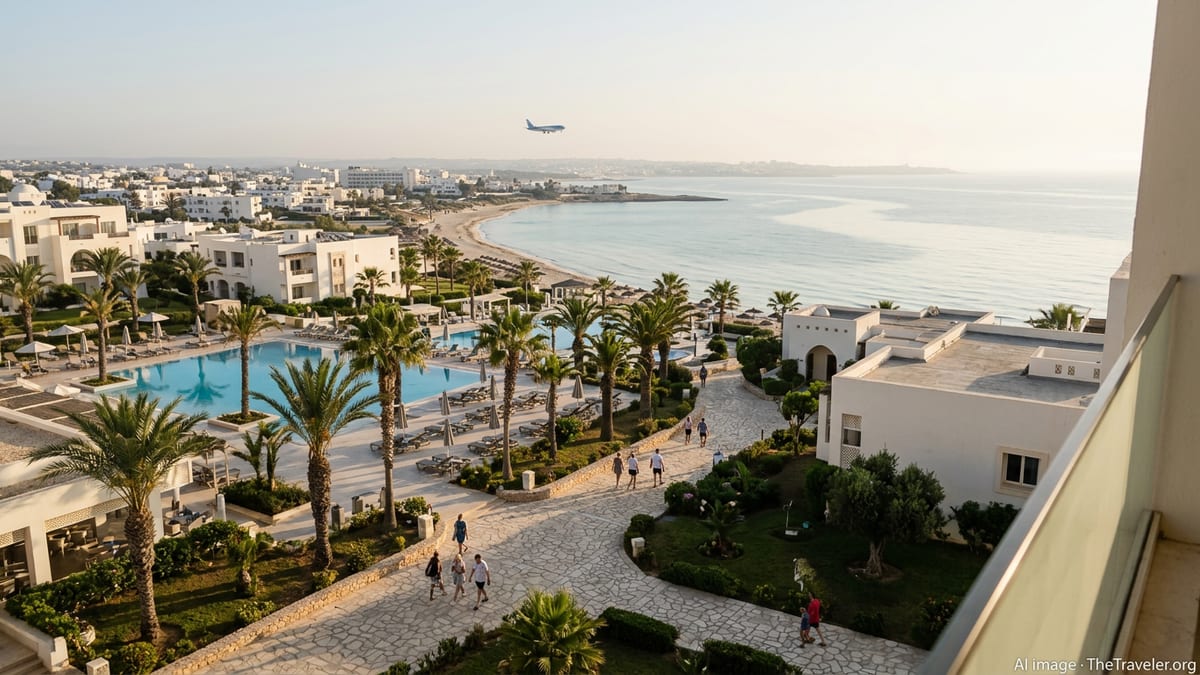
Tunisia Rides Record Visitor Wave Into New Growth Cycle
After several years of steady recovery, Tunisia has emerged as one of Africa’s tourism success stories, welcoming more than 11 million visitors in 2025 according to official figures. The milestone marked the strongest performance in the country’s history and underscored its return as a mainstream Mediterranean destination.
Tourism revenues reached the equivalent of billions of dollars in 2025, reinforcing the sector’s role as a pillar of the national economy and a major employer. Authorities say tourism and related services now account for close to a tenth of gross domestic product, while supporting hundreds of thousands of direct and indirect jobs across coastal and inland regions.
The performance has emboldened policymakers to position Tunisia as a year-round destination rather than a purely summer, sun-and-sea market. New branding efforts, including the “Tunisia Capital of Arab Tourism 2027” initiative, are being designed to extend stays, diversify products and attract higher-spending visitors from Europe, the wider Middle East and emerging Asian markets.
It is into this context of surging demand and renewed government ambition that TUI is advancing a strategic expansion, treating Tunisia as a core growth market in its wider African portfolio.
TUI’s Strategic Pivot: From Beach Charter Market to Integrated Tunisia Platform
TUI Group, already one of the dominant foreign players in North African tourism, has spent the past two years reshaping its presence in Tunisia from a classic charter operator to an integrated destination platform. The company has emphasized hotels and resorts as a primary growth engine, alongside its tour operating and airline activities.
In 2025 and early 2026, TUI ramped up its African pipeline, outlining plans for more than 20 new properties across the continent and confirming seven additional hotels in North, East and West Africa, including a desert resort in Tozeur in southwest Tunisia. These openings, combined with earlier investments on the country’s Mediterranean coast, lift TUI’s Tunisian portfolio into double digits, spanning beach, cultural and now Sahara-focused experiences.
The new investments are part of a broader strategy that has helped TUI lift its group earnings guidance on the back of record performance in hotels and cruises. Executives describe Africa, and North Africa in particular, as a “key growth frontier,” with Tunisia playing an increasingly central role thanks to its combination of established infrastructure, diversified source markets and competitive cost base.
For Tunisia, TUI’s repositioning means more than simply additional beds. The group’s vertically integrated model, linking tour operators, airlines, hotels and digital platforms, is expected to funnel greater volumes of packaged tourists directly into Tunisian resorts and circuits, while also improving average spend per visitor.
New Resort Projects Anchor Tunisia’s Tourism Diversification
The latest wave of TUI-backed projects in Tunisia is notable for its geographic and thematic spread. On the coast, new and rebranded beachfront resorts in areas such as Skanes are being tailored to family and value-conscious European travelers, with all-inclusive concepts, entertainment programs and kids’ facilities designed to compete head-on with rival destinations in Turkey and Egypt.
Inland, the development of a desert resort in Tozeur signals a push to diversify beyond the classic sea-and-sand offer. Set on the edge of the Sahara, the property combines resort-style comfort with excursions to oases, salt lakes and film locations, targeting adventure and experience-driven travelers who want more than a standard beach holiday.
Tunisia’s tourism authorities have long argued that the country’s future lies in leveraging its full geographic range, from Mediterranean beaches and historic medinas to southern desert landscapes. TUI’s new projects align closely with that vision, creating packaged itineraries that can mix coastal stays with cultural and nature-based side trips, lengthening stays and spreading economic benefits to less-developed regions.
Industry analysts say the shift also helps Tunisia move up the value chain. By adding differentiated product types and more upscale or lifestyle-oriented brands, the destination can attract visitors willing to spend more per night, while still preserving its reputation as a relatively affordable Mediterranean escape.
Competitive Pressures in North Africa Drive Scale and Innovation
Tunisia’s partnership with TUI is unfolding against an increasingly competitive North African backdrop. Morocco and Egypt have both posted record-breaking visitor numbers, investing heavily in air connectivity, high-profile attractions and global hotel brands. Tunisia, while smaller in absolute volumes, is under pressure to secure its market share and stand out in a crowded regional field.
The presence of a heavyweight like TUI brings scale advantages at a time when pricing and capacity in European outbound markets are under strain. By coordinating flight seats, hotel inventory and destination services across several North African countries, TUI can adjust capacity dynamically, shifting aircraft and marketing spend in response to demand trends and security perceptions.
For Tunisia, this integrated approach is a double-edged sword. On one hand, it helps ensure a stable pipeline of customers from key European markets such as France, Germany and the United Kingdom, even in periods of economic uncertainty. On the other, Tunisia must continuously upgrade quality, security and service standards to remain competitive against neighboring countries courting the same operator.
Officials and private stakeholders say that recent record arrivals suggest the strategy is working. But they also acknowledge that Tunisia will need sustained investment in infrastructure, training and product innovation to fully capitalize on TUI’s growing footprint and avoid competing purely on price.
Outlook: Airline Capacity, New Markets and Sustainable Growth
Looking ahead to 2026 and beyond, both Tunisian authorities and TUI are focused on unlocking new demand through improved air connectivity and targeted market development. Plans being advanced in Tunis include securing more direct long-haul and medium-haul routes, with particular attention to Asia, where outbound travel is expanding rapidly.
China has been identified as a strategic source market, with visitor numbers to Tunisia rising from a still modest base. Officials are working toward direct air links by 2026, complemented by promotional campaigns and partnerships with Chinese tour operators and digital platforms. Industry observers expect TUI and other European intermediaries to build combined itineraries that link Tunisia with other Mediterranean or African destinations favored by Asian travelers.
Sustainability is another pillar of the new growth model. TUI has highlighted energy efficiency, solar power and water management in several of its recent African properties, positioning these as part of a broader climate-conscious approach. Tunisia, heavily exposed to climate change and coastal erosion, is under pressure to ensure that tourism growth does not come at the expense of fragile ecosystems or local communities.
For now, the mood in the sector is optimistic. Record arrivals, rising revenues and a pipeline of new TUI-backed projects suggest that Tunisia is entering a pivotal phase in its tourism story. How effectively the country leverages this partnership to diversify, upgrade and future-proof its travel offer will help determine whether the current boom translates into lasting, inclusive growth.