

More news on this day
TUI Cruises has canceled a string of popular Arabian Gulf sailings on Mein Schiff 4 as escalating tensions around the Strait of Hormuz and wider Middle East security concerns disrupt cruise schedules and strain global travel networks.
Get the latest news straight to your inbox!
Popular Gulf Itineraries Abruptly Cut Short
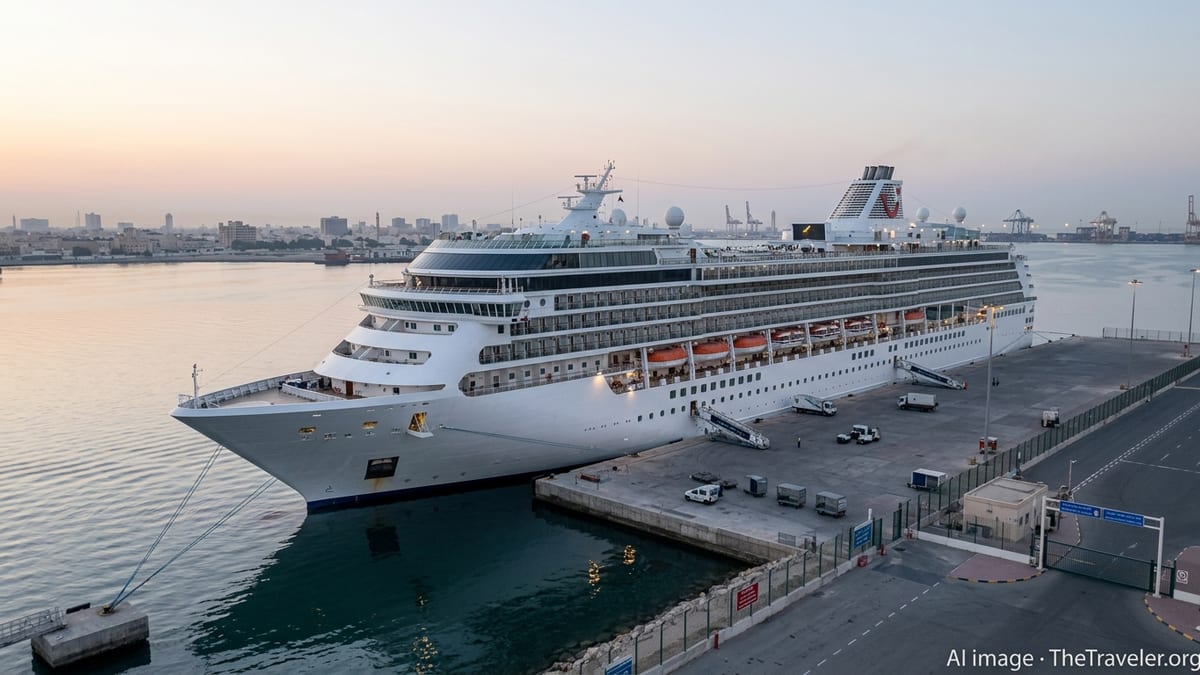
Published coverage indicates that TUI Cruises has halted several scheduled voyages for Mein Schiff 4 in the Arabian Gulf, including departures in early and mid-March 2026. The cancellations affect cruises that were due to sail roundtrip from ports such as Doha and Dubai, offering weeklong itineraries to destinations in the United Arab Emirates, Oman, Saudi Arabia and nearby Gulf states. Passengers expecting warm winter escapes, city breaks in Dubai and Abu Dhabi, and resort stopovers on islands like Sir Bani Yas are instead facing last minute changes to their travel plans.
According to cruise industry reports, at least four Mein Schiff 4 departures in the first half of March have been withdrawn, and additional voyages through March 23 have also been canceled as the situation deteriorated. The decisions follow a rapid escalation of regional tensions that left the ship unable to safely operate its planned routes. Mein Schiff 4, which has been a cornerstone of TUI Cruises’ Middle East program, is now effectively sidelined from the region for the rest of the published season.
Travel trade updates describe the affected sailings as part of a broader winter deployment that had been marketed heavily in Germany and other European source markets. Many itineraries sold on the promise of easy flight connections to Gulf hubs and predictable winter sunshine. The sudden interruption of those cruises highlights how quickly geopolitical shifts can overturn carefully planned tourism seasons, even in destinations that have invested heavily in cruise infrastructure and regional branding.
For travelers, the cancellations are especially disruptive because they come at the peak of the Gulf’s cruise window, when alternative voyages are already heavily booked. While TUI Cruises is offering rebooking options and refunds in line with regional consumer regulations, some affected guests are reporting limited like for like replacements due to the wider impact on cruise operations across the Middle East.
Strait of Hormuz Crisis Ripples Across Cruise Operations
The cancellations are closely tied to a fast moving security crisis around the Strait of Hormuz and adjacent Gulf waters. Publicly available information shows that strikes involving Iran, the United States and Israel, and subsequent retaliatory actions, have led to heightened military activity, intercepted projectiles and temporary airspace closures across parts of the region. The narrow waterway is a critical chokepoint for global energy flows and commercial shipping, and it is also the corridor cruise ships use to access several Gulf ports.
As the situation intensified, industry trackers reported that Mein Schiff 4 and its sister ship Mein Schiff 5 were among at least half a dozen large cruise vessels caught inside the Gulf when restrictions tightened. With the Strait effectively classified as a high risk zone and route planning constrained by insurance and security considerations, both ships were unable to complete their advertised itineraries. Cruise lines generally seek to avoid areas where commercial shipping faces elevated risk levels, and the recent events made it difficult to guarantee predictable and comfortable sailings for leisure travelers.
Analysts note that the crisis has had cascading effects far beyond cruise tourism. Airspace disruptions have forced airlines to reroute or cancel flights, complicating travel logistics for guests who rely on seamless air sea connections. Ports that had positioned themselves as regional cruise gateways are seeing reduced arrivals, while tour operators and shore excursion providers face sudden revenue shortfalls. Against this backdrop, TUI Cruises’ decision to cancel Mein Schiff 4 sailings has become one visible example of how security concerns in a strategic maritime corridor can reverberate across the broader tourism economy.
Beyond the immediate safety dimension, the situation has reignited debate about the vulnerability of cruise itineraries that depend heavily on narrow straits and geostrategic chokepoints. Industry commentators point out that while cruise lines routinely adjust routes for weather and operational reasons, prolonged geopolitical tensions can force deeper structural changes in deployment plans, including the temporary withdrawal of ships from entire regions.
Emergency Repatriation and Guest Care Measures
As Middle East tensions mounted in late February and early March, Mein Schiff 4’s sailings were interrupted while the vessel was in port in Abu Dhabi, according to multiple news and cruise tracking reports. With subsequent itineraries canceled and the ship unable to continue its planned program, TUI Cruises turned to large scale repatriation efforts to bring guests back to Europe. Public information from aviation and cruise industry coverage indicates that the company arranged special flights, including charter services and capacity on scheduled airlines, to move passengers from Gulf airports to German hubs such as Munich, Frankfurt and Cologne.
One widely reported example highlighted a dedicated Emirates flight from Dubai carrying several hundred guests from Mein Schiff 4 back to Munich. Additional charter flights and rebooked commercial services followed in the days after, forming a complex air bridge designed to unwind the disrupted cruise schedules. The use of multiple carriers and departure points reflects both the scale of the challenge and the constraints posed by temporary airspace restrictions over parts of the region.
Cruise and travel industry accounts describe guests remaining on board while flight plans were finalized, with onboard services maintained as far as operationally feasible. Such arrangements are consistent with established crisis management practices in the cruise sector, where ships can serve as secure, controlled environments when external conditions are uncertain. However, the unusual circumstances, including extended stays in port and staggered departures by air, underscore how significantly the crisis diverged from the expectations of a typical holiday cruise.
Observers say these repatriation operations are resource intensive, demanding close coordination among cruise operators, airlines and airport authorities at short notice. They also carry financial implications, as the lines typically cover transport, compensation and logistical support when itineraries are canceled for security reasons. The situation around Mein Schiff 4 illustrates the operational complexity that arises when a ship must be repositioned and guests repatriated in the middle of a season due to fast changing geopolitical risks.
Broader Impact on Middle East Cruise Seasons
The interruption of Mein Schiff 4’s program is part of a wider retrenchment of cruise activity in the Middle East as tensions escalate. Trade media reports that other major operators, including MSC Cruises and Celestyal Cruises, have also suspended or curtailed their Gulf sailings, canceling the remainder of their current seasons. Ports that had anticipated regular calls from multiple ships now face a thinner schedule, affecting local tourism providers from tour guides and transport firms to hotels and retail businesses that depend on cruise passengers.
German tour operator Dertour Deutschland has publicly stated it is canceling package trips to a range of countries covered by updated travel advisories, including the United Arab Emirates, Saudi Arabia, Qatar, Bahrain, Oman, Jordan, Israel and Kuwait. These tour programs often feed passengers into Gulf cruises such as those operated by TUI, meaning that itinerary cancellations are compounded by reduced demand and logistical challenges on the land based side. For travel agents and consumers, the result is a patchwork of schedule changes, refund processes and rebooking offers that can be difficult to navigate.
Industry analysts suggest that the short term outlook for Middle East cruising is highly uncertain. While some operators may retain flexibility to resume limited sailings if conditions stabilize, the current environment encourages a cautious approach to forward deployment. For lines like TUI Cruises, which had built winter portfolios around Gulf sailings for ships such as Mein Schiff 4, planners may now accelerate alternative strategies, from extended seasons in the Mediterranean and Canary Islands to repositioning voyages that circumnavigate higher risk waters.
The disruption comes at a time when cruise companies are still fine tuning their global networks following the pandemic era slowdown and subsequent rebound in demand. Sudden geopolitical shocks add another layer of complexity to decisions about ship placement, fuel planning and shore side partnerships. The cancellations affecting Mein Schiff 4 highlight how vulnerable even well established regional programs can be when external risks escalate beyond a manageable threshold.
Future Itineraries Shift Away From Risk Hotspots
Looking beyond the immediate cancellations, there are early signs that TUI Cruises and other operators are rethinking how and where they deploy capacity that had been earmarked for Middle East routes. Earlier industry announcements already pointed to a trend of bypassing the Red Sea and adjacent conflict sensitive areas by sending ships along longer repositioning routes around southern Africa. Mein Schiff 4, for example, has been scheduled to use itineraries via ports such as Cape Town and island destinations in the Indian Ocean and Atlantic when moving between the Middle East and Europe.
Experts note that these longer routes, while costlier in terms of fuel and time, provide a measure of insulation from chokepoints that have become flashpoints for military and political tensions. They also allow cruise brands to market new combinations of destinations, offsetting some of the commercial downside of losing straightforward Gulf itineraries. For passengers, the trade off may involve more sea days and higher fares, but also the opportunity to visit less frequented ports in Africa and the Indian Ocean.
In parallel, itinerary planners are expected to lean more heavily on regions perceived as comparatively stable, such as the Mediterranean, Northern Europe and certain parts of the Caribbean. Ships like Mein Schiff 4 can be redeployed into these markets during shoulder seasons, reinforcing existing programs or introducing special event cruises that appeal to core German speaking clientele. Such shifts would continue an industry pattern in which cruise lines diversify their deployment to avoid overreliance on any single politically sensitive region.
For now, the canceled Gulf sailings of Mein Schiff 4 stand as a prominent example of how fast evolving Middle East tensions are reshaping cruise travel. As operators digest the operational lessons from emergency repatriations and route changes, the experience is likely to inform future risk assessments and contingency planning across the sector, with implications for where and how travelers cruise in the years ahead.