

More news on this day
Hundreds of TUI Cruises passengers who spent around two weeks stranded in the Middle East as conflict shut airspace and disrupted Gulf sailings are now finally making their way home, marking a fragile step toward normality after one of the most chaotic episodes the cruise industry has faced in the region.
Get the latest news straight to your inbox!
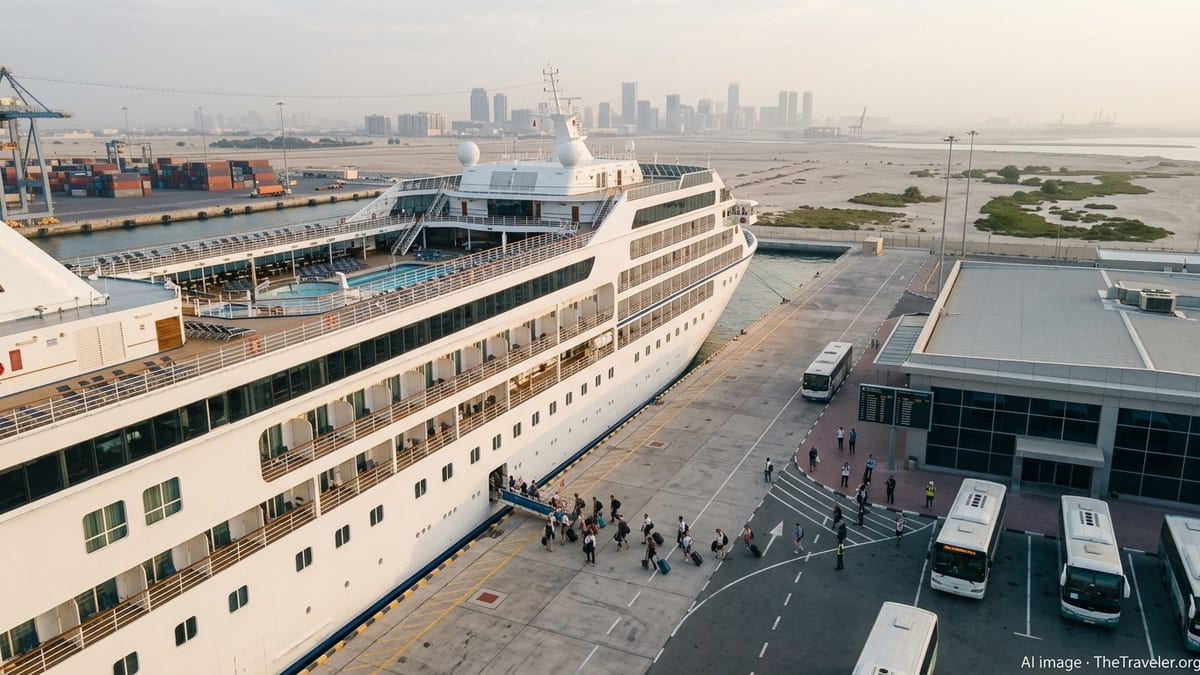
Cruise Holidays Thrown Into Chaos by Gulf Conflict
The disruption began in late February 2026, when rapidly escalating tensions involving Iran, the United States and regional allies led to military strikes and a sharp deterioration in security conditions across the Gulf. Published coverage of the unfolding Strait of Hormuz crisis describes airspace closures, heightened naval activity and warnings to commercial shipping, all of which combined to paralyze normal travel patterns in and out of key regional hubs.
TUI Cruises, which had deployed its Mein Schiff 4 and Mein Schiff 5 to operate winter Arabian Gulf itineraries from Dubai and Doha, saw its schedule unravel within days. Reports indicate that several voyages due to begin between 28 February and early March were cancelled at short notice as the company suspended operations in the region, citing the rapidly changing situation and limited options for safe onward travel for guests.
While cancellations affected future sailings, thousands of passengers were already in the Gulf aboard multiple cruise lines when the crisis deepened. Port calls were curtailed, itineraries frozen and ships remained alongside for extended periods as operators weighed security advice and waited for viable air corridors to reopen. For guests on the TUI ships, a planned week of winter sunshine quickly turned into an unexpected and lengthy stay on board, largely confined to ports such as Doha and Dubai.
Industry-focused reporting suggests that, at the peak of the disruption, around 15,000 cruise passengers across several brands were stuck in Gulf ports or nearby anchorages. TUI’s stranded guests formed a significant part of this total, with the company navigating the complex task of keeping passengers safe and comfortable while preparing large-scale repatriation efforts once flights could be secured.
From Extended Port Stays to Complex Repatriation Efforts
As the situation in the Middle East evolved, TUI Cruises shifted from itinerary management to crisis logistics. Publicly available information shows that the company paused further departures on Mein Schiff 4 and Mein Schiff 5 and moved to stabilize conditions for guests already on board. With airspace either closed or heavily restricted in several Gulf states, rapid repatriation was not possible, prolonging the stay of many passengers well beyond their scheduled disembarkation dates.
Reports indicate that TUI coordinated with partner airlines to piece together a patchwork of outbound flights as and when routes became available. In some cases, passengers were transferred by road between ports and alternative airports in neighboring states in order to access rare seats on departing aircraft. For travelers, the result was a disjointed and often stressful journey home, involving multiple legs and extended waiting times in hotels or onboard ship while arrangements were finalized.
Travel and maritime industry coverage describes similar challenges across the sector, with operators such as MSC Cruises and Celestyal also facing stranded ships and guests in the region. Against that backdrop, TUI’s efforts to return passengers home unfolded gradually, with small groups leaving first on early available flights, followed by larger waves of travelers once capacity improved and some airspace restrictions eased.
By mid-March, reports from European travel media and cruise outlets indicated that the majority of affected TUI guests had either reached home or were in transit, typically two weeks or more after their original return dates. For many, this brought an end to an unplanned extension that had transformed a conventional cruise into a prolonged stay in a region under significant geopolitical strain.
Passenger Experience: From Holiday Escape to Uncertain Waiting
Accounts gathered in public forums, social media posts and travel reporting describe a mood among passengers that evolved from initial confusion to a mix of frustration, anxiety and, in some cases, relief at simply being kept safe on board. With ships effectively turned into temporary hotels, guests saw shore excursions curtailed and normal port-hopping itineraries replaced by long days docked in a single location.
Cruise specialist publications note that onboard operations continued throughout, with entertainment, dining and basic services maintained as far as possible. For some travelers, this offered a degree of comfort and routine, even as news from the wider region remained troubling. For others, the lack of clarity about onward travel and the uncertainty around flight options overshadowed any sense of holiday atmosphere.
Families with work and school commitments back home appeared particularly affected by the extended delay, as did those with connecting travel or medical needs. Public posts from travelers reference frequent checks of airline apps, shifting departure times and repeated rebookings as routes opened and closed in rapid succession. In that environment, the eventual confirmation of a homebound flight became, for many, the defining moment of their trip.
Despite the stress, some commentary from passengers also highlights the efforts of shipboard staff, who continued delivering services under difficult circumstances. While individual experiences varied widely, the episode underscored how closely the cruise experience is tied to global transport and security dynamics that lie far beyond the control of guests or onboard crew.
Industry Fallout and Future of Gulf Cruise Itineraries
The prolonged stranding of TUI passengers and guests from other lines is likely to have a lasting impact on how operators approach Gulf and wider Middle East itineraries. Travel trade publications report that TUI has already halted its Arabian Gulf program for at least part of the season, cancelling additional sailings and working through compensation and rebooking options for future guests.
Analysts following the cruise sector suggest that cruise companies may now place greater emphasis on contingency routing, alternative homeports and flexible air arrangements when planning deployments in politically sensitive regions. The current crisis has also highlighted the vulnerability of cruise schedules to wider aviation disruption, with closed or partially closed airspace quickly rippling through to ship itineraries and passenger movements.
Regional tourism boards, which had invested heavily in promoting winter cruising as a pillar of their visitor strategies, are facing a setback. Reports from travel industry outlets note that port cities such as Dubai, Doha and Abu Dhabi may see a short-term dip in cruise visitor numbers and associated spending as operators reassess risk and guests weigh their appetite for itineraries in the region.
For TUI Cruises, the focus now appears to be on restoring confidence among passengers while absorbing the operational and financial impact of an extended disruption. Publicly available statements and reporting indicate that the line is reviewing future deployments and refining crisis protocols, aware that travelers will be looking closely at how effectively companies handled the return of those stranded for weeks in the Gulf.
Travelers Reconsider Risk as Cruise Lines Rethink Strategy
As TUI passengers arrive home and share their stories, the episode is feeding into a broader reassessment of travel risk among cruise customers. Commentary in European and international media suggests that some travelers may now gravitate toward itineraries perceived as more stable, at least in the near term, favoring regions such as the Caribbean or Northern Europe over destinations closer to current flashpoints.
Booking patterns for future seasons have yet to fully emerge, but travel agents quoted in coverage across the sector note rising numbers of questions about emergency procedures, repatriation plans and insurance coverage. The experience of those who spent two extra weeks in the Gulf is likely to sharpen demand for clear information on how operators will respond if routes are suddenly blocked or flights grounded.
At the same time, industry observers point out that cruising has historically shown resilience in the face of regional crises, often rebounding once conditions stabilize and memories of disruption fade. For destinations along the Arabian Gulf, much will depend on how quickly security conditions improve and whether travel corridors can be reliably reopened and maintained.
For now, the return of TUI’s stranded guests marks the closing chapter of the most acute phase of this particular crisis. Yet the images of cruise ships idled in Gulf ports, and of passengers boarding long-delayed flights home after weeks of uncertainty, are likely to remain a touchstone in future debates about where and how the global cruise industry chooses to sail.