

More news on this day
TUI Cruises has cancelled its upcoming Arabian Gulf sailings for the remainder of the 2025–26 winter season, a move that is rippling through tourism economies in Dubai, Abu Dhabi, Doha and other regional ports as cruise ships withdraw amid heightened security risks and complex airspace restrictions.
Get the latest news straight to your inbox!
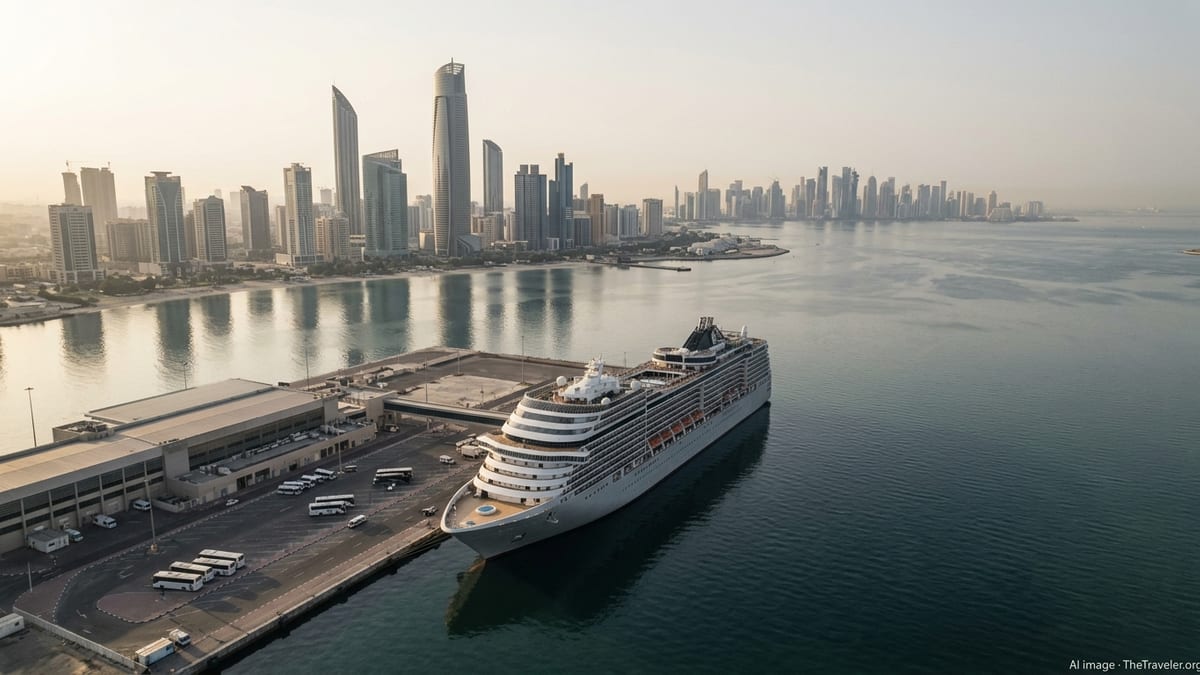
What TUI Has Cancelled in the Arabian Gulf
According to recent industry coverage, German-based TUI Cruises has halted its Middle East deployment for winter 2025–26, withdrawing itineraries that had centered on roundtrip voyages from Dubai and Doha and included calls in Abu Dhabi, Oman and other Gulf destinations. The decision follows weeks of disruption after regional tensions, partial airspace closures and maritime security concerns left multiple cruise ships unable to operate normally in the Persian Gulf.
Reports indicate that the move affects two key ships in the Mein Schiff fleet that had been based in the region for the season, Mein Schiff 4 and Mein Schiff 5. Both vessels were initially scheduled to operate a series of seven night “Orient” cruises featuring marquee city stops such as Dubai, Abu Dhabi and Doha, as well as smaller ports including Khasab and Muscat. Schedules published earlier in the year showed departures stretching into early 2026, underscoring how abruptly the outlook has changed.
Industry news outlets note that TUI Cruises joins a growing list of brands, including MSC Cruises and Saudi based Aroya Cruises, that have opted to curtail or cancel their Gulf seasons as conditions have deteriorated. Cruise-focused publications describe a cascading effect in which operators first adjusted individual voyages, then progressively removed entire seasonal programs as risk assessments were updated.
Immediate Impact in Dubai, Abu Dhabi and Doha
The withdrawal of TUI sailings represents a significant setback for Dubai, Abu Dhabi and Doha, which have invested heavily in cruise terminals, waterfront infrastructure and pre and post stay tourism products aimed at winter sun travelers from Europe. Local and regional media previously highlighted the growing role of cruise arrivals in feeding hotel bookings, shopping districts and attractions during the cooler months, when Gulf cities typically see their highest visitor volumes.
With TUI Cruises and other operators scaling back, publicly available port call data suggests a sudden gap in expected passenger throughput for late winter 2025–26. Thousands of guests who would have embarked or disembarked in Dubai, Abu Dhabi or Doha are now seeking alternative plans, which could translate into fewer overnight stays, reduced spend in restaurants and malls, and lower demand for tours ranging from desert safaris to city sightseeing.
In Abu Dhabi, reports on crew movements show that Mein Schiff 4 has been laid up with operations paused while staff are gradually repatriated. Meanwhile, coverage of ship tracking indicates that Mein Schiff 5 remains off Doha under similarly uncertain circumstances. These disruptions highlight how quickly the Gulf’s cruise turnaround ports have shifted from expansion mode to managing an unexpected downturn.
Why Security Tensions Are Disrupting Cruise Plans
The decision by TUI Cruises to cancel Middle East sailings is unfolding against the backdrop of wider regional instability that has affected both maritime and air routes. Publicly available information on recent developments in and around the Strait of Hormuz and the Red Sea describes a tightening security environment, with incidents involving commercial vessels prompting many operators to avoid key chokepoints.
Travel industry reports note that partial closures or restrictions in regional airspace have complicated the logistics of flying passengers and crew into and out of Gulf hubs. For cruise lines that rely on complex turnarounds with charter flights and tightly timed embarkation windows, these uncertainties can quickly make a season commercially and operationally unviable, even if ships remain physically safe in port.
Cruise analysts point out that the Arabian Gulf had been marketed as a relatively compact winter playground, where short sea days link marquee cities and flights from Europe are plentiful. When security advisories and airspace constraints enter the equation, that core value proposition weakens, and the financial risk of continuing operations can outweigh the benefits of maintaining a regional presence.
What Affected Travelers Can Expect
Passengers booked on TUI’s cancelled Middle East itineraries are being offered refunds and alternative options in line with the company’s existing cruise terms and conditions. Documents publicly available from TUI Cruises outline standard refund procedures when voyages are no longer operated, and previous cancellations on other routes have typically been accompanied by future cruise credits or rebooking possibilities, although specific compensation packages can vary by sailing and booking channel.
Travel trade coverage suggests that many guests are being encouraged to switch to replacement itineraries in more stable regions, such as the Canary Islands or Mediterranean, where TUI and other lines are reinforcing capacity for upcoming seasons. European ports that already host Mein Schiff ships for winter programs may see incremental demand from travelers who still prefer to cruise rather than cancel their holidays outright.
Consumer advocates advise that travelers review their original booking confirmations and any related travel insurance policies to understand entitlements in the event of cancellation due to security related disruptions. While cruise operators generally provide refunds for the voyage itself, associated costs such as independently booked flights, hotels and tours may depend on third party terms, leading some guests to explore claim options with airlines, insurers or credit card providers.
What This Means for Future Gulf Cruise Seasons
Before the latest escalation in regional risks, TUI Cruises and several competitors had signaled confidence in the Middle East as a long term growth market, with new ships and refurbished hardware positioned for winters based in Dubai, Abu Dhabi and Doha. A recent article in a Gulf focused cruise publication described a “fast growing” Arabian Gulf cruise sector, supported by new terminals, marketing partnerships and an expanding portfolio of city experiences tailored to cruise visitors.
The abrupt halt to the 2025–26 season now raises questions about how quickly that momentum can resume. Analysts note that cruise lines typically plan deployments two to three years in advance, which means decisions taken in early 2026 could reshape the region’s cruise landscape well into the latter part of the decade. Some operators may opt for a cautious return only when security conditions stabilize and air connectivity normalizes, while others could redirect capacity permanently to more predictable winter markets.
For destination cities, the pause represents both a challenge and a potential reset. Tourism boards and port authorities may use the interruption to reassess how cruise visits fit into broader visitor strategies, including diversification into longer stays and multi center itineraries that are less vulnerable to a single mode of transport. At the same time, the level of investment already made in cruise terminals and related infrastructure suggests that Dubai, Abu Dhabi and Doha will seek to bring ships back as soon as conditions allow.
For now, the cancellation of TUI Cruises’ Middle East sailings underlines the fragility of Gulf cruise tourism in a volatile security environment and serves as a reminder to travelers that even well established winter sun routes can change rapidly when geopolitical risks rise.