

More news on this day
TUI Cruises has suspended its Arabian Gulf program for the Mein Schiff fleet following a sharp deterioration in regional security, upending thousands of holiday plans and deepening a sudden cruise shutdown that is rippling across the Middle East tourism economy.
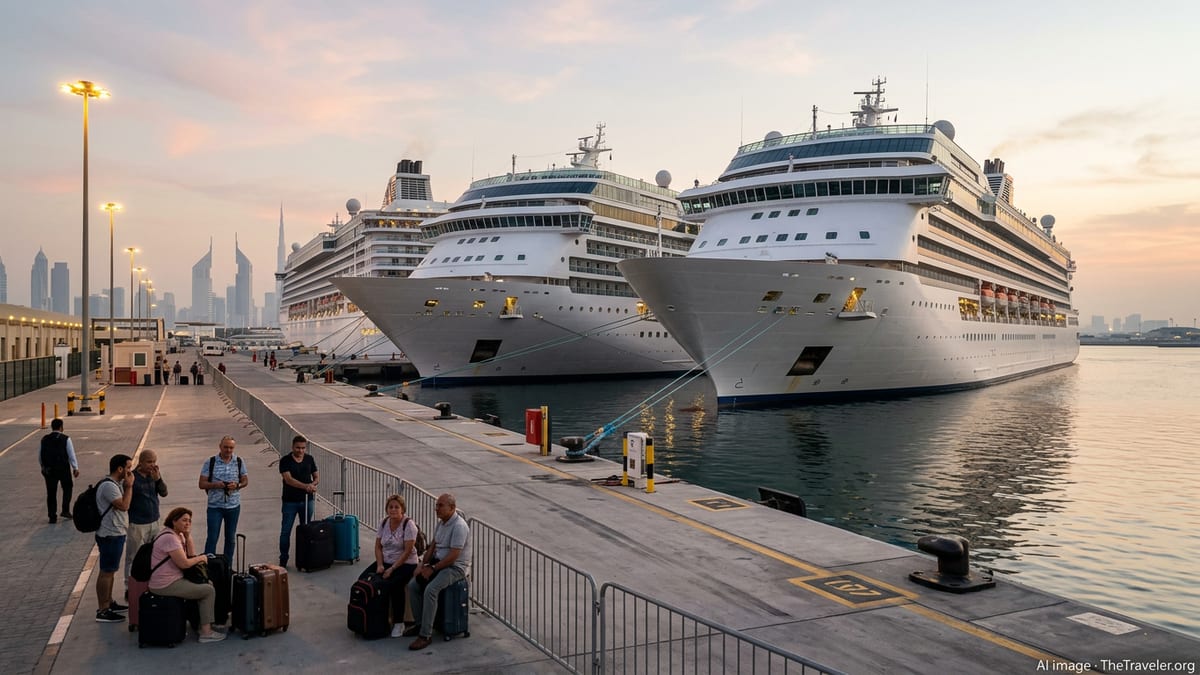
Security Crisis Forces Sudden Halt to Mein Schiff Gulf Season
The decision, confirmed in recent statements from the German line and tour partners, affects at least six departures on Mein Schiff 4 and Mein Schiff 5 that were due to sail roundtrip itineraries from Dubai and Doha in early March 2026. The ships had been operating popular seven-night routes calling at Dubai and Abu Dhabi in the United Arab Emirates, Doha in Qatar, Muscat in Oman and the beach destination of Sir Bani Yas Island.
The halt comes after a rapid escalation of conflict involving Iran and U.S.-led forces in and around the Strait of Hormuz, which triggered extensive airspace closures and a formal travel warning from the German Foreign Office for key Gulf and wider Middle East destinations. Cruise operations across the region have been paused or curtailed as governments and port authorities reassess maritime and aviation risk.
Both Mein Schiff 4 and Mein Schiff 5 are now docked in regional ports with guests still on board while the company works on complex repatriation logistics. Industry trackers report the ships are alongside in Dubai and Doha, part of an unprecedented concentration of idle cruise tonnage in the Gulf following parallel suspensions by MSC Cruises, Celestyal Cruises and Saudi-backed newcomer Aroya Cruises.
The shutdown reverses what had been a period of steady growth for winter cruising in the Arabian Gulf, a market that European brands such as TUI had helped build into a reliable alternative to Caribbean and Canary Islands itineraries during the northern winter.
Thousands of Passengers Caught in the Middle of a Regional Shutdown
The immediate fallout is being felt most acutely by passengers already on board or scheduled to embark in the coming days. Travel trade outlets and passenger forums describe a fast-moving situation in which guests were informed at short notice that sailings would not depart and that ports of call were suspended for safety reasons.
According to statements carried by specialist cruise media, TUI Cruises has acknowledged that several thousand guests are affected across the Mein Schiff 4 and Mein Schiff 5 deployments. With commercial air traffic disrupted by airspace closures and reroutings, arranging flights home for largely German and European clientele has become a logistical race against time.
The company has said it is working in close coordination with airlines and national authorities to secure capacity on alternative routes. In some cases, charter flights are being considered or arranged where scheduled services are either suspended or heavily oversubscribed. Passengers have been advised to remain on board while plans are finalized, with the ships effectively serving as temporary accommodation hubs.
Reports from the region indicate that, despite heightened tensions, life onboard has remained calm, with crews instructed to maintain normal service levels as far as possible. However, the uncertainty over flight options and the evolving security situation has left many guests anxious about when and how they will be able to leave.
Ripple Effects for Gulf Ports and Regional Tourism
The Arabian Gulf’s cruise infrastructure has expanded significantly over the past decade, with Dubai, Abu Dhabi and Doha positioning themselves as homeport gateways linking sun-seeking winter travelers to the broader Gulf and Indian Ocean. The abrupt withdrawal of multiple cruise lines is now testing that model.
Port calls from Mein Schiff 4 and Mein Schiff 5 alone represented tens of thousands of passenger visits across the season, feeding revenue into shore excursion operators, hotels, restaurants, transport providers and retail outlets. The lost calls in March, and the possibility of a longer suspension, translate directly into missed income for local tourism businesses that had come to rely on predictable cruise volumes.
Destination marketing bodies and tourism authorities in the UAE, Qatar, Oman and Bahrain have been touting cruise growth as a cornerstone of their diversification strategies. With TUI Cruises joining other major players in suspending or cancelling Gulf programs, those plans face at least a short-term setback while the security outlook is reassessed.
Industry analysts note that while cruise deployments can, in theory, be redeployed to other regions, the highly seasonal nature of Gulf cruising and the short notice of the shutdown make immediate replacement itineraries challenging. For now, the priority remains passenger safety and repatriation rather than salvaging revenue.
How TUI Is Handling Bookings, Refunds and Future Credits
TUI Cruises has not yet announced a full-season cancellation for the Arabian Gulf, but the suspension of current departures and the broader uncertainty around air connectivity suggest further adjustments are likely. For guests on cancelled voyages, the line is offering a combination of refunds and flexible rebooking options, broadly in line with its approach to prior Middle East disruptions.
Previous TUI responses to regional security issues, such as the cancellation of Red Sea and repositioning itineraries, have typically involved full fare refunds along with future cruise credits to encourage guests to rebook on alternative routes. Travel agents consulted by German and Middle East cruise media expect similar measures to apply to the current Mein Schiff cancellations, although exact terms may vary by departure date and booking channel.
Package holiday customers who booked fly-cruise arrangements through TUI’s tour operator arms are also entitled to assistance under European package travel regulations. This includes support with alternative transport home and, where necessary, accommodation until repatriation is possible. Travelers are being urged to keep receipts for any self-arranged expenses that may later be eligible for reimbursement.
Passengers booked on upcoming Gulf sailings later in March and April are being advised to monitor official TUI communications and contact their travel agents before making independent changes. Given the fluid situation, industry observers expect rolling decisions rather than a single blanket announcement on the remainder of the season.
What This Means for the Future of Middle East Cruising
The suspension of TUI’s Arabian Gulf operations underscores the vulnerability of cruise deployment plans to sudden geopolitical shocks, even in regions that have spent years cultivating a reputation for stability and safety. The Gulf cruise market had been on track for another record winter, with multiple brands basing ships in Dubai and Doha and new entrants preparing to join the line-up.
In the near term, the priority for operators and authorities is to manage the crisis and restore safe air and sea corridors. However, the longer the disruption lasts, the more likely cruise lines will be to shift capacity to other regions in future seasons, potentially slowing the Gulf’s cruise expansion. Lines that have already rerouted ships once due to Red Sea tensions may be particularly cautious about returning quickly.
For travelers, the events of early March 2026 are likely to reinforce the importance of flexible booking conditions, comprehensive travel insurance and careful attention to government travel advisories when planning itineraries through politically sensitive areas. Travel experts say that, once conditions normalize, cruise lines may look to rebuild confidence through enhanced security briefings, adjusted routes that give a wider berth to flashpoint areas, and promotional pricing to lure guests back to the Gulf.
Despite the current turmoil, few in the industry believe the Middle East’s long-term cruise potential has disappeared. With its modern ports, warm winter climate and extensive flight links, the region remains attractive to both operators and guests. But TUI’s sudden halt to Mein Schiff operations serves as a stark reminder that in global cruising, geopolitics can change course as quickly as the tides.