

More news on this day
TUI Cruises has halted its Arabian Gulf operations for key Mein Schiff vessels amid mounting security concerns in the wider region, disrupting thousands of holiday plans and casting uncertainty over how resilient the Middle East will be as a winter cruise playground in 2026.
Get the latest news straight to your inbox!
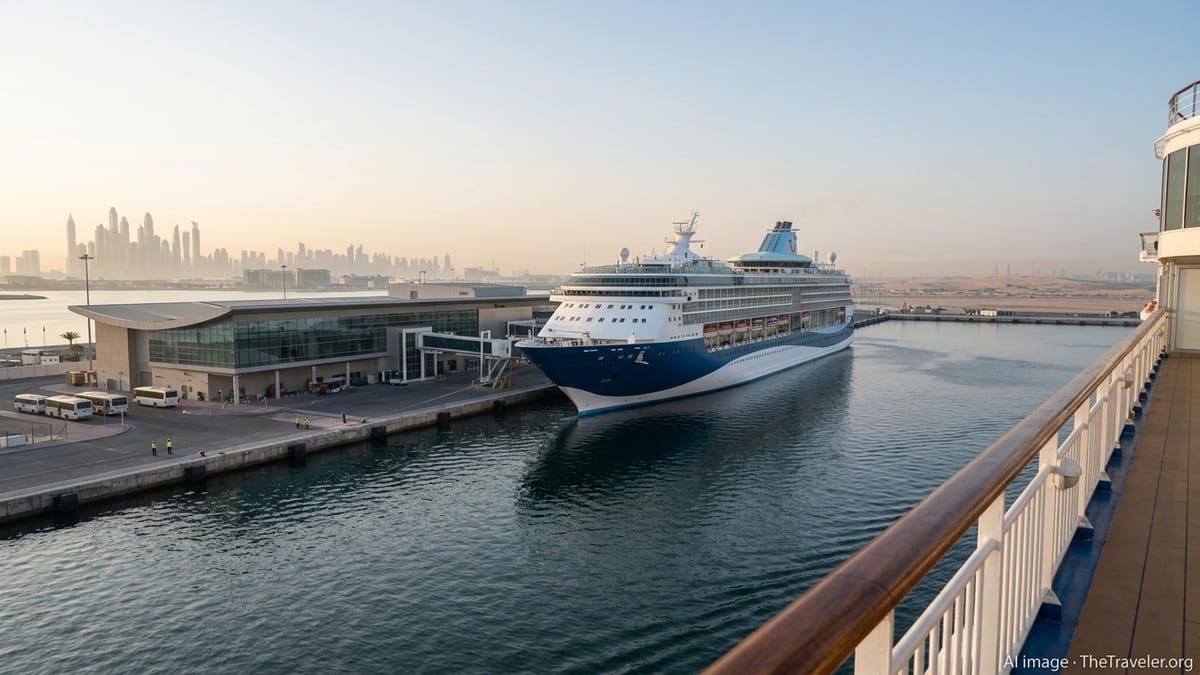
From Flagship Growth Market to Sudden Standstill
The Arabian Gulf has been promoted in recent years as a bright spot for winter cruising, with Dubai, Abu Dhabi and Doha positioned as marquee turnaround ports. Publicly available information from cruise industry coverage shows that TUI Cruises had been expanding in the region, including plans for multiple ships to homeport in the Gulf across the 2025 to 2026 seasons.
That growth narrative has shifted abruptly. In early March 2026, reports from specialist cruise publications and travel trade media indicated that TUI Cruises cancelled sailings in the Arabian Gulf for Mein Schiff 4 and Mein Schiff 5, halting their regional programs and joining other operators in suspending departures from Dubai and Doha. The move followed weeks of escalating geopolitical tension affecting key sea lanes and port access across the wider Middle East.
The cancellations come on top of earlier adjustments. Since 2024, TUI Cruises has already reworked or withdrawn certain itineraries involving the Red Sea and repositioning voyages, in response to changing advisories and security assessments. The latest halt in Gulf sailings therefore appears less like an isolated decision and more like the culmination of a multi-season reassessment of risk in the region.
Security Shocks and Stranded Ships
The immediate trigger for TUI’s latest pullback is tied to the deteriorating security environment in and around the Strait of Hormuz and the broader Gulf. Open-source reporting indicates that the waterway, a vital chokepoint for energy and commercial traffic, has been at the center of heightened military activity and threats to maritime operations since late February 2026.
As cruise brands recalibrated their exposure, several vessels became effectively trapped in the region. Coverage from European and Middle East travel media has detailed how ships from multiple cruise lines, including TUI’s Mein Schiff 4 and Mein Schiff 5, remained in ports such as Dubai, Abu Dhabi and Doha while operators worked to end current voyages, disembark guests safely and plan repositioning routes that avoid the most sensitive areas.
The situation has underlined just how exposed cruise itineraries are to geopolitical shocks. Unlike ocean cargo carriers, cruise ships must balance route flexibility with port infrastructure, air connectivity for fly-cruise guests and the expectations of thousands of passengers on tightly scheduled holidays. When a chokepoint becomes problematic, the knock-on effects travel quickly along the entire cruise value chain, from airlines and hotels to local tour operators and port-based retailers.
Economic Ripples Across Gulf Tourism Hubs
For Gulf destinations, the timing of TUI’s move is particularly disruptive. The Arabian Gulf winter season, typically running from November through spring, brings a steady stream of cruise arrivals that feed spend into city tours, shopping malls, souks, desert excursions and waterfront dining. Industry-focused reporting suggests that TUI’s halt, combined with similar decisions by other European operators, will remove tens of thousands of expected passenger visits from the 2025 to 2026 deployment window.
Dubai, Abu Dhabi and Doha have all invested heavily in cruise terminals, immigration facilities and supporting infrastructure to build their status as regional cruise hubs. Reduced ship calls translate directly into fewer coach tours, lower occupancy for some city hotels linked to pre- and post-cruise stays, and weaker takings for shore-excursion providers and small businesses catering to day visitors.
At the same time, some analysts note that these cities maintain diversified tourism portfolios. Large-scale events, beach and city breaks, business travel and stopover traffic for long-haul flights still underpin demand. In that context, a suspended cruise season is a setback rather than an existential threat, but it nonetheless slows momentum in a niche that local authorities and port operators had worked for years to cultivate.
How Cruise Lines Are Rethinking Winter 2026
TUI Cruises’ decision fits into a broader pattern of rerouting and redeployment across the industry. According to cruise news outlets and travel trade briefings, several lines have already shifted ships that were due to homeport in the Gulf for the 2025 to 2026 winter season, choosing instead to concentrate capacity in the Mediterranean, Canary Islands, Caribbean and other established warm-weather regions perceived as less exposed to current security risks.
For TUI, this realignment likely means greater emphasis on classic European itineraries and long-haul fly-cruise products outside the Gulf. The company has invested in newer tonnage and diversified routes, offering flexibility to redirect capacity when regional conditions deteriorate. That flexibility is now being tested as planners weigh fuel costs, port fees, airlift, and guest demand for alternative sun-seeking voyages.
Looking ahead to the 2026 calendar, industry observers expect Middle East calls to remain limited until operators have sustained confidence that transit routes and port approaches are stable. The experience of recent seasons, when planned Red Sea and Gulf crossings were repeatedly modified or scrapped, has sharpened risk models and made cruise brands more cautious about announcing ambitious deployment in politically sensitive waterways.
What This Means for Travelers and the Future of Gulf Cruising
For travelers, TUI Cruises slamming the brakes on Middle East sailings is a reminder that even well-established cruise regions can be subject to late changes. Guests booked on affected voyages are typically being offered refunds, future cruise credits or rebooking options, as indicated in previous communications on earlier cancellations. However, air tickets, independent hotel stays and third-party arrangements may not always be as flexible, underscoring the importance of comprehensive travel insurance and careful itinerary planning.
In the longer term, the Gulf’s cruise future will hinge on how quickly stability returns and whether operators feel confident enough to commit ships back to the region. The investments made in terminals and supporting infrastructure are long-lived, and past experience suggests that cruise lines do return once conditions normalize and demand rebounds. The rapid build-up of capacity in the years before 2026 demonstrates the underlying appeal of the region’s modern cities, winter sunshine and easy access from European source markets.
For the 2026 planning horizon, however, the signal from TUI Cruises is clear: security and operational reliability now outweigh the growth story that once defined Middle East cruising. Until risk perceptions improve, travelers seeking winter sun on a TUI ship are more likely to find themselves sailing the Canary Islands, Caribbean or southern Mediterranean than gazing at the skylines of Dubai or Doha from the pool deck.