

More news on this day
TUI Cruises has canceled further Mein Schiff sailings in the Middle East as the Strait of Hormuz crisis deepens, extending a wave of cruise disruptions affecting thousands of passengers across the Gulf region.
Get the latest news straight to your inbox!
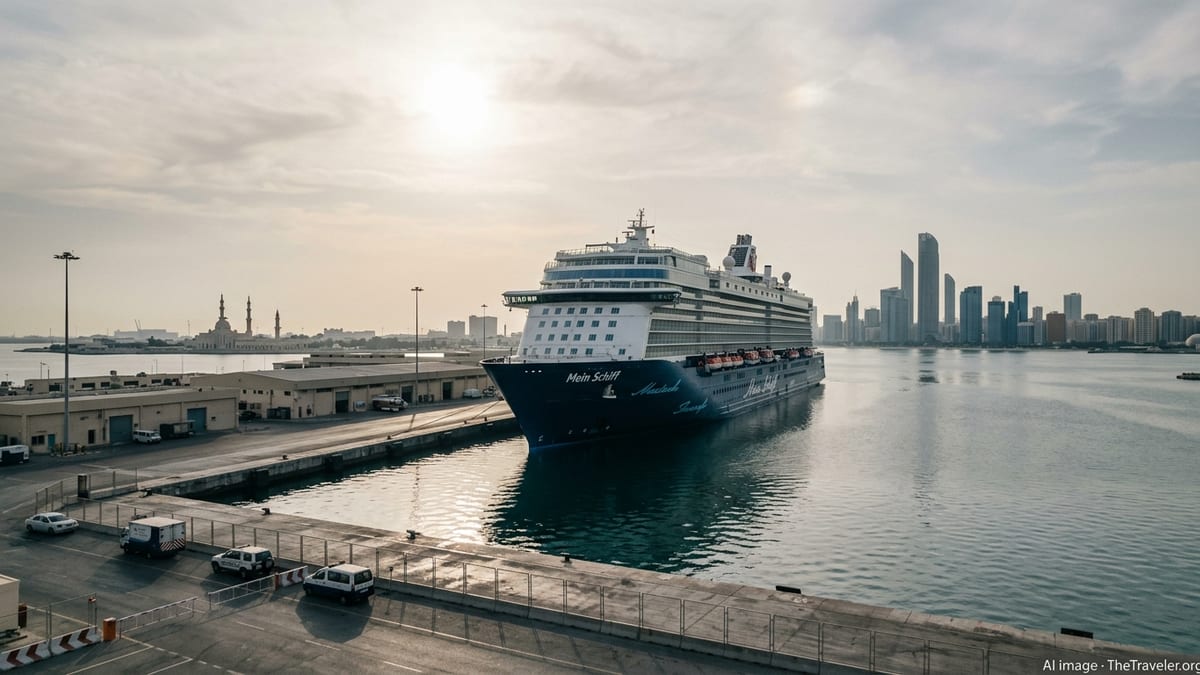
Expanded Cancellations Hit Mein Schiff 4 and Mein Schiff 5
Recent updates from industry coverage show that TUI Cruises has widened its cancellation program for Arabian Gulf itineraries involving Mein Schiff 4 and Mein Schiff 5. Previous schedule changes tied to Red Sea tensions have now been overtaken by the more acute security situation around the Strait of Hormuz, leaving both ships unable to operate their planned late winter and early spring deployments.
Reports from European and cruise trade outlets indicate that departures for Mein Schiff 4 in the Gulf have been canceled through at least late March 2026, effectively drawing a line under the ship’s winter season in the region. Similar measures apply to Mein Schiff 5, where early March sailings have been scrapped following earlier adjustments to the ship’s deployment and refit program.
These steps come on top of previously announced cancellations of Red Sea transits and repositioning voyages, reflecting an incremental tightening of TUI Cruises’ risk posture as regional instability has spread from the Red Sea into the Arabian Gulf and key chokepoints used by cruise and commercial shipping.
Strait of Hormuz Crisis Drives Safety Rethink
The operational backdrop for TUI Cruises’ latest decisions is a fast-moving security crisis in and around the Strait of Hormuz, a narrow corridor long recognized as one of the world’s most sensitive maritime passages. According to publicly available reporting, conflict in the wider Middle East has spilled into the Gulf, triggering air defense activity, naval operations and temporary disruptions to civilian traffic.
Cruise industry analyses describe a situation in which multiple large ships, including both Mein Schiff 4 and Mein Schiff 5, have been effectively trapped in regional ports such as Abu Dhabi and Doha after commercial transits through the strait became unsafe or impractical. That gridlock has in turn forced operators to abandon remaining winter sailings and focus instead on disembarkation logistics and future redeployment.
Security concerns in adjacent waterways, notably the Red Sea, had already prompted cruise lines to reassess repositioning routes that traditionally link Gulf homeports with Europe at the end of the season. With the current crisis now centered on the Gulf itself, the risk calculus has shifted again, making near term passenger operations increasingly difficult to sustain.
Passenger Repatriation and Customer Support Measures
Coverage from cruise-specialist outlets shows that TUI Cruises has moved from normal schedule adjustments to a more complex crisis-management phase, including arranging alternative travel for guests affected by the cancellations. With ships unable to complete their planned itineraries, the immediate priority has been to disembark passengers safely in available ports and coordinate flights back to their home countries.
Public information on compensation suggests that affected guests are being offered full refunds for canceled cruises, in some cases supplemented by future cruise credits, continuing a pattern established when earlier Red Sea itineraries were withdrawn. These measures are designed to offset the impact of short-notice changes and to retain customer loyalty at a time when the broader cruise sector is navigating heightened geopolitical risk.
For many travelers, the disruption has been significant, with itineraries altered or abandoned and return journeys rebooked at short notice. However, available documentation from TUI group communications and independent financial commentary emphasizes that passenger safety and crew welfare remain the core criteria guiding operational decisions, even where this entails substantial logistical and financial cost.
Industry Wide Pullback From the Gulf and Red Sea
TUI Cruises’ expanded cancellations form part of a wider retrenchment by major cruise brands from the Middle East for the remainder of the 2025 to 2026 winter season. Trade publications and European news reports describe a cascade of announcements from operators including MSC Cruises, Celestyal and Saudi-based Aroya, with many lines now having curtailed or fully ended their Gulf deployments ahead of schedule.
Several companies have also scrapped or rerouted long repositioning voyages that would normally traverse the Red Sea and Suez Canal en route between Asia, the Gulf and European homeports. Instead, ships are being diverted via southern routes around Africa or held in port until a clearer security picture emerges, lengthening sailing distances and complicating deployment plans for the coming summer.
For regional destinations that have invested heavily in winter cruise tourism, the sudden loss of calls from ships such as Mein Schiff 4 and Mein Schiff 5 represents a setback. Ports including Dubai, Abu Dhabi and Doha typically benefit from steady passenger traffic during the cooler months, and the abrupt halt underscores how vulnerable cruise-driven visitor flows can be to wider geopolitical shocks.
Longer Term Implications for TUI Cruises Deployments
While current attention is on immediate cancellations and repatriations, analysts following TUI Group note that the Middle East conflict could have repercussions for the cruise line’s medium-term deployment strategy. The company has spent recent years building a stable winter presence in the Gulf for the Mein Schiff brand, positioning the region as a counterweight to its core European markets during the off season.
Financial commentary and previous planning documents suggest that TUI Cruises had already begun diversifying routes in response to earlier Red Sea tensions, with some ships rerouted via Africa and the Indian Ocean for seasonal repositioning. The latest crisis in the Strait of Hormuz may accelerate this trend, prompting a deeper review of how and when the brand uses Middle Eastern ports and passages for both regular itineraries and transition voyages.
For now, publicly available information points to a cautious, step by step approach, with further decisions likely to depend on how quickly maritime security conditions stabilize. In the interim, the cancellation of additional Mein Schiff sailings underlines that safety considerations remain paramount, even when they require extensive schedule upheaval and complex operational workarounds.