

More news on this day
Southern Africa’s cruise tourism sector is poised for another surge in visitor numbers as TUI Cruises aligns a full winter season deployment around the African coastline, reinforcing Cape Town, Walvis Bay and neighboring ports as emerging hubs on global cruise maps.
Get the latest news straight to your inbox!
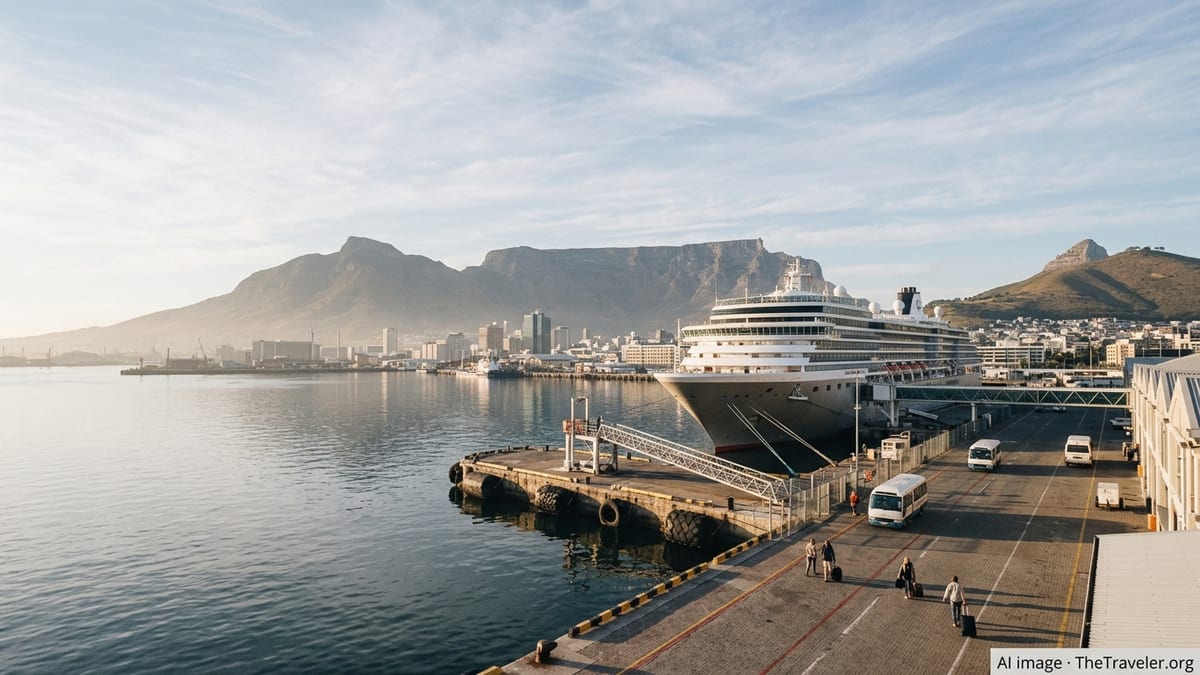
TUI Cruises Reconfigures Winter Strategy Around Africa
Publicly available deployment information and recent industry coverage show that TUI Cruises is reshaping its winter operations, pivoting capacity from traditional Red Sea and Eastern Mediterranean routes toward longer itineraries that circle the African continent. The shift follows a series of program changes prompted by security concerns and logistical challenges in the Red Sea corridor, encouraging the German operator to rely more heavily on routes that round the Cape of Good Hope.
Reports indicate that ships in the Mein Schiff fleet will now spend the core winter months serving the Middle East and Asia, but with repositioning and extended sailings structured to include extended calls in Southern Africa. Coverage from cruise industry outlets highlights itineraries that link ports such as Cape Town, Walvis Bay, Port Elizabeth and Indian Ocean islands with European and Gulf homeports, effectively creating a full winter presence in the wider region even when vessels are technically assigned to other basins.
Industry analyses note that TUI’s winter reconfiguration is part of a broader trend: major cruise brands are increasingly diversifying away from single-corridor dependence and building multi-region winter portfolios. In this context, Southern Africa benefits as a natural detour point between Europe, Asia and the Middle East, with deepwater ports, recognizable tourism icons and improving air connectivity drawing operators that once bypassed the region entirely.
Repositioning Voyages Turn Cape Town and Walvis Bay Into Seasonal Hubs
Recent reports on cruise deployment patterns for the 2025 to 2026 seasons describe several Mein Schiff voyages that will route via Cape Town and Walvis Bay as ships move between winter bases and European summer homeports. One analysis of the 2025 to 2026 schedule notes that Mein Schiff 4 is expected to sail from Dubai to Palma de Mallorca in March 2026 on a multiweek voyage that calls at Seychelles, Mauritius, La Réunion, Cape Town and the Cape Verde Islands, while Mein Schiff 6 is scheduled to reposition from Singapore to Europe with stops in South Africa and Namibia.
These extended repositioning cruises effectively act as pop-up mini seasons for Southern Africa, concentrating higher-spend international guests in ports that are already recording strong growth in cruise arrivals. Walvis Bay has been repeatedly highlighted in Namibian media as a fast-growing hub for cruise ship tourism, with local authorities reporting significant increases in ship calls between late 2023 and mid 2024, as well as expectations of additional arrivals in the 2026 to 2027 window.
Cape Town, meanwhile, has been singled out in multiple regional economic and tourism reports as one of Africa’s standout cruise gateways. Provincial data for the 2024 to 2025 season points to double-digit increases in both vessel calls and passenger numbers, with some assessments citing growth of more than 30 percent in cruise-derived revenue for the Western Cape. Local coastal towns such as Mossel Bay and Saldanha Bay are also beginning to benefit from spillover calls as ships seek alternative anchorages and smaller port experiences to diversify itineraries.
Southern Africa Cruise Market Already on Record-Breaking Trajectory
The timing of TUI Cruises’ expanded winter presence coincides with a record-breaking period for Southern Africa’s cruise sector. Tourism and economic agencies in South Africa and Namibia have released figures showing year-on-year improvements in ship arrivals, passenger volumes and direct spending linked to cruise activity. In the Western Cape, official statements describe the 2024 to 2025 cruise season as the most successful yet, measured both in passenger throughput and in total economic contribution to the provincial economy.
National port operator communications from late 2024 outlined expectations of dozens of cruise calls into Cape Town, Durban, Gqeberha and smaller harbors during the subsequent season, underscoring how cruise traffic is becoming a structural pillar of coastal tourism. On the Namibian side of the border, the national broadcaster has reported steady growth in the number of cruise liners calling at Walvis Bay, accompanied by increases in locally registered tourism businesses, including tour operators and self-catering accommodation catering directly to visiting passengers.
Analysts who track the global cruise market note that Southern Africa’s recent performance aligns with broader industry projections of strong post-pandemic expansion. Market research cited in regional trade press suggests that cruising worldwide is on course for sustained double-digit growth in value over the coming decade, creating a favorable backdrop for ports that can demonstrate reliability, safety and compelling onshore experiences. Against this outlook, each additional seasonal deployment from a brand such as TUI Cruises adds weight to the region’s long-term credentials.
Infrastructure and Air Links Strengthen the Tourism Value Chain
Southern Africa’s ability to leverage TUI Cruises’ full winter season deployment is underpinned by substantial improvements in infrastructure and connectivity. Cape Town International Airport, a primary air gateway for cruise passengers embarking or disembarking in the region, has reported record tourism passenger volumes and is progressing with runway and terminal enhancements intended to handle continued growth. Aviation and tourism annual reports highlight new long-haul routes and expanded frequencies that make it easier for European and Middle Eastern travelers to pair cruises with land-based stays.
On the maritime side, the Port of Cape Town and its dedicated cruise terminal have been the focus of modernisation projects aimed at increasing efficiency and improving the passenger experience. Port authority updates describe investment in new handling equipment and broader development plans, while the surrounding V&A Waterfront district continues to evolve as a mixed-use precinct that integrates hotels, attractions and services adjacent to the working harbor.
Similar efforts are visible elsewhere in the region. Durban’s Nelson Mandela Cruise Terminal on South Africa’s east coast, developed in partnership with private operators, has helped the city host hundreds of thousands of cruise passengers in recent seasons. In Namibia, port-led enhancements and local destination development around Walvis Bay are designed to spread the benefits of cruise tourism deeper into the economy, supporting small businesses, guiding services and transport providers serving shore excursions.
Opportunities and Pressures for Local Tourism Stakeholders
While the prospect of a full winter season shaped by TUI Cruises’ African routing is widely seen as a positive development, regional observers also highlight the operational pressures that come with rapid growth. Cruise calls concentrate large numbers of visitors in short windows of time, creating peaks in demand for ground handling, customs processing, tour capacity and urban mobility in host cities. Publicly available transport planning and tourism strategy documents from Cape Town and other municipalities emphasize the need for coordinated investment to ensure that infrastructure keeps pace.
Hospitality businesses and tour operators in Southern Africa have been expanding capacity in response to rising cruise arrivals. Tourism registration data from Namibia, for example, shows a notable increase in new operators and accommodation providers over the past year, much of it oriented toward coastal regions frequented by cruise passengers. In South Africa, regional development agencies have encouraged products that link cruise visitors to wine regions, wildlife experiences and cultural attractions beyond the port cities themselves.
As TUI Cruises refines its winter deployment and more of its fleet passes through Southern African waters, analysts expect competition among destinations to intensify. Ports that offer streamlined operations, high-quality shore excursions and robust safety records are likely to secure larger shares of future itineraries, including potential homeporting arrangements. For now, the combination of TUI’s seasonal presence, rising global demand for diverse cruise routes and record tourist arrivals paints a broadly optimistic picture for Southern Africa’s tourism economy in the coming winters.