

More news on this day
Travelers booked on TUI’s winter cruises in the Middle East are facing fresh disruption after the German operator cancelled more sailings in the Gulf, the latest in a growing wave of itinerary changes linked to heightened tensions and maritime insecurity in the region.
Get the latest news straight to your inbox!
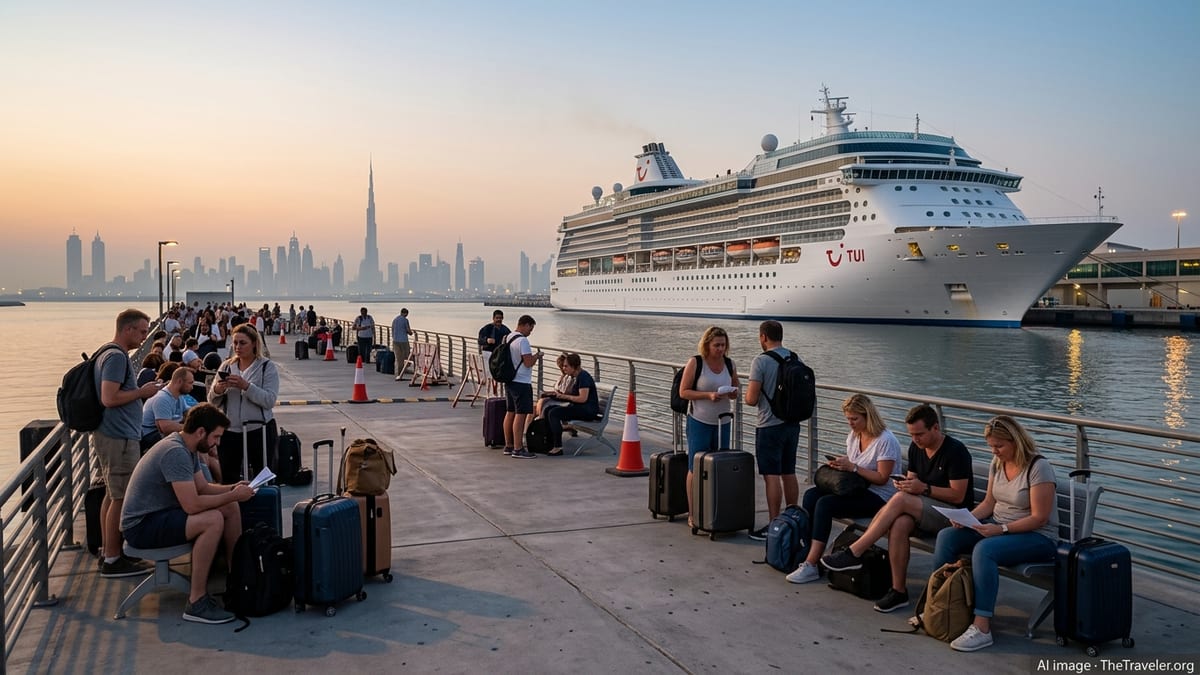
Expanded Cancellations Hit Mein Schiff Sailings
Recent industry coverage indicates that TUI Cruises has widened the scope of its Middle East cancellations, affecting additional departures on its Mein Schiff fleet that had been scheduled to operate in the Arabian Gulf during the 2025–26 winter season. Reports from cruise-focused outlets describe the remainder of several Gulf programs being withdrawn as the company reassesses the feasibility of sailing in and out of ports such as Dubai, Doha and Bahrain amid ongoing instability.
The latest adjustments build on earlier decisions to remove Red Sea transits and certain repositioning cruises from the schedule, rerouting vessels around Africa instead of using the Suez Canal. For guests, the change means that itineraries once marketed as seamless fly-cruise holidays combining Gulf city stays with week-long voyages are now either being cancelled outright or replaced with alternative routes in more stable regions.
Coverage from European travel media notes that Mein Schiff 4 and Mein Schiff 5, which were central to TUI’s planned two-ship deployment in the Middle East, are among the vessels most affected. Some departures in March 2026 have already been withdrawn, and subsequent sailings later in the winter season are being removed from sale as the company finalises a revised deployment plan.
Publicly available financial analysis of TUI Group indicates that the company has acknowledged higher costs tied to itinerary changes and cancellations in the Gulf, including the impact of suspended sailings touching Emirates, Qatar and Bahrain. While cruising remains only one segment of TUI’s broader holiday portfolio, the disruption underscores the operational challenges of maintaining a large-scale regional program in an unpredictable security environment.
Security Concerns Reshape Red Sea and Gulf Routes
The cancellations come against a backdrop of persistent security concerns stretching from the Red Sea to the Strait of Hormuz. Travel and shipping reports highlight that cruise lines have steadily reduced their exposure to these chokepoints over the past two seasons, citing an inability to guarantee safe passage for passenger vessels.
Earlier decisions by TUI to cancel 2025 Red Sea itineraries and scrap repositioning voyages through the Suez Canal set the stage for the latest wave of changes. Instead of offering extended sailings that linked Middle East homeports with Europe and Asia via the Red Sea, the company has chosen longer but operationally simpler routes around the southern tip of Africa, often without passengers on board.
Analysts tracking the cruise sector note that TUI’s moves mirror those of other major brands that have either withdrawn entirely from the region for 2025–26 or sharply curtailed their presence. Cruise industry reports list AIDA, Costa and MSC among the operators that have axed Red Sea or full Middle East seasons, often citing similar concerns over regional tensions and navigational risk.
The cumulative effect is a substantial reduction in the number of large ships homeporting in the Gulf in late 2025 and early 2026. Where TUI had once promoted the Arabian Gulf as a core winter alternative to the Caribbean or Canary Islands for German-speaking guests, the latest cancellations signal a more cautious stance until conditions improve.
What It Means for Booked Passengers
The expanded cancellations mean many travelers who had locked in Middle East cruises months or even years in advance must now revisit their holiday plans. Cruise industry coverage of TUI’s policy indicates that affected guests are generally being offered full refunds for cancelled sailings, alongside future cruise credits on selected itineraries, though precise terms can vary by departure and product.
In earlier Red Sea cancellations, TUI Cruises provided full fare refunds plus an additional credit of around ten percent toward a future voyage, and similar structures are being referenced in relation to the latest Gulf changes. However, publicly available documentation from across the sector shows that compensation for independently booked flights, hotels or tours is typically limited or excluded, leaving some travelers with out-of-pocket costs.
Travel advisors are recommending that passengers review booking confirmations closely and contact TUI or their travel agency to understand rebooking options. For some, alternative cruises in the Canary Islands, Mediterranean or Northern Europe are being promoted as substitutes, while others may choose to delay their next sailing until there is greater clarity on Middle East deployments.
Consumer forums and social media posts suggest that many guests are disappointed by the loss of Gulf ports such as Abu Dhabi, Doha and island stops like Sir Bani Yas, which had become popular for winter sunshine cruises. At the same time, sentiment often acknowledges that safety and operational reliability are central to decisions on whether a ship can realistically sail a given route.
Broader Impact on the Middle East Cruise Market
TUI’s retreat from parts of its planned 2025–26 Middle East season is part of a wider reshaping of regional cruise tourism. Travel news outlets report that several Gulf ports, which have invested heavily in new terminals and marketing partnerships over the past decade, now face the prospect of a quieter winter season as major international lines scale back.
In Dubai, Doha and Abu Dhabi, cruise tourism has been positioned as a pillar of broader tourism diversification strategies, with homeporting ships bringing steady flows of visitors who combine cruises with hotel stays and retail spending. With TUI and other European brands cancelling or reducing winter deployments, local tourism stakeholders are expected to feel a knock-on effect in terms of visitor numbers and spending.
At the same time, regional and locally backed operators are reassessing their own plans. Some Gulf-based lines that had planned ambitious growth in both Red Sea and Arabian Gulf itineraries have either paused or modified those strategies, while others are exploring a greater focus on nearby alternative routes that avoid sensitive chokepoints.
Industry analysts suggest that the medium-term trajectory of the Middle East cruise market will depend heavily on how quickly maritime security conditions stabilise and whether confidence can be restored among international guests. Until then, operators such as TUI appear likely to keep their ships closer to established European and Atlantic circuits where the risk profile is more predictable.
Practical Advice for Future Middle East Cruise Planning
For travelers still interested in cruising the Middle East once conditions allow, the current wave of cancellations offers several lessons. Travel planners advise building flexibility into itineraries, including booking flights with changeable terms and considering travel insurance that specifically addresses cruise cancellations and missed port calls resulting from security or operational issues.
Publicly available guidance from cruise specialists also highlights the importance of monitoring line-specific travel advisories and schedule updates, as operators may adjust or pull sailings months or even weeks before departure in response to evolving conditions. Prospective guests are encouraged to pay close attention to whether a sailing is marketed as firmly confirmed or still subject to potential redeployment.
Some experts recommend focusing on cruises that homeport in more stable regions but still offer a taste of the wider area through select ports, at least until there is sustained evidence of improvement in the Red Sea and Gulf. Others point to the appeal of land-based stays in destinations such as the United Arab Emirates or Oman, which can provide similar cultural and coastal experiences without the added complexity of multi-country sea itineraries.
For now, TUI’s decision to cancel additional Middle East sailings underscores how closely cruise planning is tied to geopolitics and maritime security. Travelers weighing a future voyage in the region may find that patience, flexible planning and careful review of terms and conditions are essential as the industry navigates an uncertain horizon.