

More news on this day
TUI River Cruises is preparing to add two custom-built vessels to its European fleet, a move that industry observers view as a fresh signal that river travel is entering a new growth phase focused on comfort, design and sustainability.
Get the latest news straight to your inbox!
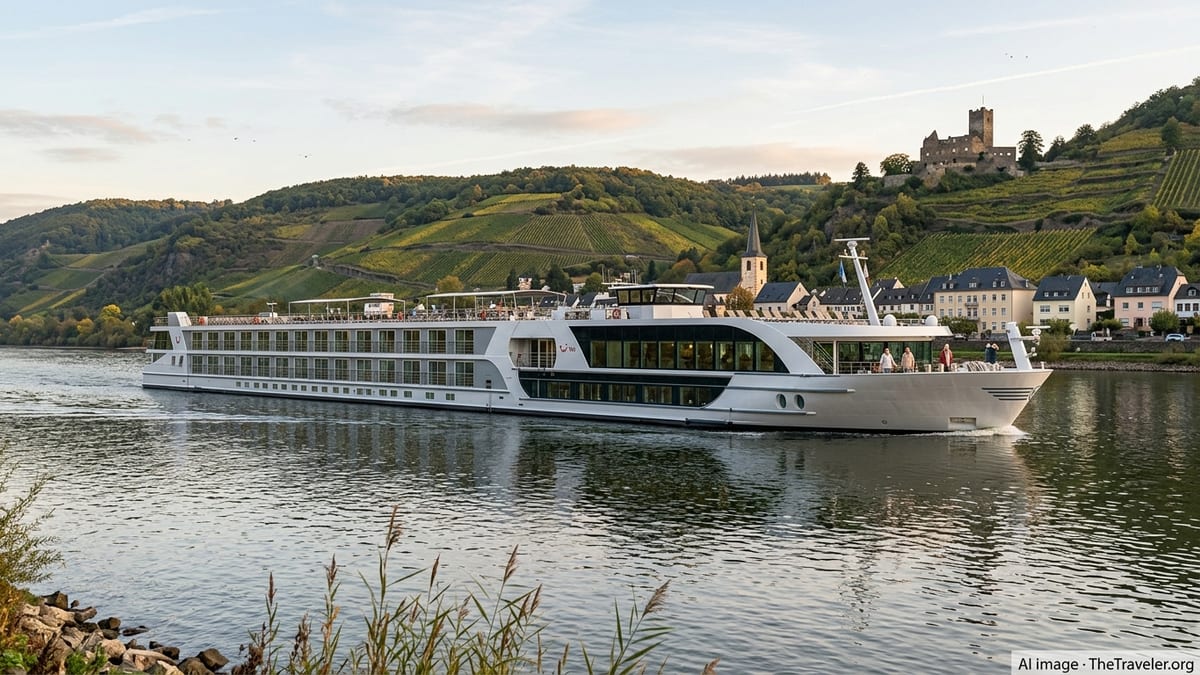
A Tailor-Made Expansion of TUI’s River Fleet
Publicly available planning documents and trade coverage indicate that TUI’s river arm is advancing work on a pair of purpose-built ships that will join its existing trio of Rhine and Danube vessels. The new additions are described as evolution designs, taking the core layout of the line’s established ships and reworking them with upgraded facilities that respond to post-pandemic travel patterns and longer seasonal demand.
The two custom-built ships are expected to operate primarily on classic Central European routes, including sections of the Rhine, Main and Danube, where TUI has concentrated its river cruise program. Early information points to capacities in the mid-size segment typical of modern river vessels, with a focus on maximising balcony cabins and flexible public spaces rather than significantly increasing passenger numbers.
TUI’s decision to commission dedicated newbuilds, rather than relying solely on chartered or refurbished tonnage, is being interpreted by analysts as a long-term bet on river cruising as a core part of the group’s portfolio. The move complements ongoing investment in ocean ships under the TUI Cruises brand and suggests that the company sees room for parallel growth on both rivers and open seas.
While detailed delivery timelines have not been widely circulated, sector reports suggest the two ships are being scheduled to enter service across successive seasons, giving TUI room to phase in new itineraries and marketing campaigns built around the latest hardware.
Designing for a New ‘Golden Age’ of Slow Travel
Coverage in European cruise publications indicates that the forthcoming vessels are being framed as part of a broader shift toward an updated golden age of river travel, with emphasis on space, light and a residential atmosphere. The design philosophy appears to prioritise panoramic lounges, larger wellness areas and contemporary European interiors over traditional riverboat nostalgia.
Cabin plans referenced in promotional material for TUI’s existing ships show a heavy weighting toward French balconies and floor-to-ceiling windows, and industry watchers expect the new vessels to extend that approach. The intent is to deliver uninterrupted views of riverbanks, vineyards and city skylines while maintaining the intimate scale that differentiates river cruising from large ocean ships.
Dining concepts are also likely to evolve on the two newbuilds. TUI’s current river fleet offers multiple restaurants and casual venues, and commentators expect the latest duo to introduce more flexible seating, regionally focused menus and longer opening hours to suit guests combining shore excursions with independent exploration.
In line with trends seen across European rivers, observers anticipate that public spaces will be configured to support informal enrichment, such as regional tastings or destination briefings, without formal lecture theatres. This aligns with a wider consumer move toward relaxed, experience-led luxury that evokes classic European grand touring in a contemporary format.
Sustainability and Efficiency on Europe’s Waterways
The development of two custom-built river ships comes as environmental performance moves to the foreground for European travel brands. While technical specifications for TUI’s latest river vessels have not been widely disclosed, the company’s broader cruise portfolio offers clues to likely priorities, including fuel-efficient propulsion, advanced wastewater treatment and shore power connectivity where available.
Industry reports on new European river tonnage highlight widespread adoption of quieter, cleaner engines and hull forms optimised for energy efficiency in shallow waterways. Analysts suggest that TUI’s new ships will incorporate similar technology, helping the line comply with tightening emissions standards along the Rhine and Danube corridors and improving onboard comfort by reducing vibration and noise.
The investment also aligns with TUI Group’s published sustainability commitments, which call for incremental reductions in emissions intensity across its cruise brands. By commissioning modern, custom-designed river vessels rather than relying on older conversions, the company gains more control over technical choices that affect fuel use and local air quality in port cities.
As European authorities and port operators continue to invest in greener infrastructure, including shore power and improved waste reception facilities, newbuild river ships like TUI’s pair are expected to play a role in demonstrating how small-scale cruising can coexist with stricter environmental expectations along heavily trafficked waterways.
Competitive Pressure in a Crowded River Market
The unveiling of two bespoke ships adds competitive weight to TUI’s position in a river cruise segment that has seen a steady influx of capacity from both specialist and mainstream operators. Recent years have brought new vessels and concepts on the Rhine and Danube from brands targeting North American, British and European guests, with many emphasising design-forward interiors and all-inclusive pricing.
Analysts note that TUI’s decision to grow its tailor-made fleet responds to this pressure by giving the brand more differentiation and control over the onboard experience. With custom-built hardware, the company can fine-tune details such as cabin mix, sun deck configuration and spa facilities to match its core source markets and distribution channels, particularly in Germany and the United Kingdom.
Reports from travel trade partners suggest that demand for river itineraries remains resilient, especially for themed cruises, festive sailings and trips that combine iconic capitals with smaller historic towns. The two new ships are expected to give TUI additional flexibility to schedule shoulder-season voyages and to test more niche routes without overcommitting capacity on any single river.
At the same time, the expansion underscores the extent to which river cruise lines are vying to capture travellers who might previously have opted for large-ship ocean sailings. By marketing the new vessels as relaxed, design-led spaces that still offer a high level of included services, TUI is positioning itself to appeal to guests seeking a less crowded way to experience Europe.
What the Newbuilds Signal for Future River Travel
For industry observers, the announcement of two custom-built river vessels at TUI is part of a wider pattern of renewed investment in inland cruising across Europe. Order books tracked by specialist cruise publications show a pipeline of new river ships through the second half of the decade, many of them focused on enhanced comfort, technology and environmental performance rather than major jumps in size.
This measured growth contrasts with the megaship race seen in ocean cruising over the last decade and reflects the physical constraints of Europe’s rivers and locks. As a result, lines such as TUI are concentrating on onboard refinement, extended seasons and itinerary variety to differentiate their offerings, rather than simply adding more berths.
Travel advisors report that river cruises are increasingly seen as an accessible step up from land touring, attracting guests who value unpack-once convenience and central docking locations in major cities. With its two new custom-built ships, TUI is seeking to strengthen its appeal to that audience at a moment when demand for slower, more scenic journeys remains strong.
If the market continues on its current trajectory, the twin additions to TUI’s fleet could mark the start of a new chapter in the story of river travel in Europe, one defined not by grand paddle steamers of the past but by compact, quietly efficient vessels designed around comfort, views and a closer connection to the waterways they sail.