

More news on this day
As TUI’s freshly christened “Kuusamo” aircraft joins a growing fleet named after Lapland destinations, the move underscores how Finland’s once-remote winter resorts have become central players in a fiercely competitive Nordic tourism market fueled by new airline capacity and record international demand.
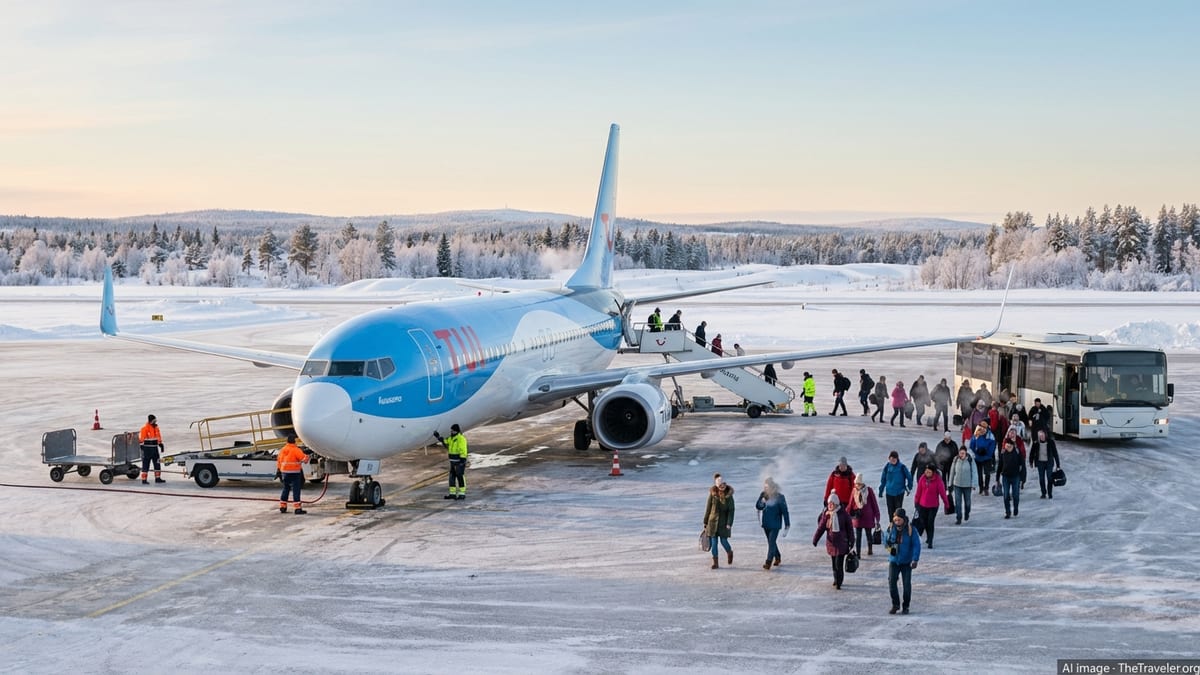
TUI’s Lapland Fleet Grows with “Kuusamo” Namesake
For TUI, naming an aircraft “Kuusamo” is both a branding gesture and a strategic statement. The tour operator has been steadily dedicating aircraft in its fleet to northern Finnish destinations, turning route names into flying billboards for Lapland’s winter experiences. “Kuusamo” now joins “Kittilä,” “Rovaniemi” and “Ivalo” on the roster of TUI aircraft that promote Finland’s snowbound appeal directly on the fuselage.
The practice reflects a broader shift in how airlines market seasonal destinations. Rather than treating winter routes as niche charters, carriers are foregrounding them in corporate identity, suggesting confidence that demand for Arctic holidays is not only strong but durable. By placing Kuusamo’s name on an aircraft, TUI signals that this once lesser-known corner of northern Finland now stands alongside its more famous Lapland neighbors.
Industry observers note that such naming campaigns are rarely cosmetic. They tend to coincide with expanded flight programs, deeper commitments to local partners and multi-year planning. In Kuusamo’s case, the new aircraft identity arrives as TUI and other airlines add frequencies, triangle routes and new point-to-point links designed to move more visitors efficiently into Finland’s winter heartland.
Strategic Flights Turn Kuusamo into a Northern Gateway
Kuusamo’s rise has been anchored in better air connectivity. Long seen as a strong domestic resort area around the Ruka ski region, the town is now gaining a clearer footprint on Europe’s winter route map. TUI’s program places Kuusamo alongside hubs such as Rovaniemi, Kittilä and Ivalo in its winter schedule, ensuring that international package tourists can reach the area directly, rather than routing exclusively via Helsinki.
Key to this strategy are carefully timed charter and quasi-scheduled services that align with week-long holiday patterns. Flights are typically concentrated on peak days such as Fridays and weekends, enabling smooth handovers between aircraft arrivals and resort transfers. The “Kuusamo” aircraft will play a visible role in this pattern, operating heavily branded flights that move tourists from core markets in Western and Southern Europe into the region’s snow-secure landscapes.
Regional tourism boards and airport operators have pushed for precisely this kind of connectivity. They argue that when foreign travelers can fly directly to resort-proximate airports like Kuusamo, rather than relying on long overland journeys, the perceived distance to Arctic destinations shrinks. For Kuusamo and its neighboring resorts, the combination of TUI’s capacity and new destination marketing around the “Kuusamo” aircraft is intended to make the region feel as accessible as more established Alpine locations.
Finland’s Winter Tourism Sets New Records
The debut of “Kuusamo” comes as Finland’s winter tourism numbers climb to historic highs. National data show that Lapland and the Kuusamo area captured a commanding share of international overnight stays during the peak winter season, cementing Finland’s position as the leading Nordic country for winter travel. Foreign visitor spending during the colder months now accounts for a substantial portion of the country’s service exports, underlining the economic weight of snow-based tourism.
Across Lapland’s airports, including Kuusamo, passenger volumes have surged. Recent statistics from Finland’s airport operator indicate that northern airports handled around 1.8 million passengers in a year, a rise of nearly one fifth compared with the previous period. The strongest growth has been concentrated in traditional winter gateways such as Rovaniemi, Kittilä, Ivalo and Kuusamo, reflecting both the spread of new routes and the sharp increase in international charter operations.
Critically, this growth has come even as Finland’s overall air traffic recovery from the pandemic lags behind some other Nordic countries. While Helsinki remains below its 2019 passenger levels due to weakened Asian transfer traffic, Lapland and Kuusamo are bucking the trend with their record numbers. Rising leisure travel is compensating for a structural drop in business flying, and winter tourism to the north is emerging as one of the most resilient segments of Finland’s aviation market.
Charter Triangles and New Routes Feed Northern Resorts
The “Kuusamo” aircraft is emblematic of the inventive route planning that underpins Finland’s winter tourism boom. Rather than relying solely on point-to-point flights, operators like TUI are increasingly using triangle routes that connect several northern destinations in a single rotation. One example is the Amsterdam–Kajaani–Kuusamo triangle, which allocates similar capacity to both Arctic Lakeland in Kainuu and the Kuusamo region while allowing airlines to balance load factors according to weekly demand.
Such seasonal charters typically operate with medium-sized, single-aisle aircraft configured for around 189 passengers and scheduled over a tight winter window from mid-January to mid-March. Flights tend to arrive on the same weekday each week, often Fridays, giving tour operators a reliable backbone for package departures and resort turnover. For local tourism businesses, these predictable waves of international arrivals support staffing, inventory planning and investment in new experiences.
In addition to TUI’s programs, scheduled carriers are also reinforcing Kuusamo’s position on the map. Finnair has bolstered its domestic links, at times operating up to seven weekly flights to Kuusamo in high season and adding extra weekend frequencies to meet rising demand. Combined, these charter and scheduled services are transforming what was once a relatively quiet regional airport into a high-intensity seasonal hub, especially in the deep winter months when snow and northern lights are at their most reliable.
Demand Drivers: Snow Security, Northern Lights and Space
Behind the aircraft names and capacity increases are powerful demand trends reshaping how Europeans holiday in winter. Finland’s northern regions offer rare snow security at a time when climate change is making conditions less predictable in many traditional Alpine resorts. The long, stable cold season around Kuusamo and Lapland gives travelers a higher chance of finding deep snow, frozen lakes and reliable skiing, even during shoulder months.
Equally crucial is the draw of the northern lights and the broader Arctic aesthetic. Tour operators report strong interest in experiences that combine husky or reindeer safaris, snowmobile excursions and aurora-hunting nights with comfortable cabin or glass-igloo accommodation. For many long-haul travelers, Finland offers an accessible, politically stable and well-organized gateway to the far north, with a growing inventory of mid-range and high-end stays.
Space and serenity have also become selling points. Kuusamo and the surrounding Arctic Lakeland area remain less saturated than the busiest Lapland icons, allowing TUI and local partners to position the destination as a quieter alternative where visitors can still access key winter activities. As crowds grow in hotspots such as Rovaniemi, a named aircraft like “Kuusamo” helps redirect attention to this emerging cluster of resorts and nature areas just south of the traditional Lapland core.
Local Economies Ride the Wave of Air Connectivity
The introduction of the “Kuusamo” aircraft and the accompanying flight programs are tangible wins for local economies stretching from Kuusamo to Kainuu. Tourism boards, municipalities and entrepreneurs in Arctic Lakeland have long argued that sustained air links to major European markets are a prerequisite for scaling up winter business. Recent decisions by TUI to continue and expand charter operations into 2026 suggest that those efforts are paying off.
In practical terms, every additional rotation into Kuusamo or Kajaani brings a new cohort of visitors to hotels, rental cabins, ski schools, activity operators and restaurants. Regional stakeholders point to strong year-on-year growth in charter arrivals and emphasize that improved accessibility directly boosts demand for local products, from guided excursions to locally sourced food. For remote communities, winter tourism provides seasonal employment that can support year-round livelihoods.
The ripple effects extend beyond tourism itself. Investments in airport infrastructure, road connections and digital services tied to the winter season create benefits for residents and businesses that operate outside the visitor economy. As air traffic to Kuusamo and neighboring regions grows, there is increasing political momentum to defend and further develop these links, particularly as they demonstrate their importance in diversifying Finland’s export base beyond manufacturing and tech.
From Peak Winter to Year-Round Potential
While the “Kuusamo” aircraft and the bulk of TUI’s capacity are focused on the classic November-to-March window, Finland’s aviation and tourism strategies increasingly aim to stretch demand across the calendar. Kuusamo is a natural testbed for this shift. Its surrounding national parks, such as Oulanka and the famous Karhunkierros hiking trail, are already well known among domestic hikers and summer visitors, and airlines are taking notice.
Finnair’s decision to add more summer flights to Kuusamo, in some periods reaching daily service, illustrates how a destination can pivot from being perceived as purely winter-focused to a dual-season or even year-round option. For tour operators, this opens the possibility of using aircraft like “Kuusamo” on shoulder-season rotations that promote hiking, cycling, canoeing and nature photography in the midnight-sun months, complementing the aurora and ski products of winter.
Tourism analysts argue that smoothing out the extreme seasonality of Lapland and Kuusamo is vital for sustainability. A more even flow of arrivals reduces pressure on infrastructure, eases staffing bottlenecks and supports a broader range of small businesses that can operate outside the peak weeks. As airlines fine-tune their schedules and regional tourism boards diversify their marketing, aircraft naming campaigns are likely to be accompanied by stories that position Kuusamo not only as a snow wonderland but also as a summer wilderness escape.
Balancing Growth with Sustainability in the Arctic North
The surge in flights embodied by TUI’s “Kuusamo” aircraft also brings questions about capacity, climate and community impact. On the one hand, airlines and tourism authorities welcome record passenger numbers as proof that investments in northern infrastructure and marketing are paying off. On the other, there is growing recognition that Arctic destinations must manage growth carefully to protect fragile ecosystems and maintain their appeal.
Local voices in Lapland and Kuusamo have begun to advocate for limits on overcrowding and for stricter environmental standards on new developments. They highlight risks such as strain on waste systems, pressure on wildlife and rising housing costs in resort towns. For airlines like TUI, this context is shaping how winter programs are designed, with more attention to distributing visitors across multiple airports and regions rather than funneling them into a single hot spot.
Policy discussions increasingly focus on how to align air connectivity with broader sustainability goals, including improvements in aircraft efficiency, the use of alternative fuels and incentives for longer stays that generate more value per flight. In that sense, the “Kuusamo” aircraft represents both an emblem of growth and a reminder that the future of Finland’s winter tourism will depend on coordinating aviation, local planning and environmental stewardship.