

More news on this day
Germany’s storied Rhine River is set for a notable shake-up in the cruise market, as TUI’s expanding river program pairs upgraded onboard luxury with an unconventional approach to ship godparents that places employees and loyal guests at the center of its branding story.
Get the latest news straight to your inbox!
A New Chapter for Rhine River Cruising
The Rhine has long been one of Europe’s most competitive river cruise corridors, and TUI is moving to sharpen its position with a refreshed fleet strategy and a more distinctive brand identity. Publicly available information on the company’s plans for 2026 and beyond indicates that its river cruises will increasingly focus on premium comfort, casual luxury, and strong ties to the German market while still targeting British travelers through its UK-focused river program.
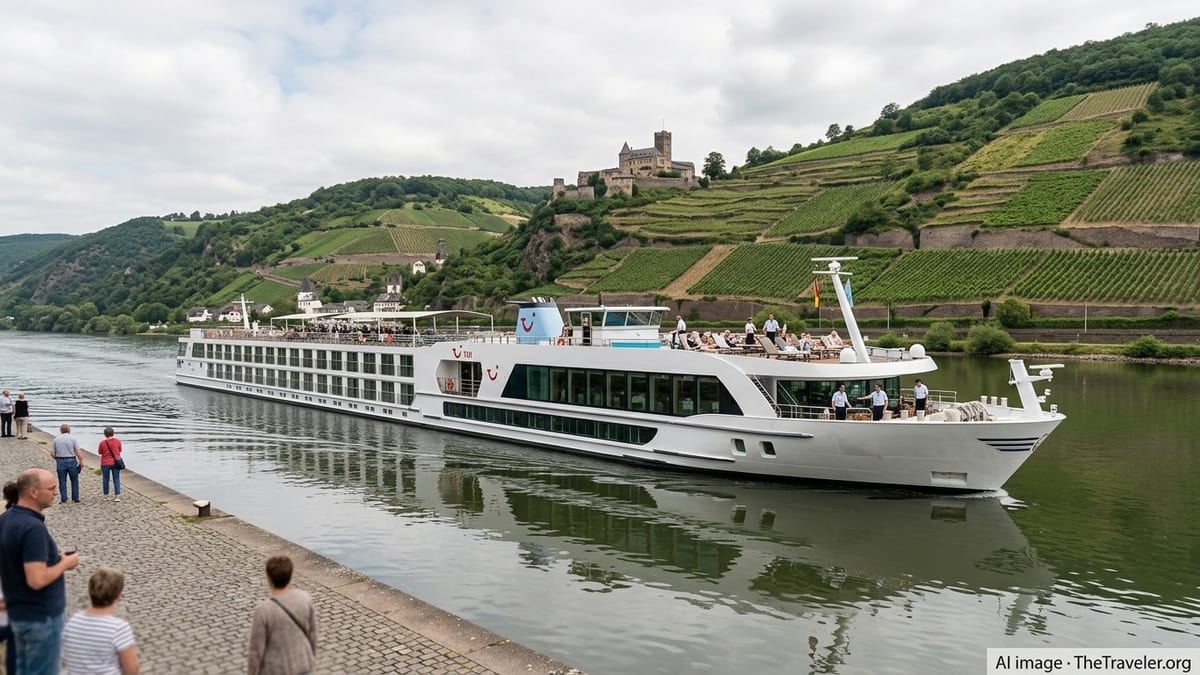
TUI River Cruises has been steadily building out itineraries along the Rhine, with schedules for 2026 and 2027 highlighting classic routes between Amsterdam, Basel and Frankfurt. The Rhine and its tributary, the Moselle, are central to this growth, reflecting traveler demand for itineraries that combine major cities with smaller wine towns and castle-dotted landscapes. According to published coverage, this segment has seen a renewed lift in sales, encouraging operators to invest in higher-capacity and more feature-rich ships.
Industry observers note that as other brands push deeper into luxury, TUI is positioning its Rhine product as an accessible alternative that still offers high comfort levels, contemporary design, and a relaxed onboard atmosphere. This approach is shaping how new and refurbished ships are configured for the mainstream European traveler who expects hotel-style amenities but prefers an informal environment over a strictly traditional cruise format.
Employee Godparents Reframe the Naming Tradition
While river vessels have historically relied on celebrities, dignitaries, or high-profile personalities as godparents, TUI’s broader cruise portfolio has begun experimenting with a different model that could influence future Rhine launches. Recent naming ceremonies in the wider TUI Cruises fleet have increasingly highlighted employees, environmental officers, shipyard staff and everyday guests as godparents, reflecting a shift away from star-driven marketing toward human-centric storytelling.
Reports indicate that one of the newest ocean ships in the group’s portfolio was dedicated with an environmental officer as godmother, underscoring themes of sustainability and operational expertise instead of celebrity status. Another upcoming vessel in the ocean fleet is linked to a contest that invites loyal passengers to become godmother, opening the role to people with a personal connection to the brand rather than public fame.
Although these initiatives are currently most visible on ocean-going ships, industry coverage suggests that they signal a wider cultural change at TUI that is likely to filter through to its river operations. As the Rhine fleet grows and new vessels enter service, observers expect employee or customer godparents to play a larger role in ship christenings, strengthening the sense of community between staff, guests and the brand.
Redefining Luxury on the Rhine
Alongside the evolving godparent concept, TUI is investing in hardware that aims to redefine what mainstream luxury looks like on the Rhine. A recently announced high-capacity river ship scheduled to enter service on the Rhine and Moselle has been highlighted as the most spacious vessel yet in the company’s river lineup. Public information describes a design that introduces features more commonly associated with ocean cruising, such as a pool with panoramic views, wellness areas, and expanded outdoor lounging space.
This ship concept reflects a broader trend of river lines adding resort-like amenities without losing the intimate scale that river travelers value. TUI’s approach blends a modern hotel aesthetic with the classic appeal of castle and vineyard scenery, targeting guests who want upgraded comfort but are not necessarily seeking ultra-luxury, all-inclusive pricing. The balance between value and indulgence is central to how the brand frames its new Rhine offerings.
According to published fleet details, wellness and open-air experiences are a particular focus. Panoramic decks, sunloungers, and informal outdoor games are designed to encourage guests to treat the vessel as a floating resort, not only a moving base for excursions. This emphasis is in line with the growing importance of onboard lifestyle for travelers who may have already visited the Rhine’s marquee cities and are now more interested in how they spend their time between ports.
Sustainability and Design Trends Converge
TUI’s evolving godparent choices also mirror a stronger emphasis on sustainability and responsible operations, themes that are increasingly visible in its wider cruise activities. Several of the group’s newest ocean ships showcase technologies such as advanced emissions controls and shore power connectivity, and the decision to spotlight technical or environmental staff as godparents underlines the importance of those investments to the overall brand narrative.
River ships on the Rhine typically operate in environmentally sensitive regions, passing through densely populated areas and protected landscapes. While technical specifications for each TUI river vessel vary, the broader corporate trend toward cleaner operations places additional focus on fuel efficiency, shore power usage where available, and careful itinerary planning that minimizes local disruption. The visibility of employee godparents with operational or environmental expertise helps connect these back-of-house decisions to the guest-facing story.
Design-wise, the newest and refurbished ships in the TUI portfolio lean into bright, contemporary interiors, flexible public spaces, and large windows that accentuate views of the Rhine’s steep vineyards and medieval towns. This aesthetic is intended to support a more relaxed luxury feel, complementing the company’s shift toward storytelling that centers on real people working behind the scenes rather than only glamorous launch events.
What It Means for Future Rhine Travelers
For travelers considering a Rhine cruise in the coming seasons, these developments point to a more personalized and experience-driven version of luxury river cruising. Prospective guests can expect itineraries that still take in classic ports such as Cologne, Koblenz and Basel, paired with ships that emphasize wellness areas, outdoor spaces, and informal social zones rather than traditional formality.
The move toward employee and guest godparents, while symbolic, offers a visible sign of how TUI is trying to differentiate its product in a crowded field. Instead of relying solely on celebrity endorsements, the company is highlighting the role of crew members, technical experts and loyal customers in shaping the onboard experience. For the Rhine market, where many lines operate similar routes, this human-centered narrative may help one brand stand out from another.
As capacity increases on the Rhine and competitors continue to introduce newbuilds and refitted vessels, TUI’s blend of accessible luxury, evolving ship design and community-focused naming traditions suggests that the next wave of Rhine cruises will feel more contemporary and more tightly connected to the people who work and sail on board. For travelers, that could mean a river journey that is not only scenic but also more relatable and personal in tone.