

More news on this day
TUI is reshaping river cruising traditions on the Rhine by spotlighting employee ship godparents and personal storytelling, turning the christening of its latest vessel into a more intimate and meaningful experience for guests and crew alike.
Get the latest news straight to your inbox!
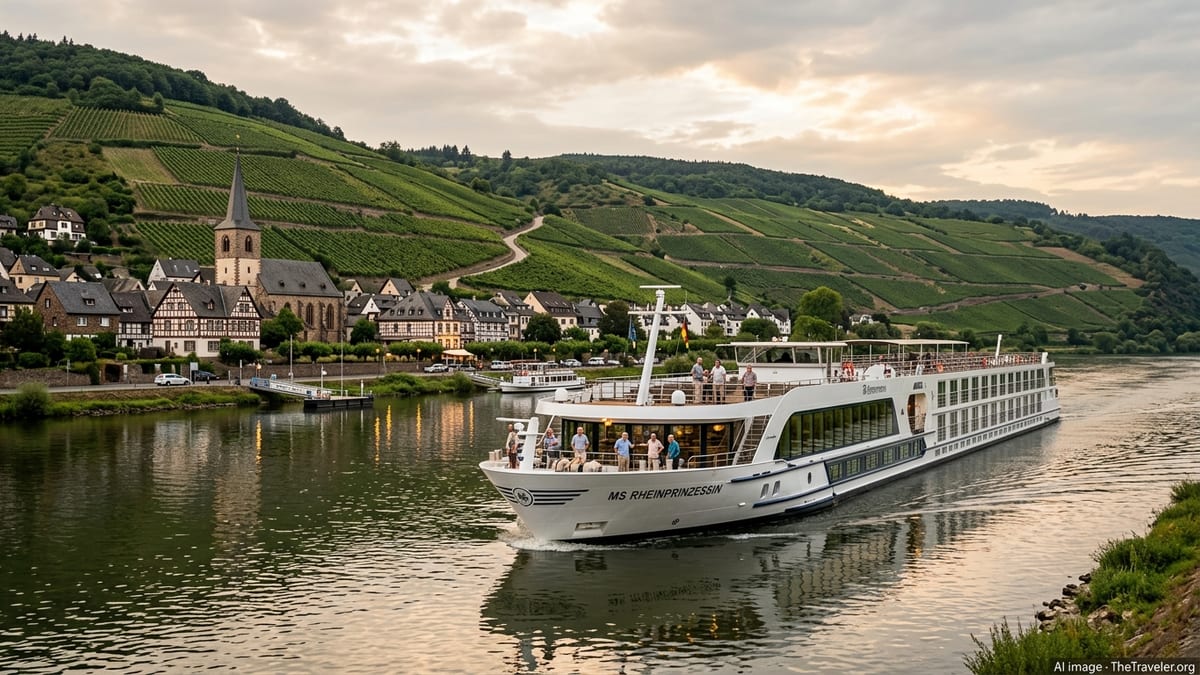
A New Rhine Launch Rooted in People, Not Celebrity
The unveiling of TUI’s newest Rhine cruise ship comes with a deliberate shift in focus from celebrity glamour to everyday talent. Instead of turning to well-known public figures, the operator is emphasizing godparents drawn from within its own ranks and wider travel community, reflecting a broader trend across the brand to humanize ship naming ceremonies and deepen guest connection.
Recent initiatives across TUI’s cruise portfolio illustrate this change in tone. On the ocean side, environmental officers and other long-serving employees have been chosen as godmothers for newbuilds, while on the contemporary Mein Schiff fleet the company has invited loyal guests to apply to become ship godparents. Publicly available information shows that this approach is now being echoed on the rivers, with staff and front-line travel professionals positioned at the heart of new ship stories.
For Rhine travelers, that means the latest vessel is being framed less as a floating resort launched by distant VIPs and more as a shared project between the people who operate it and the guests who sail on it. The naming of the ship is being communicated as a milestone for crews, engineers and shore-based teams who have carried the project from initial design to operational reality.
Travel industry coverage indicates that this people-first narrative is resonating with a growing audience of river cruisers who value authenticity and a sense of community over red-carpet spectacle. By aligning the ship’s public debut with real employees and regular travelers, TUI is aiming to underscore that river cruising can feel accessible and inclusive even as new ships add more premium features.
Employee Godparents Bring the Backstory On Board
Elevating employees to the role of ship godparents gives TUI River Cruises a powerful storytelling tool along the Rhine. Rather than a brief, symbolic appearance, godparents with operational backgrounds can speak to the years of planning, safety work and service refinement that sit behind each itinerary, from Cologne to Amsterdam or Basel.
Reports on previous TUI naming events show that environmental officers, long-serving crew and shore-based specialists have increasingly been placed center stage when new ships are christened. Transferring this formula to the river product allows TUI to highlight the technicians, hotel managers and destination experts who understand the day-to-day realities of sailing Europe’s busiest waterway.
This approach also dovetails with the river line’s adult-only positioning. Marketing materials for recent Rhine seasons promote curated culinary experiences, slower-paced city time and flexible excursions rather than rigid sightseeing. An employee godparent, with a direct understanding of guest habits and on-board culture, can embody that philosophy in a way that feels grounded and credible to passengers.
From a brand perspective, the choice of staff godparents reinforces a message of continuity and care. It signals that those responsible for the ship’s christening are the same people concerned with environmental compliance, crew welfare and the fine details of service that determine whether a river voyage feels effortless or forgettable.
Transforming the Rhine Itinerary into a Personal Journey
The Rhine has long been one of Europe’s most commercially important rivers, lined with ports where river ships dock within walking distance of Gothic cathedrals, medieval castles and wine villages. TUI’s latest vessel enters a competitive market, but its focus on personal narratives is intended to differentiate the experience from more traditional sightseeing-led itineraries.
Current Rhine programs marketed by TUI River Cruises already emphasize themes such as festive sailings, wine routes and cultural city pairings. With the new ship, the operator is layering on a more intimate dimension, incorporating employee and guest stories into on-board programming, pre-cruise content and social media coverage of the naming festivities.
According to recent brochures and schedule releases, itineraries continue to cover hallmark stretches between cities such as Cologne, Amsterdam, Frankfurt and Basel, with variations that include Christmas markets, vineyard visits and historic town walks. What is being positioned as new is not the geography but the framing: the chance to understand how crew members experience the river across seasons and how employees who serve as godparents interpret the landscapes they sail through.
For travelers, this can translate into subtle but meaningful touches, from commentary that blends personal anecdotes with destination facts to on-board events that spotlight the journeys of crew who have advanced through the company to take on symbolic roles such as godparent. The Rhine becomes not only a backdrop of castles and cliffs but also the shared workplace and life setting of those running the ship.
Linking River Cruises to a Broader Shift in TUI’s Fleet
The decision to empower employees and loyal travelers as godparents on the Rhine mirrors developments across TUI’s wider cruise operations. Ocean-going newbuilds in the Mein Schiff fleet have featured environmental officers and other staff as godmothers, while a current campaign for a forthcoming vessel invites past guests to apply to assume the role, highlighting a consistent strategy of involving insiders rather than external celebrities.
Industry analysis suggests that this shift responds to changing expectations among cruise passengers, who increasingly seek transparency around sustainability, crew welfare and operational standards. When godparents are people with hands-on responsibility for these areas, their presence at naming ceremonies sends a signal about what the company wants its ships to represent.
River cruising is a natural arena for that message. Vessels are smaller, crew-guest ratios are higher and ports are closer together, giving passengers more opportunities to interact with staff and see daily operations up close. By aligning the Rhine ship’s launch narrative with internal expertise, TUI reinforces the idea that every sailing is shaped by human decisions rather than purely by design trends or marketing slogans.
For the wider European river market, the move adds to a gradual redefinition of what a ship naming can achieve. Instead of a single, highly choreographed event aimed mainly at media coverage, christenings are being presented as the start of a long-running conversation between a brand, its workforce and repeat guests, with the Rhine acting as a high-visibility stage.
What This Means for Future European River Travel
As more travelers return to Europe’s waterways, competition among river operators on routes like the Rhine, Danube and Moselle continues to intensify. TUI’s emphasis on employee and community godparents positions its latest Rhine ship as part of a broader movement toward more personal and participatory forms of travel.
Analysts tracking river cruise capacity and new ship orders note that hardware upgrades alone are no longer sufficient to sway experienced cruisers. Cabins, dining and wellness spaces are converging in quality across major brands, which raises the importance of narrative, connection and brand values in shaping booking decisions.
Against that backdrop, the story of a Rhine vessel launched with employee godparents and supported by staff-centered storytelling offers a template that other operators may watch closely. If travelers respond positively, future ships on Europe’s rivers could see more crew members, technical specialists and long-time customers honored in ways that historically were reserved for celebrities and dignitaries.
For now, TUI’s newest Rhine ship serves as a visible marker of that evolution. By aligning a traditional maritime ritual with the lived experiences of those who work on board and sail regularly, the company is betting that European river travel can feel not only scenic and comfortable but also genuinely personal.