

More news on this day
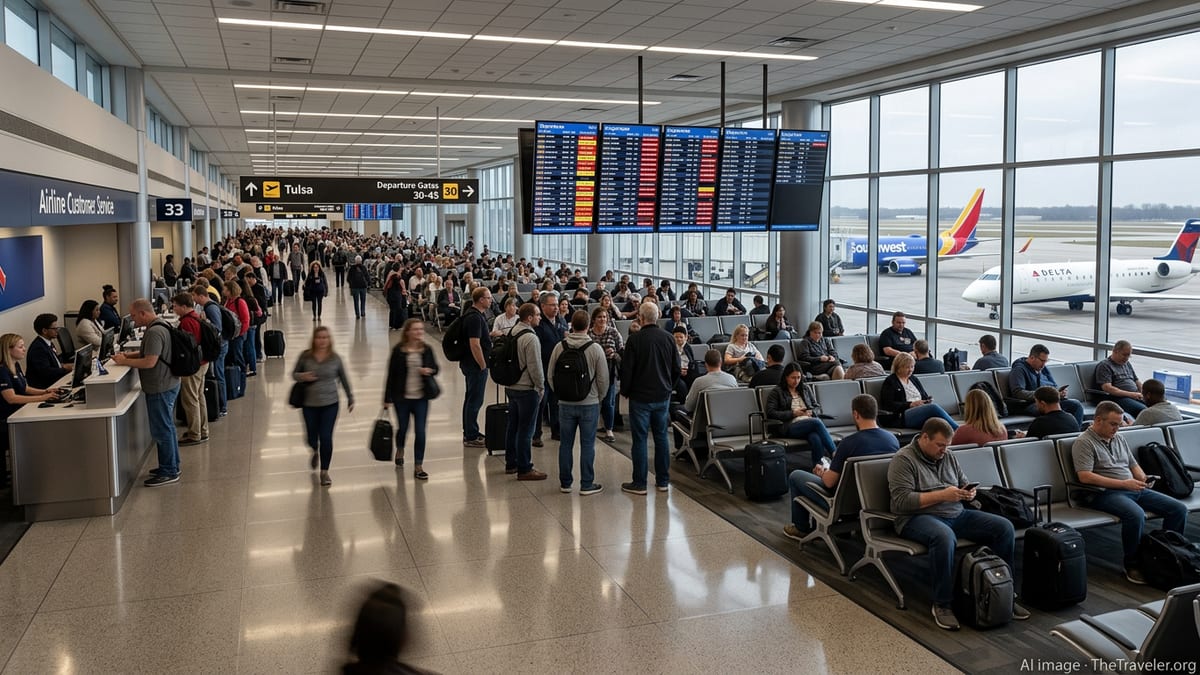
Passengers at Tulsa International Airport faced an unexpectedly chaotic travel day on March 8 as at least eight flights operated by Southwest, Delta, CommuteAir and Mesa were canceled, with additional services delayed and misaligned across major hub airports in Atlanta, Houston, Denver, Charlotte and Dallas.
Weather and Network Strains Converge on Tulsa
The disruptions came as airlines across the United States continued to recover from a broader wave of weather-related turmoil that began on March 7, when thunderstorms, low clouds and late-season snow snarled operations at key hubs including Chicago, Atlanta and Denver. Those knock-on effects rippled into Sunday schedules at second-tier airports such as Tulsa, where smaller banks of flights are more vulnerable to gaps in aircraft and crew availability.
While Tulsa International did not experience significant local weather problems, national routing constraints meant aircraft and flight crews arriving from already stressed hubs were out of position. Several early inbound flights operated by regional partners for the major carriers were either heavily delayed or removed from the schedule, forcing airlines to consolidate passengers onto later departures or reroute them through alternate cities.
By midday, the departures board at Tulsa showed a patchwork of delays, rolling gate changes and cancellations, particularly on key trunk routes to Atlanta, Houston, Denver and Dallas. For many travelers starting spring break or returning from weekend trips, the impact was felt in missed connections, extended layovers and unexpected overnight stays in connecting cities.
Airport officials advised passengers to arrive early and to remain closely engaged with airline apps and text alerts, noting that additional schedule adjustments remained possible through the evening as carriers recalibrated their networks.
Southwest and Delta Among Most Affected Carriers
Southwest Airlines and Delta Air Lines, two of the largest carriers serving Tulsa, were among those hardest hit by Sunday’s disruption pattern. Southwest, which links Tulsa to major hubs such as Dallas and Houston as well as western gateways like Denver, faced multiple schedule adjustments as aircraft arriving from weather-stricken cities were delayed or reassigned.
At least three Southwest-operated departures from Tulsa were canceled outright, affecting travelers headed to Houston and Dallas as well as those connecting onward to Florida and the Mountain West. Several additional Southwest flights departed late as operations teams waited for inbound aircraft to arrive and complete mandatory safety checks.
Delta, which relies heavily on its Atlanta hub to feed Tulsa-bound traffic, was forced to cancel and delay multiple services after enduring ground delay programs and high congestion at Hartsfield–Jackson the previous day. One Tulsa–Atlanta roundtrip was scrubbed on Sunday, and others operated with extended delays, complicating connections to the Southeast, East Coast and international long-haul network.
For passengers, the combination of cancellations and tight rebooking options on both carriers translated into a day of crowded customer service lines and jammed phone support as they sought alternative routes or travel dates.
Regional Partners CommuteAir and Mesa See Knock-on Cancellations
The turbulence was not limited to mainline operations. Regional carriers CommuteAir and Mesa, which operate flights on behalf of major brands such as United and American, also recorded cancellations affecting Tulsa’s connectivity to larger hubs. These partners typically operate smaller regional jets and are tightly woven into the mainline carriers’ banked schedules, making them particularly sensitive to upstream disruption.
According to airport and schedule data reviewed on Sunday, at least one CommuteAir-operated departure and one Mesa-operated flight touching Tulsa were canceled, directly impacting travelers headed for major connection points including Denver, Houston and Charlotte. In some cases, passengers were rebooked via indirect routings through Dallas or Chicago, adding extra segments and hours to journeys that would normally take only a single hop.
Because regional operations often serve as feeders into long-haul and transcontinental networks, the lost flights also had an outsized effect on itineraries beyond the immediate region. Travelers bound for destinations as far-flung as the West Coast, Northeast and even international gateways reported being forced to overnight in hub cities or accept next-day departures.
Airline representatives stressed that many of the regional cancellations were preemptive, aimed at stabilizing the wider network by trimming thinner routes in favor of preserving capacity on the busiest corridors.
Major Hubs Feel the Ripple Effect
The disruptions at Tulsa formed part of a broader national picture in which Atlanta, Houston, Denver, Charlotte and Dallas all reported elevated levels of delays and cancellations through the weekend. As aircraft and crews rotated through these megahubs, even relatively minor schedule changes quickly cascaded through connecting spokes such as Tulsa.
At Atlanta, lingering congestion from Saturday’s thunderstorms meant ground operations were still recovering as Sunday morning banks built up. Flights to and from secondary markets, including Tulsa, were among the first to be retimed or consolidated when arrival and departure slots tightened.
Houston’s dual-airport system, Denver’s altitude- and weather-sensitive operations, Charlotte’s role as a key East Coast connector, and Dallas’s pair of sprawling hubs also contributed to the strained network. Delays at any one of these airports translated into late-arriving aircraft for Tulsa-bound flights, which then impacted later departures from Oklahoma.
Industry analysts noted that as airlines operate tighter schedules with fewer spare aircraft and leaner staffing, the system has become less resilient to fast-changing conditions, particularly during busy travel periods such as early March.
What Stranded Travelers in Tulsa Are Being Advised to Do
For passengers still facing uncertainty at Tulsa International, airlines and travel experts are urging a proactive approach. Travelers are being encouraged to confirm their flight status before leaving for the airport, use mobile boarding passes, and enable push notifications to receive real-time updates on any further schedule changes.
Those with same-day connections through major hubs are being advised to consider earlier departures from Tulsa where possible, giving themselves longer buffers in Atlanta, Houston, Denver, Charlotte or Dallas. Agents at Tulsa’s ticket counters reported that some travelers were able to salvage international and cross-country trips by accepting creative reroutes via less congested hubs.
Airlines also reminded affected customers of their options when flights are canceled or significantly delayed, including no-fee rebooking within a limited travel window and, in some cases, travel credits. However, with load factors running high at the start of the spring break period, same-day alternatives remained limited on many routes.
With storms and operational challenges still working their way through the wider U.S. air network, officials at Tulsa International cautioned that further disruption cannot be ruled out in the coming days, and urged travelers to build extra time into their plans and maintain flexibility wherever possible.