

More news on this day
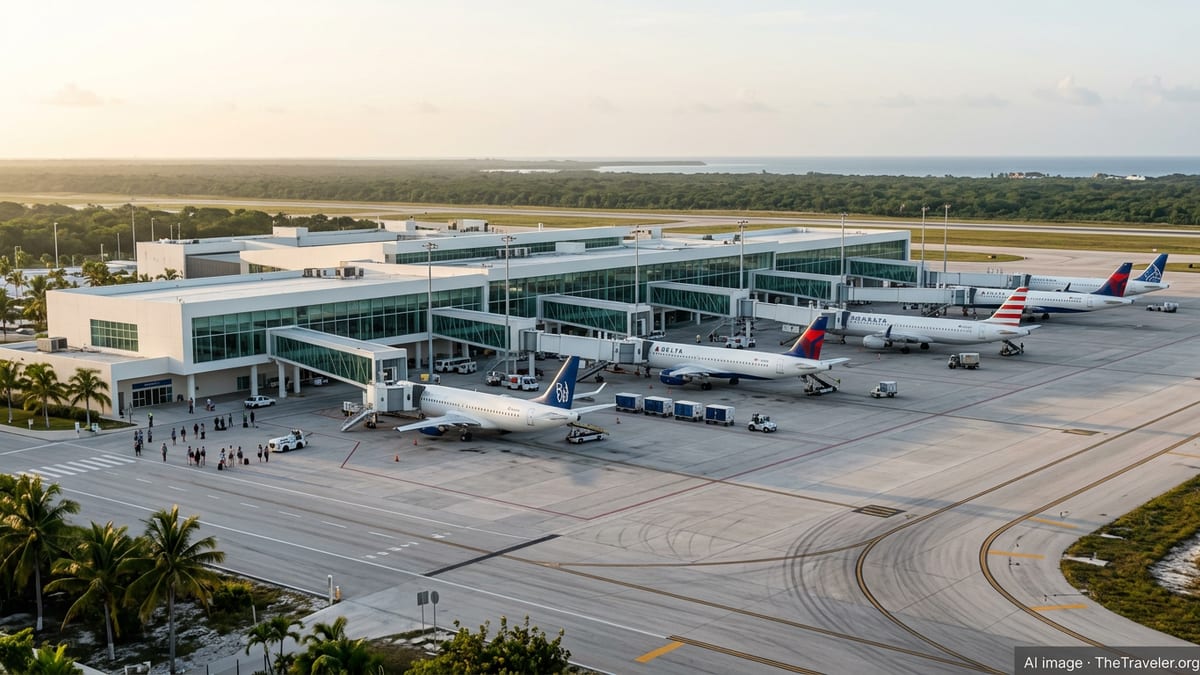
Tulum’s Felipe Carrillo Puerto International Airport is entering 2026 with brisk passenger demand, a reshuffled route map and growing importance in Mexico’s fiercely competitive Caribbean aviation market.
From Newcomer to Million-Passenger Player
Opened in late 2023, Tulum International Airport has rapidly shifted from ambitious infrastructure project to a key leisure gateway, closing 2025 with roughly 1.24 million passengers, according to Mexican aviation data. That figure puts the airport at nearly a quarter of its 5.5 million annual design capacity in only its second full year of operations, a pace analysts describe as “robust” given its highly seasonal, tourism-driven profile.
Regional authorities point out that the airport surpassed the symbolic one million passenger mark even as some airlines trimmed or reorganized capacity in 2025. The performance underscores how quickly travelers have adopted Tulum as an alternative entry point to the Riviera Maya, reducing transfers through Cancún and shortening overland journeys to resort zones along Mexico’s Caribbean coast.
By mid-2025, Tulum ranked among Mexico’s leading airports for international leisure traffic, helped by strong flows from the United States and Canada. Local tourism officials say they expect total traffic in 2026 to edge higher again, supported by a more stable schedule and better integration with ground transport networks serving the wider Quintana Roo region.
Even so, executives caution that the airport remains in a ramp-up phase, with airlines closely watching seasonal patterns and yield performance before locking in larger, year-round commitments.
Airlines Recalibrate Capacity While Demand Holds
The opening buzz around Tulum in 2024 prompted a rapid influx of capacity from major U.S. carriers, as American, Delta, United and low-cost competitors rushed to secure a foothold. By late 2024 and into 2025, that enthusiasm gave way to a more sober reassessment as some routes underperformed outside peak holiday windows, leading to selective cancellations and frequency cuts.
Industry reports note that several U.S. airlines quietly dropped secondary routes to Tulum or shifted capacity back to Cancún, while Germany’s Discover Airlines opted to move its Mexico Caribbean focus to Cancún after an initial winter season linking Frankfurt with Tulum. Those decisions fueled speculation that the new airport’s growth story might be stalling before it really started.
Traffic data and the airport’s own year-end tallies tell a more nuanced story. Despite route rationalizations and fewer daily international departures than in its first high season, overall passenger numbers continued to climb through 2025 as surviving routes consolidated higher load factors and domestic connectivity improved. Observers say the pattern is typical of a maturing leisure destination, where early overcapacity is gradually replaced by a more sustainable mix of core markets.
Heading into 2026, airlines are increasingly emphasizing schedule reliability and profitability over pure route count. Carriers are concentrating on high-demand origin cities, strengthening peak-season offerings and experimenting with shoulder-season pricing rather than maintaining thin year-round flights.
U.S. and Regional Markets Drive 2026 Route Strategy
North America remains the backbone of Tulum’s network strategy in 2026. United States carriers continue to operate from key hubs feeding the Mexican Caribbean, with Tulum positioned as a complement rather than a replacement to established Cancún operations. Industry consultants say that, after a period of trial and error, airlines have a clearer picture of which city pairs can support nonstop Tulum service beyond marquee holiday periods.
Domestic Mexican routes, including links to Mexico City and other major urban centers, have quietly become an important stabilizer for the airport. These flights provide year-round demand from business, visiting-friends-and-relatives and domestic tourism segments, helping smooth the sharp peaks and troughs that characterize purely international leisure traffic.
Latin American connectivity is also gaining attention. While long-haul European service remains limited and highly seasonal after the first experimental transatlantic offerings, regional airlines are evaluating potential links from South American cities where interest in the Riviera Maya continues to grow. Aviation analysts expect at least incremental expansion from southern cone markets over the next two years, particularly timed to winter in the southern hemisphere.
For now, airport management is focused on deepening frequency and schedule options on proven routes, aiming to make Tulum more attractive for connecting itineraries and dynamic vacation packages sold by tour operators in the United States, Canada and South America.
Travel Trends Shift Toward Longer, Experience-Focused Stays
Passenger growth at Tulum is closely tied to broader shifts in how travelers are experiencing Mexico’s Caribbean coast. Hoteliers and tour operators in the Tulum area report that visitors arriving via the local airport are skewing toward longer stays, often combining beach time with wellness retreats, eco-tourism and visits to nearby archaeological sites.
Industry surveys suggest that many repeat visitors who previously flew into Cancún are now opting for Tulum to cut overland travel times and position themselves closer to boutique resorts and coastal communities south of Playa del Carmen. That shift supports higher-spend, experience-driven tourism, a segment that regional planners hope will underpin more stable, higher-yield air demand.
At the same time, concerns over crowding and environmental impact along the Riviera Maya are influencing booking behavior. Some travelers are splitting time between inland communities and the coast, while others are exploring less-publicized stretches of shoreline accessible via Tulum’s growing network of ground transfers. Airports and airlines alike are responding by promoting off-peak travel months and shoulder-season fare deals to disperse traffic more evenly throughout the year.
Local businesses say the presence of the airport has also broadened the market for midweek and short-notice getaways, particularly among U.S. travelers who can now reach Tulum on nonstop flights from major hubs for long weekends.
Infrastructure, Capacity and the Race to Stay Ahead of Demand
Behind the passenger numbers, 2026 is shaping up as a critical year for Tulum’s airport infrastructure. With an annual design capacity of 5.5 million passengers, the terminal has considerable room to grow, but authorities are already weighing phased investments to stay ahead of demand and avoid some of the congestion challenges seen at other Mexican tourist gateways.
Planned improvements include expanded check-in and security areas, upgrades to baggage handling and apron operations, and enhanced public transport links to Tulum town, nearby resorts and the wider Maya Riviera corridor. Integration with new rail and roadway projects is a particular focus, as officials work to create a more seamless multimodal network for visitors.
Aviation experts say that how efficiently the airport manages its next phase of growth will influence airline decisions on future capacity. Streamlined ground operations and reliable connection times are key to convincing carriers to schedule additional frequencies or deploy larger aircraft during peak seasons.
For travelers, the near-term outlook is one of increasing choice. While route maps may continue to shift as airlines fine-tune strategies, the overall trend at Tulum International Airport points toward steadier, more diversified demand in 2026, reinforcing its role as a rising hub in Mexico’s Caribbean tourism landscape.