

More news on this day
Tunisair is accelerating a long-planned fleet renewal centered on Airbus A320neo aircraft and future widebody leases, a modernization drive that industry analysts say could reshape how international travelers reach Tunisia and, by extension, the wider African tourism market.
Get the latest news straight to your inbox!
A Modern Narrowbody Backbone for a Growing Market
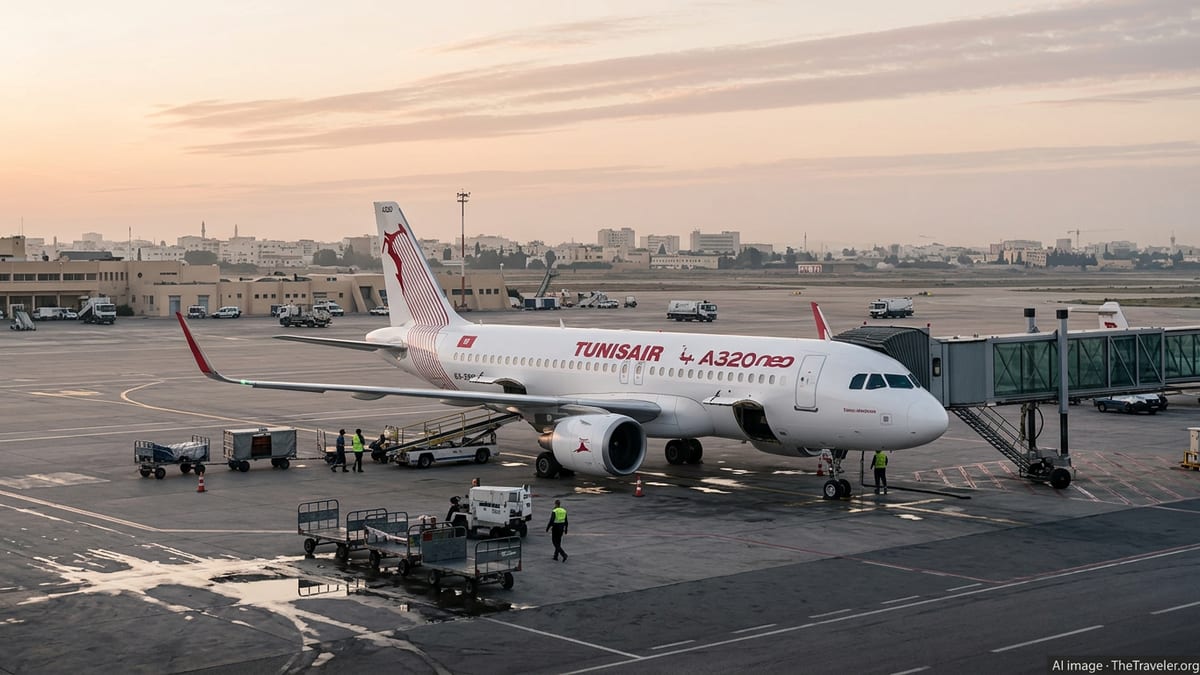
The Tunisian flag carrier has spent the past four years progressively refreshing its short and medium haul fleet with Airbus A320neo jets, moving away from older, less fuel efficient models. A sale and leaseback strategy agreed with major lessors allowed Tunisair to take five new A320neo aircraft between late 2021 and 2023, with a further A320 entering the fleet in April 2025 as part of a broader development plan. The airline today operates a mix of A320neo and A320ceo aircraft that form the backbone of its European and regional network.
The move brings tangible operational gains. The A320neo offers double digit reductions in fuel burn and emissions compared with earlier variants, while also delivering a quieter cabin and longer range. These characteristics matter on heavily trafficked routes between Tunis and key European gateways such as Paris, Rome, Barcelona and Frankfurt, where competition from low cost rivals has intensified and operating margins remain tight.
Crucially for tourism, the higher efficiency of the A320neo family gives Tunisair more flexibility to add capacity seasonally and to open thinner, point to point routes that may have been commercially marginal with older aircraft. Industry observers note that additional charter and scheduled flights into secondary European cities, North African hubs and selected Middle Eastern markets are already being operated with the new type, aligning aircraft economics with Tunisia’s aim to attract more mid income leisure travelers.
Cabin upgrades are also part of the renewal story. Tunisair has focused on standardizing interiors around the A320 platform, simplifying maintenance while improving the customer experience with refreshed seating, LED lighting and updated inflight connectivity options. These touches are aimed at tour operators and independent travelers alike, who increasingly compare short haul products across airlines rather than choosing solely on price.
New Leasing Plan Signals Next Phase of Renewal
The next chapter in Tunisair’s strategy emerged in early March 2026, when the Ministry of Transport confirmed the launch of an international tender to lease two additional A320 aircraft for a six year period starting in 2026. The plan, part of a restructuring roadmap for 2026 to 2030, foresees the leasing of four more medium capacity aircraft and two large capacity aircraft between 2027 and 2030, effectively laying the groundwork for a mixed narrowbody and widebody renewal.
The choice to favor operating leases rather than outright purchases reflects both financial realities and a desire for flexibility. Tunisia’s national carrier has faced liquidity constraints and a challenging macroeconomic context, making capital intensive aircraft orders difficult. Lease arrangements spread costs over time and allow capacity to be adjusted if demand or strategy changes, while still giving the airline access to the latest technology.
Analysts say the tender also signals a measured confidence in future demand. By staggering new arrivals through the end of the decade, Tunisair can match fleet growth with the tourism sector’s trajectory, which has already surpassed pre pandemic arrivals in 2025 and is targeting further expansion into 2026. Planned large capacity aircraft, likely in the Airbus A330 or comparable widebody category, would be positioned for medium and long haul routes serving Europe, the Gulf and potentially Asia.
For travelers, the outcome should be a more reliable and predictable schedule. A younger, more homogeneous fleet tends to improve on time performance and reduce disruption related to unscheduled maintenance, issues that have previously constrained Tunisair during peak summer months. That reliability is increasingly critical for tour operators packaging Tunisia alongside competing Mediterranean destinations.
Widebody Ambitions and Long Haul Connectivity
While the A320neo has captured attention as the visible face of Tunisair’s renewal, the airline’s plan to bring in two large capacity aircraft between 2027 and 2030 could be even more consequential for African tourism. Larger widebodies would enable the carrier to consolidate and potentially expand long haul services to Gulf hubs, sub Saharan Africa and selected Asian or transatlantic markets, either directly or via partnerships.
Tunisia’s tourism officials have repeatedly emphasized that long haul connectivity is the missing piece in the country’s growth story, particularly to China and North America. As Chinese outbound tourism rebounds, Tunisian representatives have highlighted the need for more direct or one stop connections that avoid lengthy detours through European hubs. Modern widebody aircraft configured with competitive cabins would give Tunisair greater leverage in negotiating traffic rights and codeshare agreements that could funnel higher spending visitors into Tunis, Djerba and other resort areas.
For the broader African market, an upgraded Tunisair widebody fleet could strengthen Tunisia’s role as a northern gateway between Europe and sub Saharan destinations. Improved schedules to West African commercial centers, combined with refurbished A320 family aircraft for feeder traffic, would create new itinerary possibilities that pair North African beach stays with business or leisure trips deeper into the continent.
Such ambitions will depend on careful execution. Widebody operations are capital intensive and sensitive to fuel prices, and many African carriers have struggled to profitably sustain long haul networks. Tunisair’s staggered leasing timeline, however, suggests a cautious approach that ties fleet expansion to demonstrable demand on existing and emerging routes.
Tourism Boom Raises Stakes for Air Connectivity
Tunisia’s bet on fleet renewal comes amid a sharp rebound in visitor numbers. The country welcomed more than 11 million tourists in 2025, surpassing its previous record from 2019 and confirming its status as one of Africa’s leading destinations. Tourism receipts in recent years have exceeded 2 billion dollars annually, providing much needed foreign currency and employment in coastal regions and heritage cities.
European travelers remain the backbone of the market, but authorities are targeting greater diversification, particularly from the Gulf, Central Europe and Asia. Tourism campaigns have shifted toward promoting cultural circuits that link Carthage, Kairouan and the Sahara with classic seaside resorts, while investors have announced new hotel and infrastructure projects scheduled through the end of the decade.
Air connectivity is central to these plans. National and regional tourism offices consistently describe airline capacity as the main bottleneck to faster growth, especially in shoulder seasons when hotels have room to spare but direct flights are limited. By deploying more efficient A320neo aircraft and planning for new widebodies, Tunisair positions itself as a key enabler of year round tourism rather than a purely summer focused operator.
The government is also looking beyond aircraft. Preparatory work has begun on an expansion of Tunis Carthage International Airport, which could eventually lift capacity to around 18.5 million passengers per year from roughly 5 million currently. Combined with a modernized fleet, the upgraded gateway is designed to accommodate both rising point to point demand and increased transfer traffic connecting Europe, Africa and the Middle East through Tunis.
Regional Competition and the Race to Modernize
Tunisair’s renewal drive unfolds in a highly competitive neighborhood. Across North Africa and the wider continent, airlines such as Royal Air Maroc, EgyptAir, Ethiopian Airlines and Air Arabia have invested heavily in new generation narrowbody and widebody fleets, harnessing them to expand networks and attract transit passengers. Delays in updating equipment or improving service risk pushing Tunisia to the margins of tour operators’ brochures and online travel agency listings.
By steadily introducing A320neo aircraft and planning for additional leased jets, Tunisair is seeking to close that gap and reposition itself as a credible alternative for both leisure and business travelers. The emphasis on leasing rather than large, headline grabbing purchase orders may draw less global attention, but it aligns more closely with Tunisia’s economic constraints while still achieving the end goal of a younger fleet.
Success will ultimately be measured in seat capacity and route choice. If the planned widebody arrivals support new or more frequent services to key source markets and if A320neo utilization continues to rise on intra Mediterranean routes, Tunisair could become a more visible player in the African tourism landscape by the early 2030s. That, in turn, would help Tunisia capture a larger share of the continent’s growing visitor flows, while reinforcing its role as a bridge between Europe, Africa and the Middle East.
For now, the carrier’s fleet renewal remains a work in progress, but the direction of travel is clear. Modern A320 family aircraft and future large jets are set to define Tunisair’s next decade, with implications that reach well beyond the airline itself to the hotels, destinations and communities that depend on the steady arrival of foreign visitors.