

More news on this day
A Delta Air Lines service from Los Angeles to Sydney experienced significant turbulence en route, injuring four crew members and triggering a coordinated emergency response upon landing at Sydney Airport, according to early media and aviation incident reports.
Get the latest news straight to your inbox!
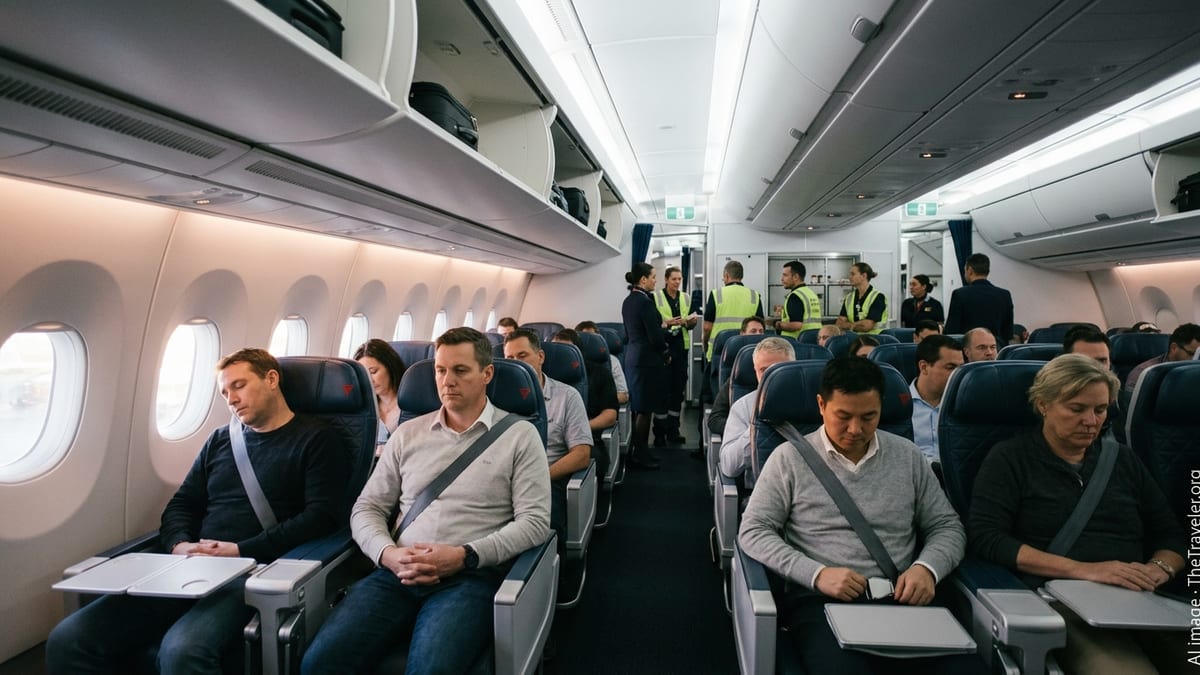
What Is Known So Far About the Mid-Pacific Turbulence
Initial reports indicate that the Los Angeles to Sydney flight encountered a sudden bout of severe turbulence over the Pacific, strong enough to throw unseated cabin crew off balance while the seat belt sign was illuminated for passengers. Publicly available flight-tracking data referenced in news coverage suggests the disturbance occurred during the cruise phase, when aircraft are normally above most weather systems.
Accounts collected by major news outlets and aviation-focused publications describe a brief but intense event, with some loose items in the cabin displaced and service temporarily halted. The four injured crew members were reportedly working in the galley area or moving through the aisle at the time, which typically carries a higher risk of injury than for seated and belted passengers.
There are no indications at this stage of structural damage to the aircraft or any threat to its overall airworthiness. Available information points to the flight continuing to Sydney under its own power and landing on schedule or with only a minor delay, consistent with standard airline procedures following an in-flight turbulence incident where the aircraft remains fully controllable.
Aviation analysts commenting in published coverage emphasize that turbulence encounters of this kind, while frightening, rarely compromise the safety of the aircraft itself. The main vulnerability in such events is to unrestrained people in the cabin, particularly crew members who are on their feet to deliver service or conduct safety checks.
Emergency Response at Sydney Airport
On approach to Sydney, the flight crew reported the injuries on board and requested medical assistance on arrival, according to publicly accessible incident summaries and local media reports. In response, airport emergency services were placed on heightened readiness and positioned to meet the aircraft at the gate, a standard precaution when injuries are reported in flight.
After the aircraft reached its parking stand and engines were shut down, paramedics boarded to assess the condition of the four injured crew members. Based on published accounts, at least some of those crew were transported to local hospitals for further evaluation and treatment, while others were assessed on site. There have been no widely reported life-threatening injuries in connection with the event.
Sydney Airport operations continued with limited disruption. Ground handling teams worked alongside emergency services to disembark passengers in an orderly manner, prioritizing medical access and safety around the aircraft. This pattern aligns with established airport emergency procedures, which are designed to keep airfield movements flowing while addressing an isolated incident on a single flight.
Australian aviation agencies typically conduct routine follow-up on these kinds of events to verify that crew actions, communication protocols and airport responses followed existing regulations. While any formal investigation process can take time, early information suggests that the immediate on-the-ground response functioned as intended, with medical assistance available quickly after arrival.
Why Turbulence Is So Dangerous for Cabin Crew
The incident underscores a long-recognized reality in commercial aviation: turbulence is more hazardous to crew than to passengers. Cabin crew often spend extended periods standing in aisles or working in galleys, which makes them especially vulnerable to sudden vertical or lateral jolts. Industry safety data frequently show crew accounting for a large share of injuries in turbulence-related events.
Published safety reviews note that even moderate turbulence can cause falls, impact injuries against carts or fixtures, and joint or back strain for cabin crew. Severe turbulence, though still relatively rare, can result in fractures or head injuries if individuals are thrown against hard surfaces. For this reason, airlines continually refine service procedures, including when to suspend food and beverage service and instruct crew to take their jumpseats.
Aviation safety organizations have also drawn attention to clear-air turbulence, which can occur in otherwise smooth skies without visible storm clouds. This type of turbulence is often associated with jet streams or atmospheric boundaries and is more difficult to forecast with precision. Advanced weather modeling, pilot reports and real-time updates help reduce exposure, but cannot always eliminate sudden bumps.
For travelers, the image of injured crew members can be unsettling, yet industry statistics place such incidents in the category of occupational risk rather than systemic aircraft safety failures. Modern airliners are built to withstand forces significantly beyond those typically encountered in turbulence, while the human body, especially when unrestrained, remains far less tolerant of abrupt movement.
What Passengers on Long-Haul Flights Should Keep in Mind
For passengers planning to fly the transpacific route between Los Angeles and Sydney, this event is a reminder of several practical safety habits. Aviation regulators and airlines alike consistently advise keeping seat belts fastened whenever seated, even when the sign is off. Many turbulence injuries to passengers occur when individuals are moving about the cabin or are unbelted during a sudden jolt.
Travelers can also reduce their personal risk by stowing heavier personal items under the seat instead of in their laps and ensuring overhead bins are properly latched after accessing their belongings. Hot drinks, glass containers and electronics placed on tray tables can become hazards during an unexpected drop or sideways lurch of the aircraft.
Parents traveling with children may wish to consider child-appropriate restraint devices where allowed, and should encourage older children to treat the lap belt as non-negotiable whenever seated. For those with mobility challenges, it can be helpful to coordinate with crew early in the flight about the safest times to move around the cabin, such as for restroom use or stretching.
Experts cited in open aviation safety literature stress that feeling anxious during rough air is normal, but that fear need not translate into avoidance of flying. Commercial aviation remains one of the safest ways to travel, and adherence to simple precautions can substantially reduce the already low risk of injury from turbulence on long-haul journeys.
How This Fits Into a Broader Pattern of Turbulence Events
The Delta flight’s experience comes amid growing attention to turbulence globally, including a series of high-profile events in recent years on transoceanic and regional routes. Some research highlighted in aviation and climate studies points to possible links between climate change and shifts in jet stream behavior, which may influence the frequency and intensity of clear-air turbulence at cruising altitudes.
Airlines and aviation authorities have responded by investing in improved forecasting tools, enhancing the sharing of real-time turbulence reports between aircraft, and updating crew training on managing cabin safety during sudden disturbances. These measures aim to provide pilots with better information about potentially rough air ahead and to ensure cabin crews can react quickly when conditions change.
For travelers, the practical outcome is unlikely to be fewer bumps in the short term, but rather more decisive and sometimes earlier suspensions of cabin service and extended periods with the seat belt sign illuminated. While this can feel inconvenient, it is part of a safety-first approach that prioritizes preventing the types of crew injuries reported on the Los Angeles to Sydney flight.
As more details emerge from official summaries and industry analysis, the incident is expected to contribute to ongoing discussions about turbulence risk management on long-haul routes. For now, publicly available information supports a familiar conclusion for international travelers: rough air remains an operational challenge and a comfort issue, but with basic precautions, it rarely poses a serious threat to the overall safety of modern commercial flights.