

Turkey has become one of the busiest aviation hubs between Europe, Asia and the Middle East, and its airports reflect that role. Whether you are landing in Istanbul for a long-haul connection or flying straight to the Mediterranean coast, understanding how Turkey’s main airports work can save time, reduce stress and help you begin or end your trip smoothly. This guide focuses on the country’s key gateways for international travelers, with current information, practical tips and what to expect on arrival and departure.
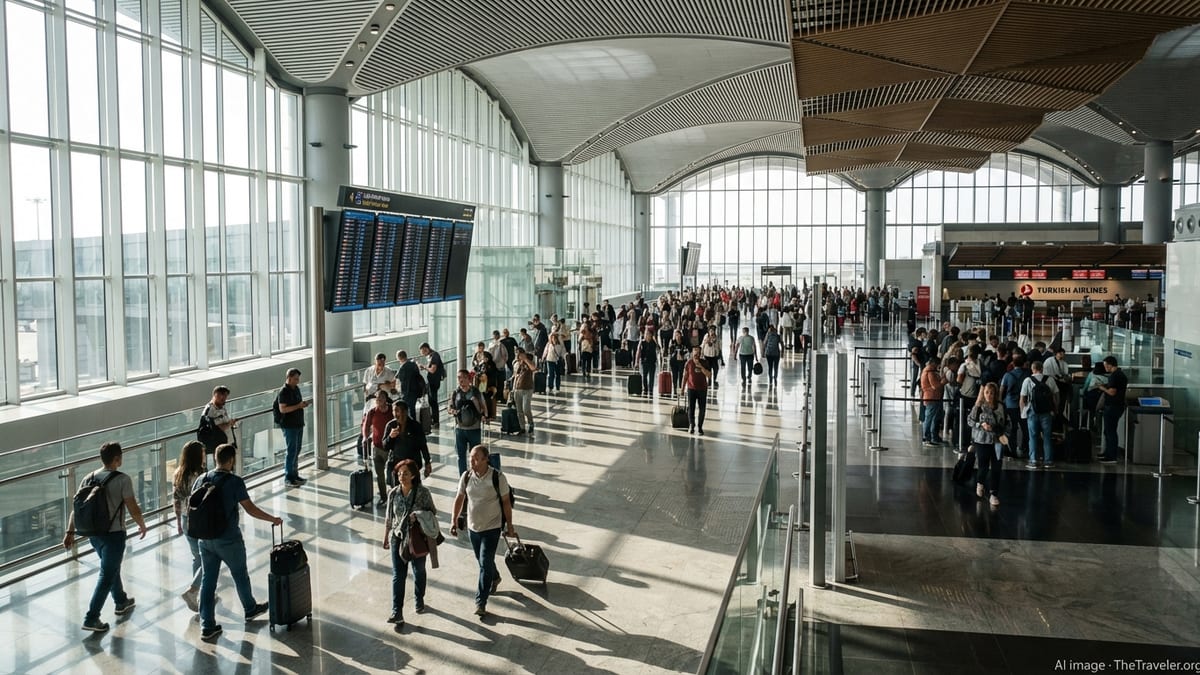
Turkey’s Airport Network at a Glance
Turkey operates a dense network of airports, but a handful handle the bulk of international traffic. Istanbul Airport is the primary global hub, with Sabiha Gokcen on the Asian side of Istanbul serving mainly short and medium haul routes. Antalya is the main gateway to the Mediterranean resort coast, while Izmir, Bodrum, Dalaman and Ankara Esenboga also receive regular international flights, particularly in peak season. Together, these airports channel tens of millions of visitors a year and act as major transfer points between Europe, the Middle East, Africa and Asia.
Istanbul Airport, opened in 2019, has quickly grown into one of the world’s largest aviation hubs, handling close to 90 million passengers a year in a single vast terminal that serves as Turkish Airlines’ main base. Its design focuses on high capacity and fast transfers, with extensive duty free areas, lounges and a growing network of long haul routes. Construction of additional runways and facilities continues, with further capacity increases planned over the next few years.
Sabiha Gokcen on Istanbul’s Asian side, and Antalya on the Mediterranean coast, have also expanded rapidly. Sabiha Gokcen is developing a second terminal building connected by a bridge system to support rising passenger numbers, while Antalya has completed a major expansion of its international terminals and apron space. For travelers, this means more flights, more seasonal routes and generally better facilities than even a few years ago, but also busier terminals at peak times.
Smaller international gateways including Izmir Adnan Menderes, Milas Bodrum, Dalaman and Trabzon are modern, relatively easy to navigate and increasingly connected to European cities. Facilities such as duty free, currency exchange, car rental and basic lounges are widely available. However, 24 hour services and extensive public transport options are concentrated primarily at Istanbul’s two airports and Antalya, so planning ahead is more important when flying into regional gateways late at night or out of season.
Arriving in Turkey: Entry, Visas and Formalities
For most travelers, the first official encounter with Turkey is at passport control. Entry rules depend on nationality and the type and duration of stay. Many travelers from Europe and parts of Asia can enter visa free for short stays, while others need an e-visa obtained online before travel, and some may require a visa issued by a Turkish consulate. Requirements have been relaxed for some nationalities in recent years, but you should always check current rules with official Turkish government sources or your airline shortly before departure, as policies can change.
On arrival, expect separate lines for Turkish citizens and foreigners, and sometimes for e-visa holders. At Istanbul Airport and other major hubs, border control is generally efficient but queues can be long during peak arrival waves. Having your passport, visa or e-visa confirmation, and address of stay ready will speed things up. Officials may ask briefly about your travel plans and length of stay. Stays beyond 90 days in a 180 day period usually require a residence permit or specific visa category rather than standard tourist entry.
After passport control, international arrivals pass through baggage claim and customs. Red and green channels operate on a standard self declaration basis. Random inspections are possible, and there are restrictions on items such as large amounts of currency, tobacco, alcohol and professional camera or broadcasting equipment. Turkey’s customs rules are generally similar to those in the European Union in terms of duty free allowances, but limits and categories differ slightly, so travelers carrying high value goods should review guidelines in advance.
Health and safety checks can vary by period. During times of heightened public health concern, temperature scans or random checks may be in place, particularly at Istanbul and Antalya. Travel insurance is strongly recommended, as medical care in Turkey is generally good in major cities and tourist regions but can be expensive for uninsured visitors at private hospitals. Keep copies of your passport and entry stamp separately from your original documents in case of loss or theft.
Istanbul Airport (IST): The Country’s Global Hub
Istanbul Airport, often simply referred to as IST, is Turkey’s flagship gateway and one of the world’s largest airports by area. Located on the European side of the city, north of the Black Sea coast, it replaced the former Ataturk Airport for commercial passenger flights. The airport currently operates a single vast terminal complex serving both domestic and international flights, with multiple concourses and long walking distances. Wayfinding is clear, with English signage throughout, but travelers with reduced mobility or tight connections should consider requesting assistance in advance.
International arrivals at Istanbul Airport usually disembark via jet bridges into the main terminal. After following signs to passport control and collecting baggage, passengers exit into a large arrivals hall with currency exchange counters, banks, mobile phone operators, car rental desks, coach ticket counters and taxi stands. Free Wi Fi is widely advertised, though registration is often required, typically via SMS or passport scan at designated kiosks. The airport’s duty free complex is extensive and located primarily in the departures area, so arriving passengers will see only limited retail until they reach landside.
Departure procedures at IST can be time consuming during busy hours because of the airport’s size and the volume of passengers. For long haul or peak season flights, arriving three hours ahead for international departures is a sensible minimum, and more if you need to check in luggage, reclaim tax free purchases, or travel with a group. After airline check in, passengers pass security and passport control before entering the main departure hall, where boarding gates are organized by concourses. Istanbul Airport hosts a large number of airline, credit card and independent lounges, which can be a welcome refuge on longer layovers.
For transfers, most passengers remain airside and follow transfer signs directly to security screening and departure gates. If your bags are checked through, you do not usually need to clear Turkish immigration. Minimum connecting times depend on the airlines and booking, but given the airport’s layout, allowing at least 90 minutes between flights is prudent, and more for self arranged connections. Information screens are abundant, and flight information is provided in Turkish and English. Passengers with long layovers can consider using landside facilities, but should factor in time to pass border control and security again.
Reaching the City: Transport from Istanbul Airports
Istanbul’s airport links have improved rapidly, but transfer times still depend heavily on traffic and time of day. From Istanbul Airport, the fastest option for many travelers is the airport metro line, which connects to the city’s wider rail network. Journey times into central areas are often comparable to or faster than by road, and fares are generally low. Travelers should be prepared to change lines and possibly stand with luggage during busy periods, as the metro doubles as a commuter service for local residents.
Intercity and airport buses connect IST with a wide range of neighborhoods on both the European and Asian sides, serving major hubs where travelers can transfer to metro, tram or ferry lines. These buses operate frequently during the day and evening, with night services on some routes. Tickets are usually paid using Istanbul’s reusable transport card, which can be bought and loaded at machines in the terminal. This option balances cost and convenience, although travel times depend on traffic conditions on approach roads and bridges.
Taxis and ride hailing services are widely available at Istanbul Airport. Official airport taxis use meters, and while they are more expensive than public transport, they can be cost effective for small groups or travelers with heavy luggage. It is sensible to confirm that the driver will use the meter and to have your accommodation address written down. Travel times into central districts range widely, from under 40 minutes in light traffic to well over an hour in rush hour or adverse weather. Private transfer companies and hotel car services offer prebooked rides at fixed prices, which can be attractive after long haul flights.
Sabiha Gokcen Airport on the Asian side has its own network of airport buses, metro connections and taxis serving both sides of the city. Journey times to central tourist areas from Sabiha Gokcen can be similar to or slightly longer than from IST depending on your destination. Because Istanbul is spread across two continents and separated by the Bosphorus, choosing the right airport for your stay can make a noticeable difference in transfer times. Travelers staying primarily on the Asian side or along the eastern Marmara coast may find Sabiha Gokcen more convenient, while most visitors to historic central districts tend to use IST where possible.
Antalya and Other Coastal Gateways
Antalya Airport is the main international gateway to Turkey’s Mediterranean resorts and one of the country’s busiest airports, especially in the late spring and summer season. It operates multiple terminals, including a domestic building and two international terminals that now share a significantly expanded capacity, following a large scale modernization and enlargement project. The airport can handle far more passengers than in the past, with additional gates, aircraft stands and retail spaces, which helps reduce congestion during peak holiday weekends.
International travelers typically arrive at one of the two international terminals, which are used by a wide mix of scheduled and charter airlines from Europe, the Middle East and beyond. The domestic terminal sits adjacent to one international building, while the second international terminal lies several kilometers away, connected by shuttle services and road links. Because airlines can operate from different terminals and these can change by season, it is essential to check your departure terminal on your ticket or app before heading to the airport. Transferring between terminals can take additional time, particularly if you need to reclaim luggage.
Transport options between Antalya Airport and nearby resorts such as Antalya city, Belek, Side, Kemer and Alanya include local buses, intercity coaches, hotel shuttles, taxis and prearranged transfers. Many package holidays bundle airport transfers into the price, making arrival straightforward for resort guests. Independent travelers may find taxis and ride hailing the most convenient option, though prices rise during peak season and late at night. Public buses serve the main city and connect with tram and bus lines, offering a cheap if slower alternative, especially for those staying near the city center rather than outlying beach resorts.
Other coastal airports, including Izmir Adnan Menderes, Milas Bodrum and Dalaman, follow similar patterns in peak months, with busy arrival and departure waves timed to holiday flights. Facilities at these airports are generally modern but more compact than Istanbul or Antalya, with shorter walking distances and fewer dining options. Arriving at least two to three hours before international departures remains a wise rule of thumb, particularly between May and October when queues for check in and security can build quickly around popular departure times.
Money, Connectivity and Practical Services
Major Turkish airports provide a full range of traveler services, but they are not all equal in price or quality. Currency exchange offices and ATMs are common in arrivals and departures areas, yet exchange rates at airport counters are often less favorable than in city centers. Withdrawing Turkish lira from ATMs operated by well known banks generally offers better value, though foreign card fees can apply. It is useful to carry at least a small amount of cash for taxis, small purchases and tipping, but card payments are widely accepted in airport shops, cafes and transport services.
Mobile connectivity is a priority for many travelers on arrival. Turkish mobile operators maintain desks or kiosks at major airports where visitors can purchase prepaid SIM cards with data packages. These offers are convenient, though often priced at a premium compared with city outlets. ESIM packages sold online by international providers can be an alternative, though coverage and speeds may vary by region. Free Wi Fi is commonly advertised throughout terminals, particularly in Istanbul and Sabiha Gokcen, but access may require registration via local phone number, email or passport scan, and some networks limit free usage time.
Food and beverage options in Turkey’s main airports have expanded significantly and now range from fast food chains and coffee shops to restaurants serving Turkish specialties like pide, kebab and baklava. Prices are generally higher than in the city, but still often below those in many Western European hubs. During busy hours, popular outlets can be crowded, so travelers with tight connections might prefer smaller kiosks in quieter gate areas rather than central food courts. Drinking water fountains or bottle filling points are available in some terminals, though many passengers still rely on bottled water purchased after security.
Other useful services include left luggage facilities, prayer rooms, pharmacies, basic medical clinics, children’s play areas and smoking rooms where permitted by local regulations. At Istanbul Airport and some larger gateways, passengers can access paid fast track security and passport lanes, private meet and assist services, and shower facilities in certain lounges. These extras can be worth considering after long flights or when traveling with young children or elderly relatives. However, offerings differ from airport to airport, so checking what is available at your specific point of arrival or departure is worthwhile.
Security, Safety and Local Customs
Security standards at Turkish airports are broadly in line with international norms, with some additional layers that may be unfamiliar to first time visitors. At certain airports, travelers may pass through an initial security screening, including X ray scanners for bags, before reaching the check in area, followed by another screening after passport control. Liquids rules mirror those at many other international airports, with limits on container size and total volume carried in hand luggage, and laptops and larger electronics must usually be removed for separate screening.
Visible police presence, plainclothes security personnel and occasional random checks are part of standard operations at major hubs. While this can feel intense compared with smaller airports elsewhere, it generally reflects a focus on deterrence and passenger safety. As in any crowded transport hub, basic precautions against petty crime are sensible: keep valuables out of sight, watch your bags in busy queues and be cautious of unsolicited offers of help with luggage or transport. Official information desks and uniformed staff are the best points of contact if you need assistance.
Respecting local norms helps interactions run smoothly. Turkey is a predominantly Muslim country with a secular legal system, and its airports cater to a diverse mix of travelers and local residents. Modest dress is normal, though not strictly enforced for visitors. Prayer rooms are available in most airports and are usually separate for men and women. During religious holidays, terminals can be especially busy with domestic travelers, and some services may operate on adjusted schedules, so allowing extra time is wise.
Alcohol is served in many airport bars and restaurants, particularly in international departure areas, but authorities expect responsible behavior. Intoxicated passengers can be refused boarding at the discretion of airline and ground staff. Smoking is prohibited inside terminals except in designated rooms or outdoor areas where provided. Vaping rules usually mirror smoking regulations, and use of e cigarettes inside is generally restricted. Compliance with staff instructions is important, as penalties for disruptive behavior on aircraft or in secure zones can be significant.
The Takeaway
Turkey’s main airports have undergone rapid modernization and expansion, transforming the country into a significant global aviation hub. Istanbul Airport anchors this network with extensive long haul connections, while Sabiha Gokcen, Antalya and other regional gateways support a dense mesh of international and domestic routes. Facilities, from lounges and retail to transport links and digital services, have improved markedly, even if crowds and queues remain a reality in peak periods.
For international travelers, the key to a smooth journey through Turkish airports lies in preparation and timing. Checking visa and entry rules in advance, allowing generous margins for transfers, verifying the correct terminal, and planning onward transport all help reduce stress. Once you know what to expect at each airport, from security procedures to available services, travel through Turkey’s gateways becomes not just manageable, but often pleasantly efficient.
Whether Istanbul is your final destination, a quick layover or the starting point for a coastal holiday, understanding how Turkey’s airports work will help you navigate them with confidence, turning complex terminals and busy arrivals halls into straightforward steps on your wider journey.
FAQ
Q1. Do I need a visa to enter Turkey through Istanbul or Antalya airports?
Visa requirements depend on your nationality and length of stay. Some travelers enter visa free, others need an e visa obtained online before travel, and some require a visa from a Turkish consulate, so always check the latest rules from official sources before departure.
Q2. How early should I arrive at Turkish airports for an international flight?
At major airports like Istanbul and Antalya, arriving at least three hours before scheduled departure for international flights is advisable, and longer during peak holiday seasons or if you need to check in luggage, reclaim tax free purchases or travel in a large group.
Q3. Is it easy to transfer between international flights at Istanbul Airport?
Yes, Istanbul Airport is designed for transfers, and most passengers remain airside, but the terminal is large, so you should allow at least 90 minutes between flights and follow transfer signs promptly, especially if you need to clear security again or move between distant concourses.
Q4. What are the main transport options from Istanbul Airport into the city?
Travelers can use the airport metro line, frequent airport buses to major districts, official metered taxis, ride hailing services or prebooked private transfers, with choice depending on budget, group size, luggage and tolerance for traffic or line changes on public transport.
Q5. Are Turkish airports safe for solo travelers and families?
Security is generally robust, with multiple screening points and visible police presence, and most solo travelers and families pass through without issues if they follow standard precautions such as watching valuables, using official transport and seeking help from uniformed staff when needed.
Q6. Can I buy a local SIM card or mobile data at Turkish airports?
Yes, major airports host desks for local mobile operators selling prepaid SIM or data packages, which are convenient though sometimes pricier than city outlets, and many travelers also rely on airport Wi Fi or international eSIM plans for initial connectivity.
Q7. Is it better to exchange money or use ATMs at Turkish airports?
Currency exchange offices are common but often offer less favorable rates, so many travelers prefer using ATMs from major banks to withdraw Turkish lira, while keeping in mind possible foreign card fees and carrying some small cash for taxis and small purchases.
Q8. What should I know about security screening at Turkey’s airports?
Expect at least one, and sometimes two, screening points with standard rules on liquids and electronics, and be prepared to remove laptops and larger devices from bags while following staff instructions, as extra checks may occur during busier or higher risk periods.
Q9. How busy are coastal airports like Antalya, Bodrum and Dalaman?
These airports can be very busy from late spring to early autumn due to holiday flights, with crowded arrival halls and longer queues at security and check in, so arriving early and arranging transport or transfers in advance is particularly important in peak months.
Q10. Are lounges and fast track services available at Turkish airports?
Yes, Istanbul Airport and other major gateways offer airline, credit card and independent lounges along with paid fast track lanes for security or passport control in some cases, which can be useful for frequent travelers, long layovers or trips with young children or elderly passengers.