

More news on this day
Turkey has joined Denmark, the United Kingdom, Spain, Italy, Austria and other European heavyweights at the top of the 2025 Airport Service Quality Awards, as Airports Council International’s latest rankings spotlight a continent-wide push to redefine what passengers can expect from customer service and terminal experience.
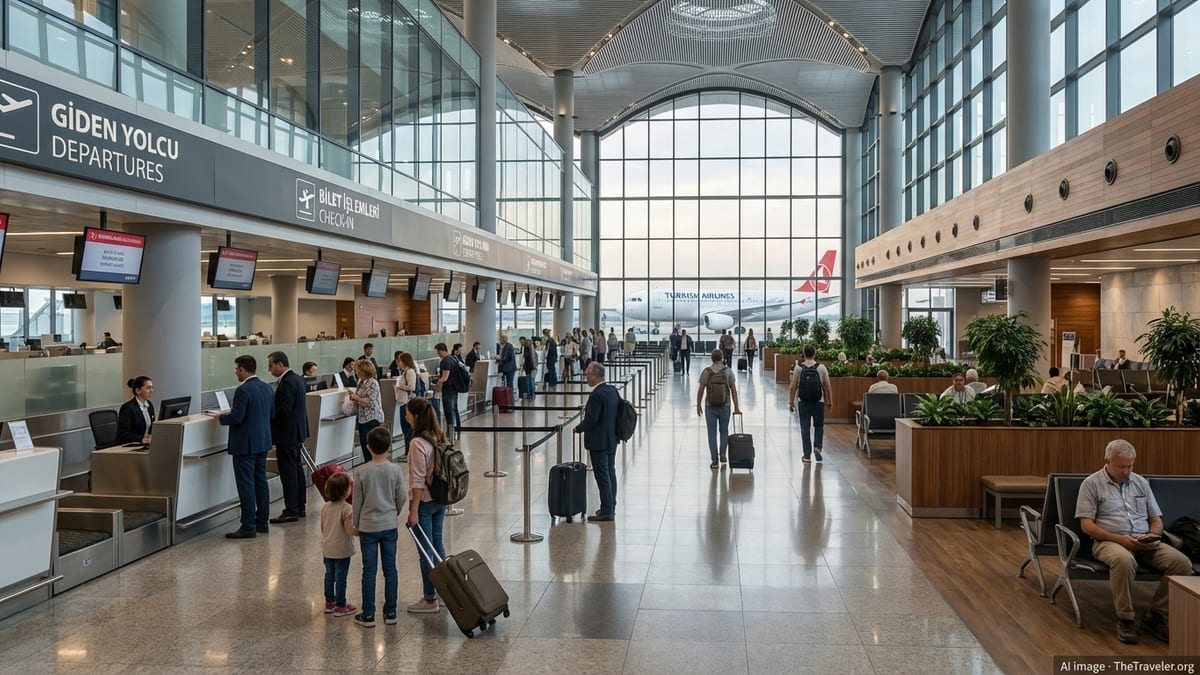
Turkey’s Airports Step Onto Europe’s Top Tier
Turkey’s fast-rising airport sector is now firmly embedded among Europe’s leaders for passenger experience, with multiple facilities recognised in the 2025 Airport Service Quality (ASQ) Awards. Building on years of rapid infrastructure investment and service upgrades, Turkish airports have been singled out for strong scores in terminal ambience, cleanliness and staff engagement, placing the country alongside long-established Western European hubs in the latest rankings.
The recognition reflects how operators across Turkey have moved beyond capacity expansion to focus on the finer details that shape a trip through the terminal. From clearer wayfinding and shorter queues to expanded food and retail offerings, airports have worked to smooth pain points that often frustrate travellers, particularly during peak leisure seasons and complex transfer journeys.
Industry analysts note that Turkey’s emergence in the ASQ tables also mirrors the country’s growing role as a connector between Europe, the Middle East and Asia. With more transfer passengers choosing Turkish gateways, operators have been pushed to match not only regional rivals but also major global hubs on customer satisfaction, a shift that is now being captured in real-time ASQ survey data.
The 2025 awards add momentum to Türkiye’s ambitions to position its airports as benchmarks for efficiency and comfort, not just as busy transit nodes. The latest honours are expected to support both tourism marketing and airline route development, reinforcing the message that the country’s gateways can deliver a consistently high level of service.
Denmark, UK, Spain, Italy and Austria Consolidate Their Lead
While Turkey’s rise is a headline, the 2025 ASQ Awards also confirm that Denmark, the United Kingdom, Spain, Italy and Austria continue to set the pace in Europe for traveller satisfaction. Across these markets, airports in different traffic brackets feature prominently among the top performers, highlighted for courteous staff, efficient processes and well-maintained facilities.
Danish, Spanish and Italian airports in particular have leveraged recent terminal refurbishments and technology deployments to keep passengers moving more smoothly, even as traffic has continued to climb. Automated check in and bag-drop, expanded security lanes and upgraded boarding areas have combined with more welcoming interiors to push satisfaction scores higher in the ASQ surveys.
In the United Kingdom and Austria, operators have focused on operational reliability and better communication with passengers during disruptions, knowing that timely information can significantly influence perceived service quality. Investment in real-time messaging, improved signage and staff training around problem solving has translated into higher marks for perceived professionalism and helpfulness.
Together with Turkey, these countries illustrate how a diverse group of airports, from capital city hubs to important regional gateways, are converging around a common goal: to deliver a more predictable, less stressful and more enjoyable experience at every stage of the journey.
Inside the 2025 ASQ Methodology and What Passengers Value Most
The Airport Service Quality programme remains one of the aviation industry’s most closely watched barometers of customer satisfaction because it captures passenger sentiment while they are still in the terminal. For the 2025 awards cycle, hundreds of airports worldwide participated, with close to three quarters of a million surveys collected across departures and arrivals, spanning all operating hours and seasons.
Passengers were asked to rate airports on a wide range of criteria, including check in, security, immigration, wayfinding, cleanliness, retail and dining, comfort of waiting areas and staff courtesy. In Europe, the strongest improvements recorded this cycle were linked to border and passport control, where many airports have invested in smarter queuing systems and expanded use of biometric e gates to reduce waiting times.
Airport ambience and cleanliness again ranked among the most powerful drivers of overall satisfaction, reinforcing the idea that passengers increasingly expect terminals to feel closer to modern public spaces than utilitarian transit sheds. Natural light, quieter seating zones, better acoustics and more greenery have all become part of the design toolkit for operators chasing higher ASQ scores.
For the airports recognised in the 2025 awards, strong performance across several of these criteria was essential. The expansion of categories such as Most Enjoyable Airport, Cleanest Airport and Easiest Airport Journey underscores how the ASQ programme is evolving beyond basic service checklists to capture the full emotional and practical arc of a passenger’s time in the terminal.
Europe’s Competitive Push to Redefine the Airport Experience
The clustering of award winning airports across Turkey, Denmark, the UK, Spain, Italy, Austria and neighbouring countries points to a broader competitive shift in Europe. Rather than treating customer experience as a marketing add on, airport operators increasingly view high ASQ scores as critical to attracting airlines, maintaining hub status and sustaining non aeronautical revenues from retail and food concessions.
As travel rebounds and diversifies, Europe’s leading airports have been racing to differentiate themselves on reliability and comfort. This has meant investing not only in frontline staff and digital tools, but also in backstage improvements such as baggage system upgrades, airside punctuality initiatives and more resilient terminal operations during peak flows or weather disruptions.
Environmental considerations are also starting to intersect with passenger expectations. Many of the airports gaining recognition in the 2025 rankings have coupled customer experience improvements with sustainability measures, from energy efficient lighting and better waste management to quieter, cleaner ground operations. For travellers, these changes manifest as calmer, less cluttered spaces and reduced noise, factors that increasingly feed into how they rate their overall experience.
The result is a virtuous circle: as airports refine processes and environments to please passengers, they also create conditions that can support more efficient aircraft turnarounds and higher service reliability. The 2025 ASQ Awards suggest that those European hubs willing to invest holistically across these fronts are being rewarded with both higher satisfaction scores and stronger reputations among airlines and travellers alike.
What This Means for Travellers Planning 2025 and 2026 Journeys
For travellers mapping out trips in 2025 and into 2026, the latest ASQ results provide a useful indicator of where they are most likely to encounter smoother and more enjoyable airport experiences. Turkey’s emergence alongside Denmark, the UK, Spain, Italy and Austria gives passengers a wider choice of high performing gateways when piecing together multi leg itineraries across Europe and beyond.
Frequent flyers are likely to notice incremental but meaningful differences at these award winning airports, from shorter average queues and more responsive staff to tidier restrooms and better organised seating. While no terminal is immune to peak time crowding or weather related delays, the ASQ recognised facilities have demonstrated that they manage such pressures more effectively and communicate with passengers more transparently.
For leisure travellers in particular, the emphasis on enjoyable environments and cleaner, more intuitive layouts can help reduce the stress that often accompanies family holidays or long haul connections. The 2025 honours send a strong signal that many of Europe’s busiest gateways are listening more closely to passenger feedback and adjusting service strategies in near real time.
With Airports Council International set to formally present the awards at a summit in Istanbul later in the year, the focus now turns to whether Europe’s stand out performers can maintain or even improve their rankings. For Turkey and its peers, the challenge will be to keep investing in people, processes and spaces so that the customer experience recognised in the 2025 ASQ Awards becomes an enduring hallmark rather than a one off achievement.