

More news on this day
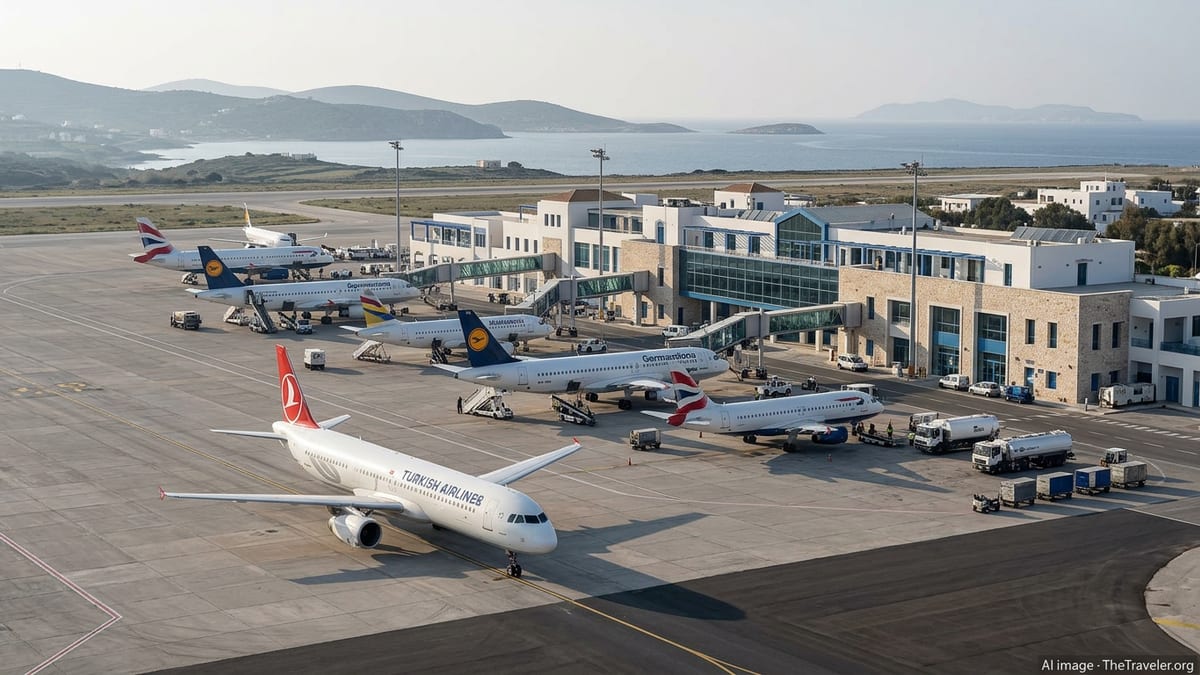
Fraport Greece’s network of 14 regional airports recorded a robust 9.1 percent year on year rise in passenger traffic in February 2026, as Turkey joined Germany, the United Kingdom, Italy, Poland, Switzerland, Austria, Belgium and Cyprus among the strategically important markets powering Greece’s out-of-season tourism momentum.
Get the latest news straight to your inbox!
Turkey Emerges as a Strategic Winter Market for Greek Regional Airports
Industry analysts point to Turkey’s growing role in regional air connectivity as a notable feature of Fraport Greece’s February performance. While European Union markets continue to dominate absolute volumes, Turkish-origin and Turkish-destination traffic has accelerated more quickly over recent winter seasons, supported by a mix of scheduled services, city-break demand and increasingly price-sensitive leisure travelers.
Travel demand between Turkey and Greece has diversified beyond traditional summer beach holidays. Routes linking Turkish metropolitan centers with gateway islands and northern Greek cities have seen rising off-peak interest from both sides of the Aegean, with passengers combining short breaks, shopping trips and cultural visits. For Fraport Greece, which manages key islands such as Rhodes, Corfu and Kos as well as Thessaloniki, that means additional winter and shoulder-season resilience.
Market observers note that Turkish carriers and European low-cost airlines have been steadily adding capacity on cross-Aegean routes, taking advantage of competitive airport charges and strong tourism branding for Greek destinations. By February 2026, these capacity moves were clearly visible in traffic numbers, with Turkey now grouping alongside established high-volume source countries as one of the strategic pillars of Fraport Greece’s growth story.
The strengthening of Greek–Turkish air links also aligns with a wider regional trend: as European aviation returns to and surpasses pre-pandemic levels, secondary hubs and regional airports are benefiting from travelers seeking shorter, flexible escapes and combining cultural city stays with nearby island or coastal experiences.
Core European Markets Continue to Deliver Volume and Stability
Despite Turkey’s standout momentum, Fraport Greece’s February surge remains anchored in the performance of its traditional European source markets. Germany and the United Kingdom, long among the most important origin countries for Greek tourism, continued to provide a stable foundation of demand, supported by strong airline schedules and early-season leisure bookings into 2026.
Italy and Poland added further depth, reflecting the growing popularity of Greek destinations among Southern and Central European travelers who are increasingly comfortable flying in the late winter and early spring months. Poland in particular has been a bright spot for Greek tourism, with expanding middle-class travel and a dense network of low-cost connections to Greek islands and northern city airports delivering consistent year-on-year gains.
Smaller but high-spending markets such as Switzerland, Austria and Belgium also contributed to the February increase. These travelers tend to favor quality accommodation, shoulder-season escapes and shorter, more frequent trips, which aligns neatly with the capacity profile at many of Fraport Greece’s regional airports. Cyprus, closely connected through business, family and holiday travel, remains a reliable source of year-round flows that help smooth seasonal peaks and troughs.
Combined, these markets underpinned the 9.1 percent passenger rise, reinforcing the importance of geographic diversification. Rather than relying solely on one or two major countries, Fraport Greece’s network is increasingly balanced across Northern, Western, Central and Eastern Europe, cushioning the impact of economic or geopolitical volatility in any single market.
Winter and Shoulder-Season Travel Redefine Greece’s Tourism Calendar
The February figures highlight a broader transformation in Greece’s tourism calendar, long dominated by the June to September high season. In recent years, Greek authorities, airport operators and local stakeholders have been working to extend the season, promoting city breaks, cultural events, gastronomy and nature-based tourism during the cooler months.
Fraport Greece’s regional airports have been central to this shift. December 2025 already showed strong growth, and the 9.1 percent jump in February 2026 confirms that winter demand is no longer a marginal phenomenon. More airlines are willing to operate or maintain routes through the low season when they can count on consistent loads not just from classic holidaymakers but also from visiting friends and relatives traffic, conference and events travel, and niche segments such as hiking or wine tourism.
The pattern mirrors broader European aviation data, which show a gradual normalization of year-round travel as consumers spread trips more evenly to avoid peak-season crowds and heat. For Greece’s regional airports, this trend translates into better utilization of infrastructure, more stable employment and greater opportunities for local businesses that previously depended on a short, intense summer window.
It also encourages investment in non-summer product development, from cultural festivals and sports events to wellness retreats and gastronomic experiences that give travelers a reason to visit in February or March as well as in August. The presence of markets like Turkey, Germany, the United Kingdom and Italy in winter traffic statistics suggests that this strategy is beginning to pay off.
Fraport Greece’s Network Strategy Strengthens Regional Connectivity
The February 2026 performance is also a reflection of Fraport Greece’s long-term network strategy for its 14 regional airports, ranging from major gateways such as Thessaloniki and Rhodes to high-profile island destinations like Mykonos, Santorini and Corfu. Since taking over the concessions, the operator has invested heavily in terminal upgrades, runway works and passenger experience improvements designed to attract and retain airline partners.
By pairing infrastructure investment with proactive route development, Fraport Greece has successfully positioned its airports as efficient, traveler-friendly gateways for carriers seeking alternatives to crowded metropolitan hubs. This role has been particularly important for point-to-point airlines and charter operators targeting leisure demand from Germany, the United Kingdom, Italy, Poland, Switzerland, Austria, Belgium, Cyprus and, increasingly, Turkey.
Enhanced operational reliability during the winter months has been another factor supporting February’s uplift. Runway and airfield improvement programs at several airports, carried out in phased works over the past seasons, aim to reduce weather-related disruptions and keep regional gateways resilient during periods of adverse conditions. Airline planners view this reliability as a key prerequisite for maintaining year-round schedules.
The stronger February numbers also contribute to Greece’s broader aviation narrative. As Athens International Airport records its own winter traffic gains and new international routes are added across the country, Fraport Greece’s regional network ensures that the benefits of rising air connectivity are felt well beyond the capital, supporting local economies from the Ionian to the Dodecanese.
Airlines Capitalize on Demand as 2026 Travel Outlook Brightens
For airlines, the 9.1 percent February surge at Fraport Greece’s airports is an encouraging signal that demand for Greece in 2026 remains strong despite economic headwinds in parts of Europe. Carriers are using this data to fine-tune capacity plans for the upcoming summer, with many expected to add seats or frequencies on routes that already show double-digit growth early in the year.
Low-cost giants, regional operators and full-service airlines alike have identified Greece as a crucial market in their European networks. Turkey’s emergence as a more prominent origin and transit market enhances this positioning, creating additional opportunities for through traffic and multi-country itineraries that pair Greek islands or cities with Turkish destinations on a single trip.
Industry observers note that competition on certain routes is intensifying, which could benefit consumers through sharper pricing and improved schedules. However, airports and local authorities will need to continue managing growth carefully to protect the visitor experience and avoid the strains associated with overtourism during peak months.
For now, February’s 9.1 percent uplift at Fraport Greece’s regional airports underscores a positive start to the year and confirms that Greece’s strategy of cultivating a broader mix of source markets, including Turkey and a wide range of European countries, is helping to reshape the country into a genuinely year-round destination.