

More news on this day
Greece’s tourism sector is closing 2025 on a high note as international air arrivals climb 5.9 percent to an unprecedented 31 million passengers, with Turkey joining Germany, the United Kingdom, the United States and Israel as leading source markets driving a fresh wave of demand for the country’s airports and destinations.
Get the latest news straight to your inbox!
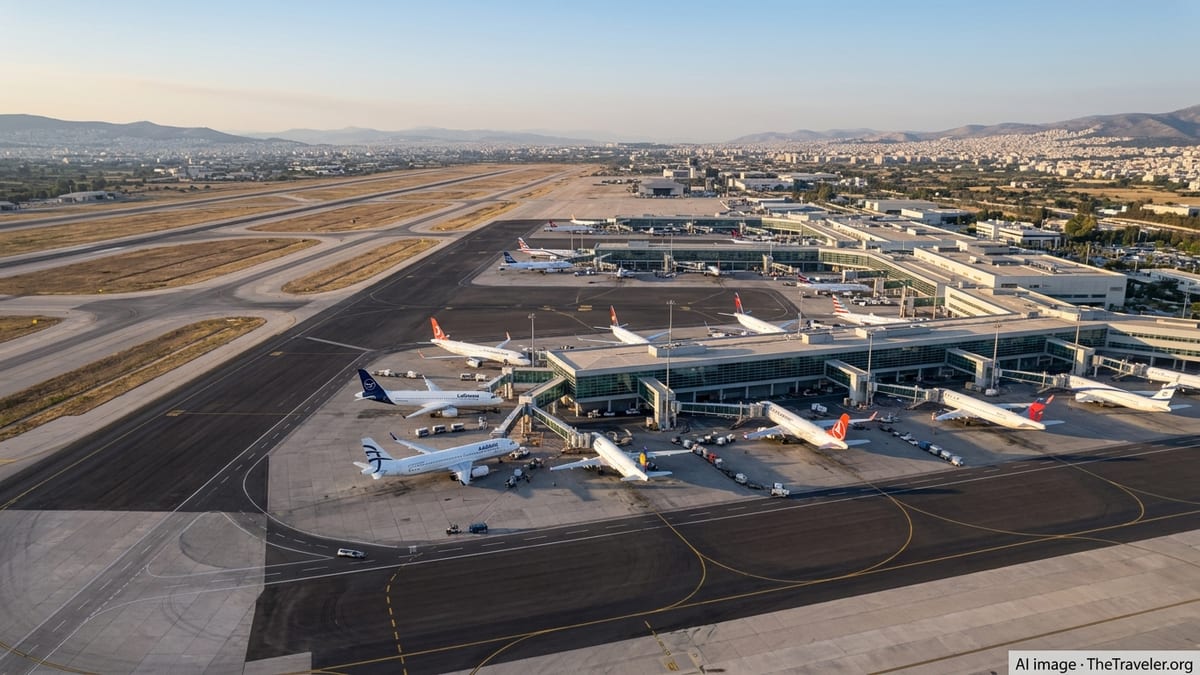
Record-Breaking Year for Greece’s Airports
Recent datasets from Greece’s tourism research bodies and aviation authorities indicate that international air arrivals have reached a historic milestone in 2025, with approximately 31 million inbound passengers recorded at the country’s airports. This represents a 5.9 percent rise compared to 2024, extending the upward trajectory established in the post-pandemic recovery years and setting a new benchmark for inbound air travel to Greece.
The latest figures build on a strong 2024 season, when international air arrivals were estimated at just over 29 million and tourism receipts already hit record levels. Provisional 2025 data show that Greece has not only managed to consolidate those gains, but also to attract higher visitor volumes across a broader stretch of the calendar year, with growth recorded in both peak summer months and the traditionally quieter shoulders of spring and autumn.
Athens International Airport has been a central driver of this performance, handling more than 31 million total passengers in 2025 and reinforcing its role as both a gateway to Greece and a regional hub. Regional airports serving high-profile destinations such as Crete, the Dodecanese and the Ionian islands have also reported robust growth in international traffic, supported by expanded airline capacity and an increasingly diverse route network.
Industry observers note that the sustained rise in air arrivals aligns with broader travel and tourism indicators for 2025, including higher hotel occupancy, extended opening periods for seasonal properties and continued investment in airport and tourism infrastructure across the country.
Turkey Emerges Alongside Established European and US Source Markets
While Germany, the United Kingdom and the United States remain among Greece’s largest and most established source markets by air, publicly available aviation and tourism data highlight a notable surge in traffic from Turkey in 2025. Along with Israel, these markets collectively underpin much of the year’s incremental growth, helping to push inbound air arrivals to their new record.
Analysts point to several factors behind Turkey’s strengthening role. Improved connectivity between major Turkish airports and Greek destinations, the growth of regional carriers and the popularity of short-break and business travel in both directions have all contributed to higher passenger volumes. At Athens International Airport, Turkey has moved firmly into the group of top international markets, with scheduled passenger movements between the two countries expanding markedly over the past few years.
Germany and the UK continue to provide large-scale, relatively stable flows of visitors, supported by dense summer flight schedules and a wide mix of full-service and low-cost carriers. The US market, meanwhile, has benefited from an expanded transatlantic offering, with more nonstop services to Athens and, seasonally, to island gateways. Data from recent seasons indicated strong American demand, and travel specialists report that this trend has carried into 2025 despite global economic headwinds.
Israel remains another key contributor to Greece’s inflows, with frequent services linking Tel Aviv to Athens, Thessaloniki and several island airports. The combination of short flight times, cultural ties and established leisure patterns continues to support high load factors on these routes, reinforcing Israel’s position among the leading origin markets in this year’s growth story.
Extended Season and Regional Winners Across the Aegean
The 5.9 percent rise in international air arrivals is not confined to a handful of hubs. Regional breakdowns compiled by tourism analysts show that airports serving Crete, the Dodecanese and the Ionian islands have recorded some of the strongest year-on-year gains in 2025, often outpacing the national average. Increased capacity from Turkey, Germany, the UK, the US and Israel has been particularly visible at these leisure-focused gateways.
Reports covering the first half of 2025 already pointed to solid double-digit growth in arrivals at several island airports, highlighting the appeal of destinations such as Heraklion, Chania, Rhodes and Corfu. As the summer progressed, these trends translated into fuller hotel books, longer average stays in some markets and widespread indications of higher tourism spending compared with the previous year.
Another notable feature of 2025 has been the ongoing extension of Greece’s tourism season. Data from the early months of the year showed air arrivals climbing at a faster rate in traditionally low-season periods such as March and April, while preliminary autumn figures suggest a similar pattern later in the year. Airlines from Turkey, Germany, the UK, the US and Israel have supported this shift by maintaining or adding off-peak services, encouraging city breaks in Athens and Thessaloniki as well as early- and late-season island holidays.
Tourism analysts argue that this gradual smoothing of the arrival curve is crucial for addressing overtourism concerns in peak months and for supporting local economies year-round. The 2025 air arrival data are seen as evidence that Greece is making incremental progress toward a more balanced seasonal profile, even as total visitor numbers continue to set new records.
Air Connectivity and Capacity Fuel Explosive Tourism Growth
The record 31 million international air arrivals in 2025 are closely tied to an expansion in airline capacity and network breadth. Aviation market reports for Greece show that carriers have added both frequencies and new routes into the country, responding to sustained demand from key markets and the strong performance of the 2024 season. This has been particularly evident in services from Germany and the UK, where increased competition among airlines has broadened options for travelers.
From the US, the continued rollout of nonstop seasonal connections to Athens and, in some cases, to regional airports has allowed Greece to tap deeper into the North American long-haul market. Higher-capacity aircraft on transatlantic routes and coordinated schedules with feeder traffic in Europe have further boosted arrivals from American cities.
In parallel, improved intra-regional connectivity with Turkey and Israel has opened up new multi-stop itineraries that combine Greek destinations with other Eastern Mediterranean hotspots. Travel industry coverage indicates that a growing number of visitors, particularly younger and more independent travelers, are using these links to plan flexible trips that include stays in both Greece and neighboring countries, thereby raising the volume of short-haul flights into Greek airports.
These aviation dynamics, combined with rising global interest in Mediterranean destinations, have underpinned what industry commentators describe as “explosive” tourism growth for Greece in 2025. The sector’s performance has reinforced tourism’s central role in the national economy, with early assessments pointing to another record year for travel-related revenue and employment.
Opportunities and Pressures in a New Tourism Landscape
The surge in international air arrivals presents both opportunities and challenges for Greece. On the one hand, higher visitor numbers from Turkey, Germany, the UK, the US and Israel support hotel and restaurant operators, transport providers and a wide ecosystem of tourism-related businesses, especially in regional areas where alternative economic activities may be limited.
On the other hand, local media and policy discussions increasingly focus on the pressures that record air traffic brings to popular destinations. Concerns range from congestion in historic city centers and on island road networks, to strain on water resources, waste management systems and housing affordability for residents in high-demand coastal towns.
Publicly available policy papers and industry commentary suggest that Greek authorities and tourism stakeholders are responding with a mix of infrastructure upgrades, digital management tools and targeted promotion of lesser-known destinations to help redistribute flows. The continued diversification of source markets, with Turkey now firmly aligned alongside Germany, the UK, the US and Israel as a leading driver of arrivals, is seen as a chance to spread demand more evenly across regions and throughout the year.
As 2025 draws to a close, the data on international air arrivals confirm that Greece has entered a new phase in its tourism development. The combination of record-breaking passenger volumes, broader international reach and a more extended season points to strong underlying momentum, while also underscoring the need for careful planning to ensure that the benefits of this growth are sustainable for both visitors and local communities.