

More news on this day
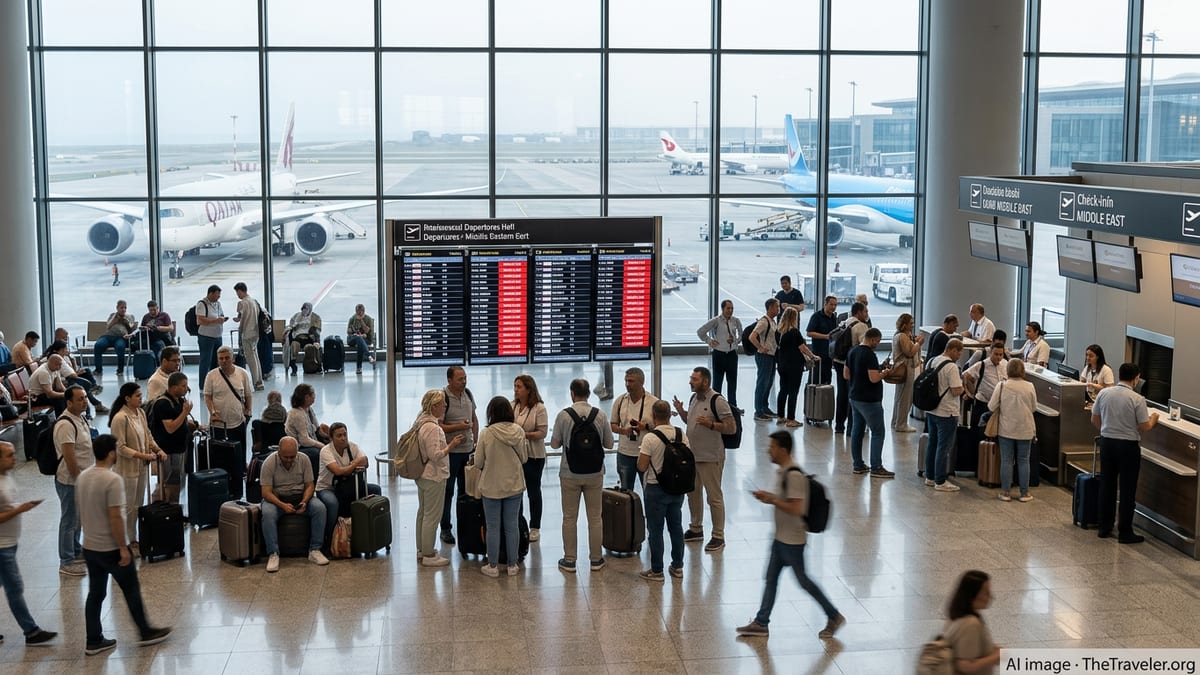
Turkey’s role as a key bridge between Europe and the Gulf has been shaken as Qatar Airways, Gulf Air and SunExpress cancel multiple services from Istanbul and Antalya, isolating passengers and disrupting vital links to Doha, Bahrain and Dubai amid an evolving regional airspace crisis.
Four High-Profile Cancellations Expose Turkey’s Vulnerability
On March 10, a fresh wave of disruptions hit Turkey’s outbound traffic to the Gulf as four key flights operated or codeshared by Qatar Airways, Gulf Air and SunExpress were cancelled from Istanbul and Antalya, according to airport and airline schedule updates. The affected services include high-demand routes feeding Doha, Bahrain and Dubai at the height of the spring travel period, sharply curbing options for both Turkish and transit passengers.
The cancellations are part of a wider regional shock triggered by the ongoing security crisis in Gulf airspace, which has already prompted widespread suspensions to Iraq, Syria, Lebanon and Jordan by major Turkish carriers. Turkish authorities had already extended a blanket halt on flights to several Middle Eastern destinations through March 13, but the removal of additional Gulf-bound services has underscored how rapidly conditions can change for travelers using Turkey as a hub.
While many long-haul passengers previously relied on Istanbul as a reliable detour when Gulf hubs were compromised, this week’s cancellations show those workarounds are increasingly fragile. With aircraft and crew already stretched by diversions and complex routings, airlines now appear to be trimming even strategically important departures from Turkey to maintain safety margins and comply with insurance and regulatory constraints.
Aviation analysts say the immediate impact is most acutely felt in the Istanbul–Doha and Istanbul–Dubai corridors, where demand remains strong but the operating environment has become unpredictable. Travelers who counted on short-notice rerouting via Turkey to reach key Gulf hubs now face longer detours, overnight layovers or outright trip cancellations.
Qatar Airways Scales Back as Limited Corridor Prioritizes Repatriation
Qatar Airways, which has been operating under a tightly controlled corridor authorized by the Qatar Civil Aviation Authority, has shifted much of its focus from commercial connectivity to repatriation and essential travel. The carrier has announced a limited schedule in and out of Doha, with Istanbul appearing as a priority gateway on selected days while other services are pared back or pulled at short notice.
In practice, this means that while some Istanbul–Doha flights continue as part of relief-style operations, others, including feeder legs and codeshare links touching Antalya, have been cancelled or consolidated at the last minute. Passengers holding tickets from Turkey to Doha report being moved onto fewer, heavily oversubscribed departures, or being told to await rebooking as the airline updates its plan day by day.
For Turkey-based travelers, the imbalance is stark. A limited number of flights are still leaving Doha for Istanbul as part of rescue operations, but outbound capacity from Turkish airports into the Qatari hub remains irregular, creating a one-way dynamic that leaves many stranded on the European side. Qatar Airways is offering date changes and, in some cases, refunds or rerouting, but options are constrained by the broader Gulf-wide shutdown.
The carrier has reiterated that safety and regulatory compliance remain its overriding priorities. However, given that aircraft and crews are scattered across various continents, restoring a predictable Turkey–Doha schedule is likely to take significantly longer than a simple reopening of airspace might suggest.
Gulf Air and SunExpress Caught in Bahrain and UAE Turbulence
Gulf Air, Bahrain’s flag carrier, has been equally constrained by ongoing closures and restrictions around Bahrain International Airport. Operating only a skeleton network with aircraft that happened to be outside Bahrain when the crisis escalated, the airline has cut back sharply on Turkey-linked services, including a key Istanbul–Bahrain rotation that once served as a convenient bridge for Turkish travelers heading to the wider Gulf and South Asia.
Industry sources indicate that at least one Istanbul–Bahrain leg and a connected Antalya–Bahrain sector marketed through codeshares have been removed from schedules in recent days as Gulf Air prioritizes repatriation flights from safer staging points in Saudi Arabia and Oman. For passengers in Turkey, that has translated directly into cancelled tickets and fractured itineraries onward to destinations such as Riyadh, Muscat and Karachi.
SunExpress, the Antalya-based leisure specialist jointly owned by Turkish Airlines and Lufthansa, has also felt the shockwaves. After Turkey’s transport ministry confirmed an extension of cancellations to destinations including Doha, Dubai and Bahrain until at least March 13, SunExpress quietly suspended or cancelled several Middle East services from Antalya and secondary Turkish cities, including at least one Antalya–Dubai and one Antalya–Bahrain rotation that were popular with package tourists and expatriate workers.
The timing is painful for both the airline and the tourism sector clustered around Turkey’s Mediterranean coast. March is when Gulf-origin visitors begin to book early-season escapes to Antalya’s resorts, while outbound Turkish travelers use competitive fares to connect through Dubai or Bahrain. With four headline services now scrubbed and more cuts possible, tour operators are scrambling to rework packages or shift clients onto longer routings via European hubs.
Stranded Passengers Face Long Lines, Patchy Information and Rising Costs
Across Istanbul Airport and Antalya Airport, scenes of confusion have become increasingly common. Travelers bound for Doha, Bahrain and Dubai have reported waiting in long queues at airline counters only to be told that their flights have been cancelled due to the regional security situation, with rebooking opportunities limited and hotel support inconsistent.
Many passengers originally treated Turkey as a backup when their direct Gulf flights were cancelled from other cities, assuming that detouring via Istanbul or Antalya would offer more certainty. Instead, they are now finding themselves stranded a second time as Turkish-operated links are also pulled. Some are opting to purchase entirely new tickets on European carriers via Frankfurt, London or Rome, absorbing hundreds of dollars in additional cost to reach their final destinations.
Travel agents in Istanbul say they are struggling to keep pace with rolling schedule changes and short-notice cancellations. With Gulf carriers publishing limited rescue timetables only a day or two ahead, and Turkish operators adjusting in sync with government advisories, front-line staff are frequently left to explain shifting rules to frustrated customers without concrete guarantees about future flights.
The result is a surge in demand for clear, up-to-date information on flight status and rebooking policies. However, overloaded customer-service channels and call centers mean that many travelers are turning instead to social media and online forums, where unofficial updates can be incomplete or misleading, adding another layer of uncertainty to already stressful journeys.
Turkey’s Hub Strategy Tested as Airlines Weigh Safety and Strategy
Turkey has spent the past decade cultivating Istanbul and, to a lesser extent, Antalya as key global transit points, especially for traffic flowing between Europe, the Middle East and Asia. The present disruptions reveal both the strength and fragility of that strategy. On one hand, Turkey remains one of the few major markets with multiple carriers and airports capable of absorbing rerouted traffic when Gulf hubs come under pressure. On the other, its deep integration into regional aviation networks means that conflict or closures in neighboring airspace can quickly reverberate through Turkish schedules.
For now, Turkish officials are signaling that the suspension of flights to Doha, Dubai, Bahrain and other Gulf destinations through March 13 is a temporary safety measure. Behind the scenes, however, airlines are reassessing route economics, insurance costs and crew positioning as they contemplate how quickly, and to what extent, to restore full connectivity once conditions allow.
Travel industry observers warn that even if airspace restrictions ease in the coming days, a full normalization of service between Turkish airports and Gulf hubs could lag by weeks. Carriers like Qatar Airways and Gulf Air will first need to complete repatriation backlogs and reposition aircraft, while SunExpress and Turkish leisure operators will have to judge whether demand has been permanently dampened by traveler concerns about regional stability.
Until then, passengers in Turkey are being urged to maintain flexible plans, avoid airport arrivals without confirmed rebookings, and brace for further last-minute changes on routes to Doha, Bahrain and Dubai. With four prominent flights already cancelled and more at risk, Turkey’s normally resilient role as a bridge to the Gulf remains under unprecedented strain.