

More news on this day
Turkey’s role as a vital bridge between Europe and the Gulf has been further shaken as Qatar Airways, Gulf Air and SunExpress scrapped four key services linking Istanbul and Antalya with Doha, Bahrain and Dubai, leaving passengers stranded and underscoring the deepening impact of Middle East airspace closures on regional travel.
Fresh Cancellations Deepen Middle East Airspace Turmoil
The latest round of cancellations affecting Turkish departures comes amid ongoing closures of Qatari and Bahraini airspace, which have forced Gulf carriers to curtail or suspend many routes. Qatar Airways and Gulf Air, both heavily dependent on their Doha and Bahrain hubs, have trimmed services across their networks while offering limited relief flights on select corridors.
In Turkey, those cuts are now being felt directly on the ground. Two Istanbul services operated by Qatar Airways and Gulf Air, along with Antalya departures by SunExpress toward Dubai and a connecting Gulf hub, have been scrubbed from schedules in what airlines describe as a safety driven response to regional instability. The affected flights were due to carry passengers onward to Doha, Bahrain and Dubai, critical gateways for both business and leisure traffic.
While domestic operations inside Turkey remain largely intact, the loss of these international links is disrupting itineraries for travelers heading to or transiting through the Gulf. Many had chosen Istanbul and Antalya specifically as safer, more stable springboard airports during the current crisis, only to discover that hub closures and airspace restrictions still ripple back into Turkish schedules.
Authorities in Ankara have confirmed that multiple carriers, including SunExpress and other Turkish operators, are adjusting or suspending flights to several Middle Eastern destinations at least through mid March. Officials continue to stress that decisions are being taken in coordination with regional aviation regulators and are subject to rapid change as the security picture evolves.
Stranded Passengers Confront Confusion at Istanbul and Antalya Airports
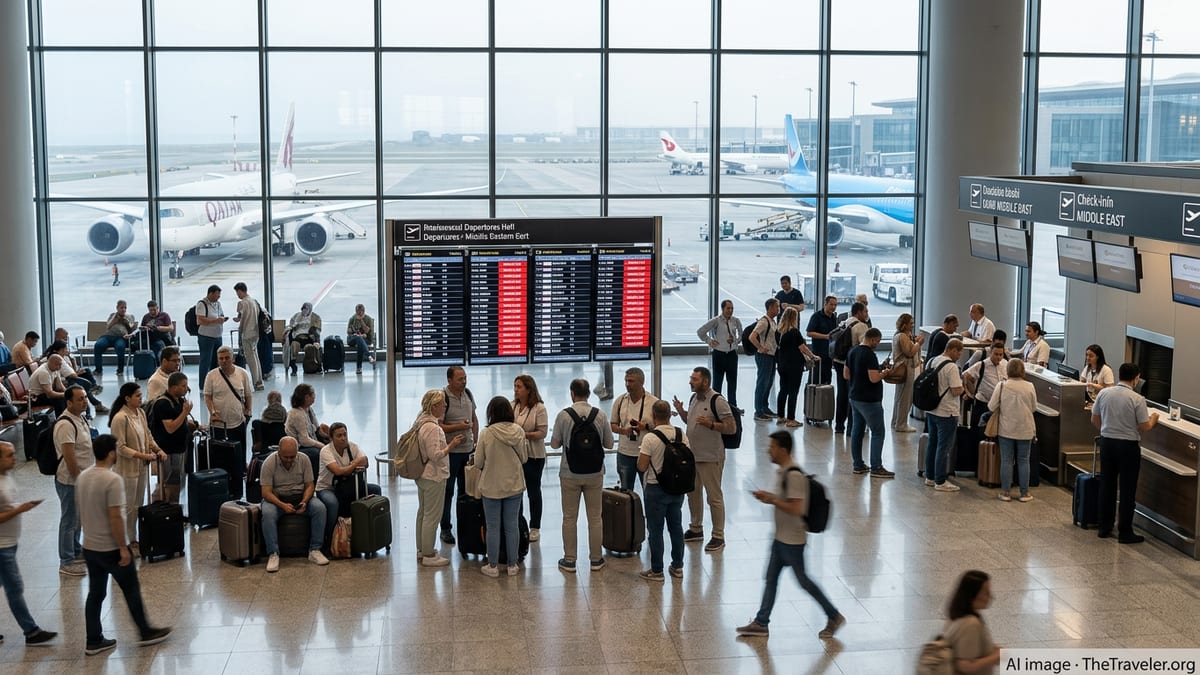
The abrupt cancellations have left travelers at Istanbul Airport and Antalya Airport scrambling for answers. Passengers bound for Doha, Bahrain and Dubai report being turned back at check in or notified only hours before departure that their flights were no longer operating, with alternative arrangements slow to materialize.
At Istanbul, airport staff have been directing affected passengers toward airline service desks that are facing long queues and limited rebooking options while Gulf hubs remain partially closed. Some travelers with onward long haul connections to Asia, Africa and Australia through Doha and Bahrain now face lengthy detours via European or Turkish carriers, or days long waits for scarce seats on relief services.
In Antalya, where SunExpress plays a key role ferrying holidaymakers and expatriate workers, the scrapping of Dubai bound services has added a layer of uncertainty at the outset of the spring travel season. Ground staff have been offering vouchers, refunds or rebookings on later dates, but capacity constraints and a lack of clarity on when normal Gulf operations will resume mean many passengers are opting to cancel trips entirely.
Travel agents in Turkey say they are struggling to keep pace with shifting schedules and policy updates from multiple airlines at once. With some carriers publishing rolling advisories and others relying on direct notifications to ticket holders, information gaps are common, particularly for passengers who booked through third party platforms or tour operators.
Airlines Offer Waivers and Limited Alternatives Amid Ongoing Uncertainty
Faced with widespread disruption across the region, Qatar Airways and Gulf Air have extended booking flexibility for customers whose plans have been upended by the airspace closures. Both carriers are offering options such as complimentary date changes, rerouting where possible, or refunds for eligible tickets within specified travel windows, though exact conditions vary by booking channel and fare type.
Qatar Airways has announced a limited schedule of repatriation and relief flights from Doha to select global hubs, including Istanbul on certain days, with return sectors aimed at clearing backlogs of stranded passengers. However, with its regular commercial operations still heavily curtailed, capacity remains well below normal levels, and not all Turkish origin passengers can be accommodated promptly.
Gulf Air, meanwhile, is prioritizing special services linking nearby airports to its key markets while Bahrain’s airspace remains constrained. Travelers from Turkey who had planned to connect in Bahrain are being urged to contact the airline or their travel agent before heading to the airport, as many flights remain either canceled or subject to last minute timing changes.
SunExpress is also providing waivers and rebooking options for customers whose Antalya departures to Dubai and other affected Middle Eastern destinations have been canceled. Industry observers note that while the Turkish carrier has more flexibility to redeploy aircraft on European leisure routes, its ability to restore Gulf services hinges on the broader regional security and airspace environment rather than purely commercial considerations.
Turkey’s Hub Ambitions Tested as Regional Shockwaves Continue
The latest cancellations are a setback for Turkey’s aim to position Istanbul and Antalya as resilient, go to transfer points for travelers seeking alternatives to more volatile hubs. In recent years, Turkish airports have marketed themselves as reliable gateways between Europe, Asia and the Middle East, investing heavily in infrastructure and route development.
The current disruption illustrates how intertwined those ambitions are with stability in neighboring airspaces. Even with Turkish airspace and infrastructure fully operational, closures affecting Qatar, Bahrain and parts of the Gulf inevitably constrain traffic flows through Turkey, particularly for itineraries that rely on seamless same day connections via Doha or Manama.
Aviation analysts say that Turkey’s large domestic market and diversified network of European and regional routes will soften the blow, allowing airports to maintain robust activity even as certain Gulf services falter. Yet they also caution that prolonged closures in the Gulf could lead airlines to rethink some capacity allocations from Turkish gateways in the short term, especially where alternative routings via Europe can bypass the affected hubs altogether.
For now, Turkish officials and airport operators are emphasizing flexibility, urging airlines to use Istanbul and Antalya as staging points for relief and repatriation flights whenever safe corridors are available. They argue that maintaining Turkey’s role as a reliable backbone in regional connectivity will be crucial as the Middle East aviation map is redrawn around temporary airspace restrictions.
What Travelers From Turkey Should Do Next
With schedules changing day by day, passengers holding tickets from Istanbul or Antalya to Doha, Bahrain, Dubai and other Gulf destinations are being advised not to head to the airport without firm confirmation from their airline. Carriers and airport authorities alike stress that travelers should rely on official communication channels, such as airline apps, customer service centers or verified notifications through their booking agents.
For those already affected by cancellations, the immediate priority is to secure either a rebooking, rerouting via an alternate hub, or a refund, depending on the urgency and flexibility of their plans. Travel insurance policies that include disruption coverage may offer additional assistance, particularly for passengers who face extra accommodation costs while awaiting new flights.
Industry experts recommend that passengers remain as flexible as possible about dates, routings and even departure airports within Turkey. With domestic flights operating normally, some travelers may find better options by repositioning between Istanbul, Ankara and Antalya to connect with the limited long haul capacity now available on a mix of Turkish and foreign carriers.
Although there is cautious optimism that airspace restrictions will gradually ease in the coming weeks, no firm timeline has been given. Until then, Turkey’s travelers and airports will continue to live with a rolling pattern of cancellations, last minute schedule changes and partial resumptions, as airlines navigate one of the most complex operational challenges the region has faced in recent years.