

More news on this day
Turkey has issued a fresh travel warning for Iraq in 2026, advising its citizens to avoid nonessential trips as regional conflict, militia activity, and cross‑border strikes heighten security risks across the country, particularly in areas bordering Iran and the Kurdistan Region.
Get the latest news straight to your inbox!
Heightened Alert as Regional Conflict Spills into Iraq
The latest advisory reflects concern that Iraq’s internal security challenges are being magnified by a wider regional confrontation involving Iran, Israel, and the United States. Publicly available analysis notes that Iraq has been drawn into the crisis through protests, attacks on diplomatic facilities, and pressure on foreign troops stationed in the country.
Recent missile and drone strikes on targets in northern Iraq, including the Kurdistan Region, have underscored the potential for escalation around key urban centers and energy infrastructure. Open-source reporting describes waves of projectiles launched by Iran and allied militias, with civilian casualties and damage to residential areas adding to a preexisting sense of volatility.
Security advisories produced by risk consultancies in early March 2026 point to a patchwork of flashpoints across the Middle East, identifying Iraq, border zones with Syria, and areas around US and coalition facilities as particularly vulnerable to further incidents. Travelers are urged to limit movements, maintain flexible itineraries, and prepare for sudden changes to local security restrictions.
The travel warning dovetails with a broader trend among foreign governments and private security providers, many of which already classify Iraq as a high or extreme risk destination due to terrorism, armed conflict, civil unrest, and the limited capacity of consular services during major crises.
Focus on Northern Iraq and the Kurdistan Region
While the advisory applies to Iraq as a whole, emphasis is falling on northern areas where multiple regional dynamics intersect, including the activities of Kurdish armed groups, Iranian influence, and Turkish military operations against the Kurdistan Workers’ Party. Analysts note that the Kurdistan Region, long perceived as comparatively stable, has come under increasing threat from missile and drone attacks launched from outside Iraq’s borders.
Recent coverage of Iranian strikes on the Kurdistan Region in late February 2026 describes a campaign using ballistic missiles and armed drones against sites linked to Kurdish opposition factions and, in some cases, locations near critical energy facilities. These attacks followed earlier incidents such as drone strikes on gas infrastructure in 2025, which highlighted vulnerabilities in air defense and emergency preparedness.
In parallel, long-running tensions involving Turkey’s cross‑border operations against Kurdish militants in northern Iraq continue to create flashpoints around military bases and border districts. Previous cycles of violence have included attacks by Shia militias on Turkish outposts and retaliatory airstrikes affecting communities inside Iraq, events that travel risk assessments frequently cite when mapping danger zones.
The overlap of these risks means that even destinations previously marketed as safe gateways for business and tourism, especially in and around Erbil and Duhok, now feature in security briefings as areas where conditions could deteriorate quickly if regional rivalries intensify.
Air Travel Disruptions and Overflight Concerns
The 2026 Iraq travel warning is also framed against a backdrop of disrupted air travel and evolving overflight policies across the wider region. Industry updates indicate that Turkish carriers and other airlines have adjusted routes, reduced frequencies, or temporarily suspended flights to certain Middle Eastern destinations because of conflict‑related airspace concerns.
Advisories produced by travel insurers and aviation security firms in February and March 2026 highlight a more complex risk environment for both commercial flights and charter operations transiting Iraqi and neighboring airspace. Pilots and operators are being urged to consider alternate routings, adhere to updated notices to air missions, and factor in the possibility of short‑notice airspace closures.
For travelers, this environment translates into a higher probability of last‑minute cancellations, extended layovers, and diversions, even when final destinations lie outside active conflict zones. Guidance aimed at passengers stresses the importance of flexible tickets, comprehensive travel insurance, and close monitoring of airline communications for schedule changes.
Turkey’s decision to caution against nonessential travel to Iraq aligns with these operational realities, signaling that overland and air approaches to Iraqi cities cannot be assumed to function normally as long as regional hostilities remain unresolved.
Implications for Turkish Citizens and Regional Mobility
The warning carries practical and legal implications for Turkish citizens contemplating trips to Iraq for business, family visits, religious pilgrimages, or humanitarian work. Publicly available guidance from multiple governments indicates that travel against official advisories can affect insurance coverage, employer duty‑of‑care obligations, and access to evacuation assistance during emergencies.
Turkish travelers who still consider it necessary to go to Iraq are being encouraged, in open‑source security briefings, to conduct detailed risk assessments, maintain low profiles, and avoid political gatherings, military sites, and critical infrastructure such as energy facilities and major transport hubs. Companies with staff in Iraq are advised to review crisis management plans, confirm communication chains, and verify that safe accommodation and secure transport arrangements are in place.
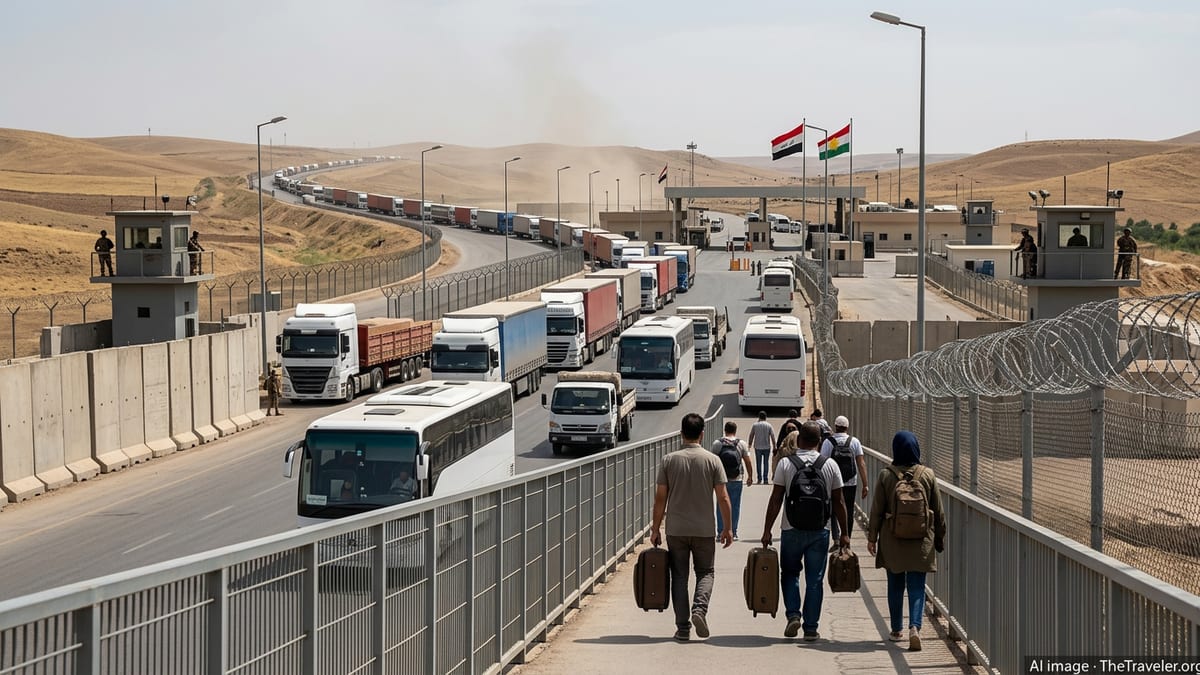
The advisory is also expected to dampen informal cross‑border movement in frontier communities, including trade, seasonal labor, and medical travel that typically relies on relatively open land crossings. Local reports from previous periods of tension suggest that such restrictions can have knock‑on effects on livelihoods and supply chains, particularly in northern Iraq and southeastern Turkey.
Regional mobility more broadly is likely to be shaped by the evolving stance of airlines, insurers, and neighboring states. With Iraq already subject to strict warnings from a range of foreign ministries, Turkey’s latest position adds to the growing perception of the country as a zone where travel must be carefully justified and tightly managed.
Travel Industry and Tourism Outlook
For the wider travel and tourism industry, Turkey’s 2026 Iraq advisory underscores how quickly years of incremental recovery can be undermined by renewed conflict. Trade media coverage has already described the Middle East tourism sector as “shaken” by recent retaliatory attacks and air campaigns that have affected both perception and practical connectivity.
Many tour operators and travel agencies that had tentatively reintroduced packages involving Iraq, especially cultural itineraries and faith‑based tours, are expected to reassess their offerings in light of the heightened warning environment. Specialist firms that continue to operate in Iraq may pivot further toward tightly controlled small‑group or corporate travel, often accompanied by professional security support and detailed contingency planning.
Turkey’s own role as a major transit hub between Europe, Asia, and the Middle East means that shifts in Iraqi risk levels reverberate across airlines and airports in Istanbul, Ankara, and other cities. Industry observers anticipate more scrutiny of passenger flows connected to conflict‑affected destinations, along with continued coordination between carriers and risk analysts on how to balance commercial demand with safety obligations.
While it remains unclear how long the current phase of regional tension will last, the 2026 travel warning signals Ankara’s assessment that the situation in Iraq is too fluid and hazardous to support routine leisure and business travel. For now, nonessential trips are discouraged, and those who must travel are urged by open‑source guidance to proceed only with heightened caution and robust contingency plans.