

More news on this day
Escalating cross-border strikes between the United States, Israel and Iran are triggering a sharp new downturn in Middle East tourism, with Turkey now joining Bahrain, Saudi Arabia, the United Arab Emirates, Jordan, Kuwait, Israel and other destinations in facing a dramatic collapse in arrivals and more than three hundred fifty billion dollars in future tourism revenue at risk.
A Rapid Reversal for a Once-Booming Region
Only months ago, the Middle East was one of the fastest-growing tourism regions in the world, with the World Travel & Tourism Council projecting the sector’s annual contribution to reach about 367 billion dollars in 2025 as destinations from Saudi Arabia to the UAE invested heavily in new resorts, airports and cruise infrastructure. Those forecasts are now being hastily redrawn as airspace closures, travel warnings and images of missile strikes undermine the narrative of stability that underpinned the surge.
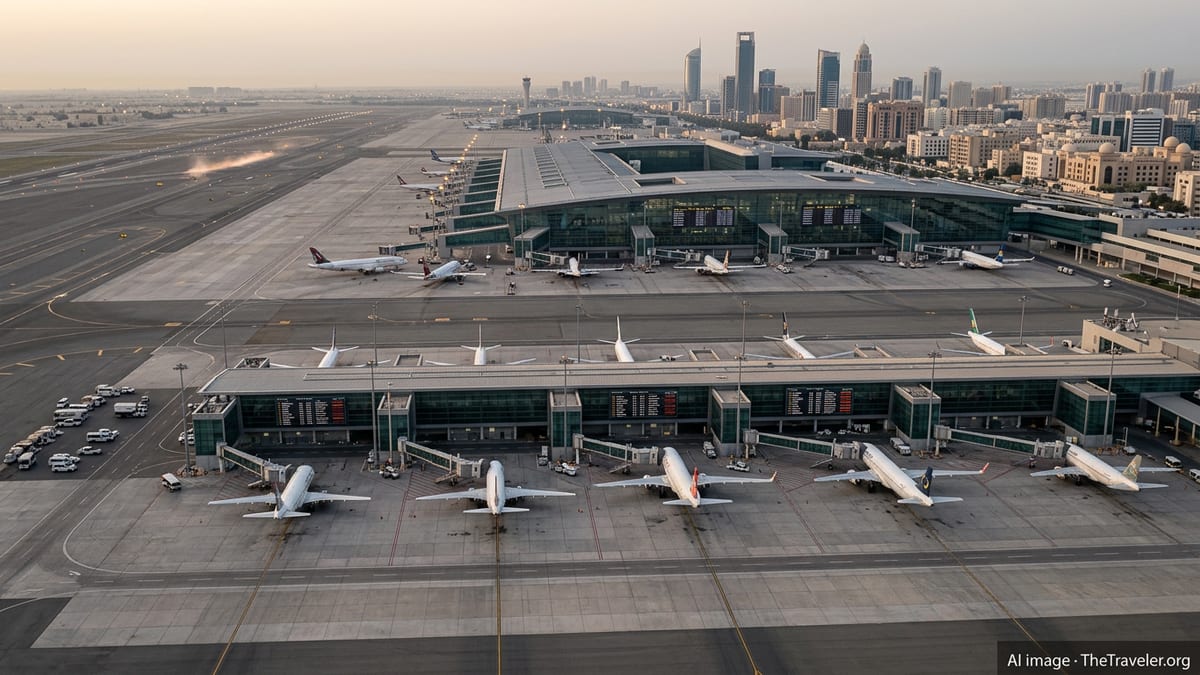
The latest conflict was triggered on 28 February 2026, when joint US and Israeli strikes on Iran set off a cascade of retaliatory attacks, including drone and missile strikes against targets in Israel and several Gulf states. Within hours, key aviation corridors were shut and hub airports in Dubai, Abu Dhabi and Doha were largely paralyzed, with flight-tracking data showing thousands of cancellations and diversions and more than a million passengers disrupted in the first days alone.
Tourism economists now warn that if hostilities and airspace restrictions persist beyond a few weeks, the region could see visitor spending in 2026 fall by tens of billions of dollars compared with earlier projections, with scenario estimates ranging from roughly 34 billion to more than 50 billion dollars in immediate losses. When longer term impacts on investment, brand perception and deferred projects are included, industry analysts say the cumulative hit over the coming decade could easily exceed 350 billion dollars across the wider Middle East and North Africa.
Turkey’s Strategic Location Turns From Asset to Liability
Turkey, which straddles Europe and Asia and has marketed itself as a bridge between continents, is now experiencing some of the most acute knock-on effects of the airspace turmoil despite not being a direct combatant. Aviation analysts report that sections of Turkish airspace have effectively been bisected as airlines seek to avoid routes perceived as too close to Iranian territory or contested skies, forcing costly detours and schedule cuts on Europe–Asia connections that typically overfly or transit Turkey.
Turkish tourism operators say the shift has been sudden. Istanbul’s airports, which in recent years positioned themselves as global connection hubs, have seen a wave of cancellations and rerouting by European carriers and long haul airlines wary of insurance and war risk premiums. Coastal destinations such as Antalya and Bodrum, heavily reliant on charter flights from Western Europe, are reporting sharp spikes in cancellations for spring and early summer packages.
Local analysts expect the Turkish Ministry of Culture and Tourism to confirm a steep year on year decline in foreign arrivals for the first quarter of 2026, wiping out gains made after the pandemic and earlier regional tensions. With tourism having generated tens of billions of dollars annually and serving as a crucial source of foreign currency, a prolonged slump would intensify pressure on an already fragile lira and complicate Ankara’s broader economic management.
Gulf Giants and Levant Gateways Suffer Sudden Standstill
Across the Gulf, some of the region’s most ambitious tourism transformation plans have been thrown into uncertainty. Saudi Arabia, which had surpassed the milestone of 100 million visitors as part of its Vision 2030 strategy and was targeting around 50 billion dollars in tourism revenue by 2026, is now facing a wave of cancellations from key Western markets, particularly for high end leisure and events tied to its new giga-projects. Analysts warn that billions in anticipated foreign direct investment into hotels, entertainment districts and cultural sites could be delayed or scaled back.
The United Arab Emirates, long marketed as a safe, politically stable hub, has been hit at the heart of its model. Temporary closure and heavy restrictions in UAE airspace in recent days have forced Emirates and Etihad to cancel or reroute hundreds of flights, affecting tens of thousands of daily passengers who normally pass through Dubai and Abu Dhabi. While officials stress that core tourism infrastructure remains intact, hotel executives say occupancy has plunged as visitors opt to postpone trips rather than navigate uncertain connections.
Smaller but strategically positioned states such as Bahrain, Kuwait and Jordan are experiencing similar shocks. Bahrain, which had built itself as a boutique Gulf destination for weekend leisure and regional business travel, is now grappling with sudden revenue shortfalls as flight bans and advisories from Western governments take effect. Jordan, heavily reliant on long haul tourists visiting Petra, Wadi Rum and the Dead Sea, faces a repeat of previous regional crises, with group tours from Europe and North America suspended indefinitely.
Israel, still recovering from the steep tourism collapse triggered by the Gaza war that began in 2023, has seen any tentative rebound immediately reversed. Most major international airlines had only partly restored service to Tel Aviv before the latest escalation; fresh barrages and airspace closures have again emptied hotels in Jerusalem, Tel Aviv and Eilat and redirected incoming traffic elsewhere in the Mediterranean.
Billions in Infrastructure and Jobs Hang in the Balance
Beyond near term visitor spending, industry observers say the greatest risk lies in how the conflict may reshape long term investor confidence in Middle Eastern tourism. Over the past decade, governments and sovereign funds across the GCC and beyond have collectively committed more than 350 billion dollars to mega-projects, destination resorts, new airlines and cruise terminals designed to diversify economies away from hydrocarbons. Many of those investments assume steady growth in international arrivals well into the 2030s.
If the perception of the region shifts decisively back toward volatility and insecurity, some of that pipeline could be postponed, repriced or relocated. Developers of large scale projects in Saudi Arabia, the UAE, Qatar and Oman are already reassessing construction timelines and phasing as they watch booking trends and financing conditions. Tourism-linked small and medium enterprises, from desert tour operators to restaurant groups, are especially exposed, with limited reserves to withstand another protracted shock after the pandemic.
Jobs are also at stake. Travel and tourism supported millions of positions across the Middle East before the latest escalation, from hotel staff in Dubai and Istanbul to guides in Petra and drivers in Cappadocia. A sustained downturn could force employers to cut seasonal hiring, delay new openings and freeze wages, with ripple effects across household incomes in countries where youth unemployment is already elevated.
Uncertain Outlook as Travelers Wait for Clear Skies
For now, much hinges on how quickly airspace restrictions ease and whether a broader ceasefire can stabilize perceptions of risk. Tourism forecasters outline a narrow window in which a short conflict, lasting a few weeks with limited further escalation, would still leave 2026 as a down year but allow for a relatively brisk recovery in 2027, mirroring post-pandemic rebounds. Under more pessimistic scenarios, in which strikes and counterstrikes spread or become a recurrent feature of the regional landscape, the Middle East could face several years of suppressed demand and permanently higher insurance and operating costs for airlines and tour operators.
Travel agents in key source markets report that many customers are not canceling outright but instead shifting to alternative destinations in Southern Europe, North Africa outside the immediate conflict zone and parts of Asia seen as safer. This substitution effect may soften the global tourism impact but deepens the revenue hole for Middle Eastern countries that had counted on capturing a larger share of international travel growth.
In Turkey, as in Bahrain, Saudi Arabia, the UAE, Jordan, Kuwait, Israel and their neighbors, industry leaders are lobbying for coordinated diplomatic efforts to safeguard civilian air corridors, clearer communication on safety conditions and targeted financial support for tourism businesses. Until missiles cease to fly and flight paths reopen, however, the region’s ambitious tourism renaissance remains on hold, overshadowed by a conflict whose economic aftershocks are only beginning to be felt.