

More news on this day
Turkey’s biggest airlines moved overnight to halt most passenger services to the heart of the Middle East, extending sweeping suspensions to Iran, Iraq, Syria, Lebanon and Jordan as military escalation and airspace closures left aircraft and passengers stranded across the region.
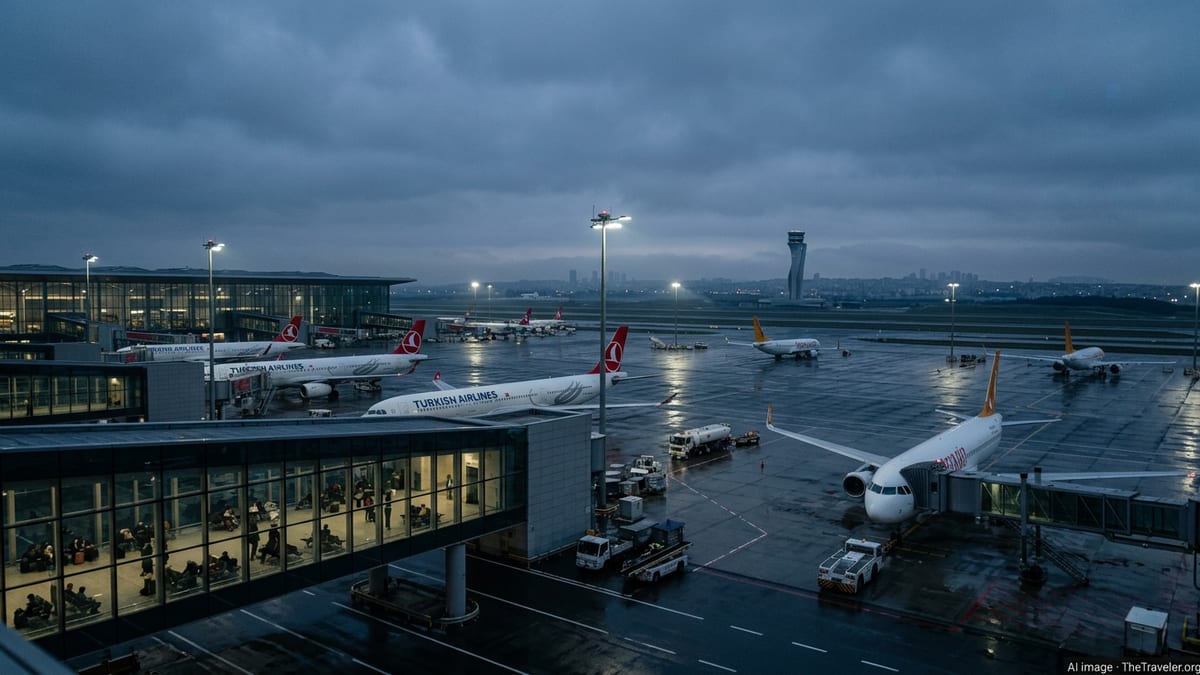
Turkish Carriers Extend Sudden Flight Suspensions
Turkey’s Transport and Infrastructure Minister Abdulkadir Uraloglu confirmed on Friday that flights operated by Turkish Airlines, AJet, Pegasus and SunExpress to Iran, Iraq, Syria, Lebanon and Jordan have been suspended until the end of March 9, citing acute security concerns along key air corridors. The move hardened what began as rolling cancellations into a coordinated freeze on much of Turkey’s short haul Middle East network.
National flag carrier Turkish Airlines has gone further on Iran, announcing that its services to the country will remain off the schedule until March 20, while low cost rival Pegasus has removed Iran flights at least until March 12. Other routes into conflict exposed airspace are formally on hold only through March 9, but officials and aviation analysts suggest the timeline may be revised again if the regional situation deteriorates.
Officials say the decisions reflect a rapidly evolving risk picture following United States and Israeli strikes on Iranian targets and a wave of retaliatory attacks that have triggered repeated airspace closures. While Turkish airspace and major domestic hubs remain open, corridors south and east of Turkey are subject to a patchwork of restrictions that airlines say has made safe and commercially viable scheduling impossible in the short term.
The minister stressed that the suspensions are framed as precautionary, rather than a response to a direct threat to Turkish territory, but acknowledged that the concentration of military activity around traditional civilian routes left authorities with little choice. Turkish carriers have been urged to prioritize safety over network continuity, even at significant financial cost.
Stranded Jets and Passengers from Istanbul to Dalaman
The overnight changes have left not only passengers but also aircraft marooned around the region. Turkish officials disclosed that four Iraqi Airways aircraft are currently grounded at Istanbul Airport, two more at Mugla Dalaman on Turkey’s southwest coast and another at Ankara’s Esenboga Airport, unable to return to Iraqi airspace while closures remain in force.
Operational data and industry reports point to a growing cluster of stranded jets belonging to Turkish and foreign carriers alike, parked on remote stands from Istanbul and Antalya to Gulf and Caucasus airports. At least two Turkey registered aircraft, a Pegasus Airbus A321neo and a Turkish Airlines Boeing 737 operating Tehran bound flights, were forced to remain on the ground in Iran earlier in the week as authorities reassessed route safety and overflight clearances.
For travelers, the disruption is playing out in crowded terminals and lengthy queues at airline counters. At Antalya Airport on Saturday, a string of cancellations and long delays on flights serving Saudi Arabia, the United Arab Emirates, Kuwait and other regional destinations left holidaymakers and migrant workers searching for scarce alternative connections. Carriers such as Pegasus, SunExpress and European low cost operators reported tight rebooking inventory and warned that compensation rules may not fully apply in the face of extraordinary geopolitical events.
Airlines have introduced broad waivers for date and routing changes on affected tickets, but with neighboring countries also curbing access, realistic options remain limited. Many passengers are opting to remain in Turkey temporarily, while others try to route home via Europe or Central Asia, adding hours and in some cases days to journeys that would typically take only a few hours.
Regional Airspace Clampdown Ripples Through Global Networks
Turkey’s abrupt step comes amid a wider Middle East aviation crisis that has seen large parts of the region’s sky effectively redrawn in a matter of days. Iraq on Saturday extended its complete airspace closure for a further 72 hours as a precaution against spillover from nearby hostilities, grounding its national carrier and blocking foreign airlines from operating to Baghdad, Erbil and Basra.
Further south, Qatar has moved to reopen its airspace only for limited evacuation and cargo services after recent strikes, leaving standard commercial schedules suspended. Across the Gulf, Dubai and Abu Dhabi have been operating reduced schedules focused on repatriation and essential links, while Bahrain remains heavily constrained by airport suspensions and customs bottlenecks. Together, the restrictions have pushed carriers to add hours to long haul flights or cancel them outright as fuel burn and crew scheduling become unmanageable.
The Middle East’s principal hubs typically act as vital bridges between Europe, Africa and Asia, and Turkey’s own airports, particularly Istanbul, play a central role in that global transit map. With multiple nodes in the network compromised at once, the knock on effects are being felt far beyond the immediate conflict zone, reaching as far as South Asia, Eastern Europe and even North America as airlines restructure their timetables and aircraft rotations.
Analysts note that while air navigation authorities and airlines have dealt with localized crises before, the present combination of simultaneous airspace closures and missile activity over wide areas is unusually severe. They warn that even if front line hostilities ease, restoring confidence in certain routes and altitudes may take weeks, prolonging the current pattern of suspensions and diversions.
Turkey’s Balancing Act Between Hub Ambitions and Safety
The sweeping route cuts underscore the vulnerability of Turkey’s aviation centric growth model to external shocks. Over the past decade, Istanbul’s main airport and the country’s expanding low cost sector have turned Turkey into a global transfer powerhouse, with dense schedules knitting together cities from Europe, the Caucasus, the Gulf and South Asia. The current crisis has abruptly severed many of those southern and eastern links.
Airline executives privately concede that the commercial hit from grounding Middle East routes will be painful, particularly at the tail end of the winter travel season and as carriers position for the summer peak. Aircraft that would normally be shuttling to Beirut, Amman, Tehran or Baghdad are now either parked or hastily reassigned to stronger European and domestic markets, a reshuffle that risks crowding already busy routes and depressing yields.
Turkish authorities, however, emphasize that maintaining safety and international regulatory compliance must override short term economic considerations. They point out that Turkey benefits from a reputation as a relatively safe and reliable transit point in a turbulent neighborhood, and that compromising on risk assessments could jeopardize that long term brand. Regulators are said to be in near constant contact with their counterparts in neighboring states as well as with global aviation bodies to synchronize real time intelligence on threats to civil aviation.
Industry observers expect Turkey’s airlines to keep a tight grip on capacity and cash until there is clear evidence of a durable de escalation in the region. In the meantime, travelers are advised to assume that schedules to and over the Middle East will remain subject to last minute change and to build in extra flexibility around any trip that touches the region.
What Travelers Should Do Now
For passengers holding tickets on Turkish Airlines, AJet, Pegasus or SunExpress to any of the suspended destinations, the immediate priority is to confirm whether their flight is still operating and under what conditions. Airlines are encouraging customers to use digital channels for rebooking and refunds where possible, warning that airport and call center staff are under heavy pressure and may face long wait times.
Travel agents and corporate travel managers are also playing a larger role in triaging itineraries, particularly for those who must travel for urgent family, humanitarian or business reasons. In some cases, rerouting via Europe, the Caucasus or North Africa can provide a path around closed airspace, but options are highly dependent on evolving notices to airmen and bilateral overflight agreements.
Travel experts recommend that anyone planning to transit Turkey on long haul journeys in the coming days monitor both their airline’s operational updates and official travel advisories issued by their home governments. Even if a specific route has not yet been suspended, airlines may decide to pull flights with little warning if risk calculations change. Flexible tickets, comprehensive travel insurance that covers war related disruptions, and a willingness to adjust dates and routing at short notice are becoming essential tools for navigating the current environment.
With Turkey’s major airlines bracing for continued volatility, the country’s role as a bridge between continents is being stress tested in real time. How quickly carriers can restore confidence and connectivity to the Middle East will depend less on their operational capabilities than on developments far beyond the control of any airline or aviation authority.