

More news on this day
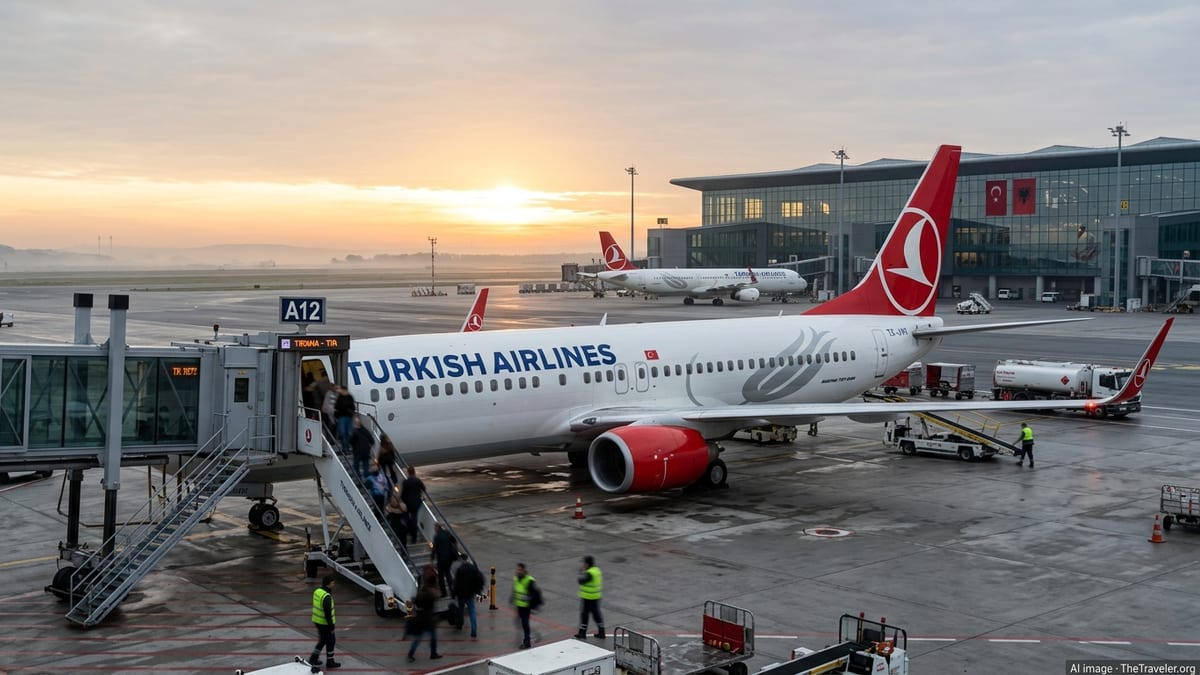
Daily nonstop flights have returned to the skies between Istanbul and Tirana, as Turkish Airlines restores direct service from January 23, 2026, marking a significant boost to air connectivity between Turkey and Albania.
Get the latest news straight to your inbox!
Daily Nonstop Link Reconnects Istanbul and Tirana
Publicly available schedule data shows that Turkish Airlines has resumed nonstop operations on the Istanbul–Tirana route as of January 23, 2026, after several years without regular service. The reinstated link brings back a direct connection between Istanbul Airport and Tirana International Airport Nënë Tereza, offering one round trip per day on most timetables.
Reports from aviation news outlets indicate that the route is being served primarily by Boeing 737 aircraft in a short to medium haul configuration, with flight times of around one hour and forty minutes. The daily pattern provides travelers with a predictable option for point to point journeys, as well as connections via Istanbul to a wider global network.
Information published by Tirana International Airport describes the launch as a strategic addition to its airline portfolio, noting that Turkish Airlines has joined the airport’s lineup with daily flights on the Tirana–Istanbul route. Airport communications highlight strong demand between the two markets, particularly from business travelers, tourists, and those visiting family and friends.
Industry route trackers and timetable resources show that the Istanbul–Tirana connection had either been suspended or operated with reduced visibility in recent years, with regional and low cost carriers stepping in to meet demand. The return of Turkish Airlines as a daily operator on the route therefore represents a notable shift in the competitive landscape for links between Albania and Turkey.
Significance for Trade, Tourism, and the Albanian Diaspora
According to published coverage from aviation and travel industry platforms, the restored Istanbul–Tirana service is expected to support stronger flows of trade and tourism between the two countries. Turkey is frequently cited as one of Albania’s more significant economic partners, with growing activity in construction, energy, and consumer goods that depends on predictable air links.
For leisure travel, the route opens convenient access for Albanian visitors heading to Istanbul’s cultural attractions and coastal resorts, while also creating new options for Turkish travelers exploring Albania’s emerging beach destinations and historic cities. Travel analysis suggests that the Western Balkans are drawing increasing interest from regional tourists seeking short break holidays within a two to three hour flight radius.
The daily nonstop flights are also likely to be important for the sizeable Albanian diaspora scattered across Europe and beyond. By using Istanbul as a connecting hub, passengers flying from Tirana gain one stop access to destinations in the Middle East, North America, Africa, and Asia. Turkish Airlines’ role as a carrier serving more countries than any other airline, as reflected in publicly available fleet and network data, amplifies the reach of what is, on the surface, a relatively short regional route.
Tourism bodies in both countries have previously emphasized the value of air connectivity in driving visitor numbers and length of stay. While current figures for 2026 are not yet fully reported, analysts expect that the combination of daily nonstop capacity and broad onward connections through Istanbul will help stimulate additional demand in both directions.
Network Strategy and Competition in the Western Balkans
Industry reports suggest that the return of Turkish Airlines to the Tirana market forms part of a broader strategy to reinforce the carrier’s presence in the Western Balkans. Over the past few years, schedules have shown a pattern of renewed or expanded services to several smaller regional cities as airlines recalibrate networks following earlier disruptions and demand shifts.
At Tirana International Airport, the daily flights from Istanbul enter a market that has seen increased competition from low cost airlines and regional players. Data summarized in open aviation databases indicates that carriers such as AJet and others have been active in linking Albania with Turkey and select European cities, often targeting price sensitive leisure travelers.
Against this backdrop, Turkish Airlines’ move to operate a stable daily frequency positions the carrier to appeal to higher yielding segments such as corporate travelers and long haul passengers connecting through Istanbul. The use of mainline aircraft and integration with the airline’s global schedule underscore its intent to anchor Tirana within a wider network rather than treat it as a purely seasonal or opportunistic market.
Analysts following the Balkan aviation sector note that this development may encourage further route announcements or capacity adjustments by competing airlines. As traffic patterns stabilize into the summer 2026 season, the Istanbul–Tirana corridor is expected to serve as a test case for how legacy network carriers and low cost competitors balance capacity and pricing in a relatively compact but strategically located market.
Improved Passenger Experience and Connectivity Through Istanbul
For passengers, one of the most tangible outcomes of the resumed route is streamlined connectivity through Istanbul Airport, which has rapidly grown into a major intercontinental hub. Timetable information shows that the new Tirana flights are timed to link with banks of departures to key destinations in North America, the Gulf region, and major cities in Asia and Africa.
Travel planning resources indicate that same day connections are available from Tirana to cities such as New York, Dubai, and Bangkok with relatively short transfer times at Istanbul, typically within two to three hours. This represents a notable improvement over previous itineraries for many Albanian travelers, which often required multiple stops or overnight layovers when using alternate European hubs.
From an operational perspective, the use of a single airline on both legs of long haul journeys via Istanbul can simplify baggage handling and disruption management for passengers. Publicly available guidance from airline and airport channels emphasizes the importance of coordinated schedules and minimum connection times at large hubs, factors that can significantly influence the overall travel experience.
Travel agencies and online booking platforms are already reflecting the renewed Istanbul–Tirana service within their fare displays for spring and summer 2026, indicating that the route is being integrated into broader package offerings and corporate travel programs. As awareness grows among travelers in both markets, demand for the nonstop option is expected to strengthen.
Outlook for 2026 and Beyond
Looking ahead through the remainder of 2026, network planners and aviation observers will be watching closely to see how the Istanbul–Tirana route performs with daily nonstop frequencies. Historical patterns on similar regional links suggest that stable year round service can encourage more frequent business trips and repeat leisure visits, gradually building a base of loyal travelers.
Published airport statements describe Turkey as a strategic market for Tirana International Airport, citing sustained demand from tourism, trade, and visiting friends and relatives. In this context, the presence of Turkish Airlines with daily flights aligns with the airport’s broader ambitions to position itself as a key gateway for Albania and the wider Western Balkans.
While future capacity adjustments will depend on load factors, economic conditions, and competitive responses, the restoration of daily nonstop flights between Istanbul and Tirana from early 2026 stands as a clear milestone in the recovery and reshaping of regional air connectivity. For travelers on both sides of the Adriatic, the route’s return translates into more choice, shorter journey times, and easier access to a broad global network centred on Istanbul.