

More news on this day
Turkey and Albania are set for closer travel and commercial ties as Turkish Airlines launches daily flights between Istanbul and Tirana, a move widely viewed as a catalyst for tourism growth and deeper business links across the Balkans.
Get the latest news straight to your inbox!
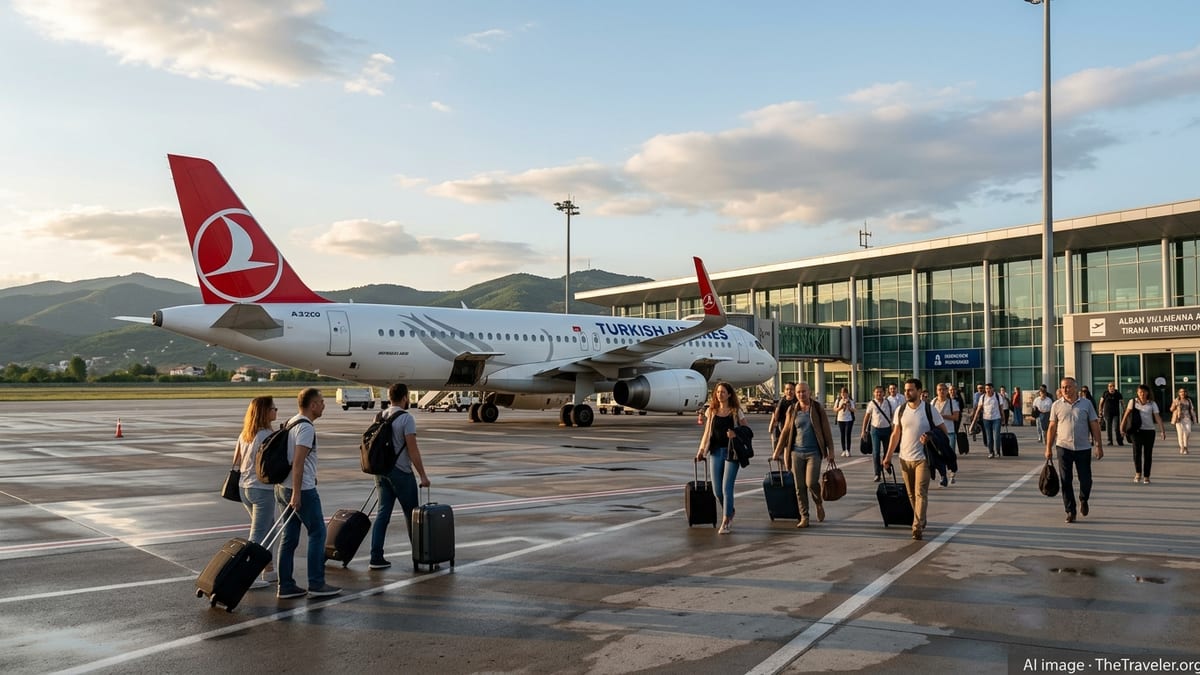
New Daily Service Reconnects Istanbul and Tirana
Turkish Airlines began operating daily flights between Istanbul Airport and Tirana International Airport on January 23, 2026, re-establishing the flag carrier’s presence on one of the region’s key corridors. The service, detailed in published schedules and airport announcements, provides at least one daily rotation between the two cities, with some listings showing two direct flights per day depending on season and demand.
Information shared by Tirana International Airport describes the launch as a significant expansion of the airport’s airline network, emphasizing the strategic value of direct links to one of the world’s largest hub airports. The move follows a period of disruption on the Tirana–Istanbul route and comes at a time when demand between Albania and Turkey has been steadily increasing.
Route reports from aviation industry outlets underline that the new Istanbul–Tirana flights are designed to plug the Albanian capital back into Turkish Airlines’ global network after the carrier’s earlier withdrawal from its partnership role in Air Albania. The daily connection positions Istanbul as a primary gateway for Albanian travelers heading to long-haul destinations in Asia, the Americas, Africa, and the Middle East.
Turkish Airlines’ own route information highlights that passengers on the Istanbul–Tirana sector will be able to connect to hundreds of destinations worldwide, reinforcing Istanbul’s role as a transfer hub for traffic to and from the Western Balkans.
Albania’s Tourism Boom Creates New Demand
The timing of the new flights coincides with a sustained tourism boom in Albania. Recent fact sheets from Albanian investment and tourism bodies indicate that the country welcomed around 11.7 million international visitors in 2024, continuing several years of double-digit growth in arrivals. Tourism is increasingly described in official summaries as a cornerstone of the Albanian economy, with its share in national output projected to rise further in 2025.
Media coverage across the region has repeatedly highlighted Albania as one of Europe’s fastest-growing destinations, with coastal resorts, UNESCO-listed towns, and alpine areas drawing both regional and long-haul travelers. Reports from Visit Tirana and local tourism organizations note that visitor numbers to the capital have also risen sharply, supported by new hotels, renovated public spaces, and a growing cultural calendar.
Turkey has been one of the standout growth markets within this broader tourism surge. Visit Tirana data for 2023 cited more than 200,000 arrivals from Turkey, representing an increase of over 100 percent compared with the previous year. Subsequent reporting on 2024 and 2025 trends suggests that visitor flows from Turkey have continued to expand in parallel with a wider Balkan travel circuit popular among Turkish tourists.
The increase in Turkish arrivals is reinforced by Albania’s visa-free entry for Turkish citizens and relatively competitive prices compared with more mature Mediterranean destinations. The new daily Istanbul–Tirana flights provide a direct mechanism to sustain and potentially accelerate this trend by offering more convenient schedules and seamless onward connections.
Business Links and Trade Prospects Strengthened
The new air service is also expected to support growing business and trade flows between Turkey and Albania. Investment promotion materials from Albanian agencies list Turkey among the country’s key trading partners, with bilateral commerce spanning construction, energy, manufacturing, and consumer goods. Better connectivity through Istanbul is seen as a practical enabler for business travel, site visits, and corporate expansion on both sides.
Economic briefings from Albanian and international institutions point to tourism, infrastructure, and energy as priority sectors for foreign investment, where Turkish companies already have a visible footprint. Easier access to Tirana through Turkish Airlines’ network makes it more straightforward for Turkish executives and project teams to reach Albania, while also allowing Albanian entrepreneurs to tap into markets in Turkey and beyond.
Regional analysts note that Istanbul’s position as a major transfer hub adds an extra layer of value. The daily Istanbul–Tirana link effectively connects Albania to global supply chains and financial centers without the need for multiple stops via Western Europe. This is particularly important for small and medium-sized enterprises looking to expand export and import relationships while keeping travel times and costs manageable.
The route launch also follows a wider expansion strategy at Turkish Airlines, which has announced fleet growth plans involving hundreds of new aircraft over the next decade. Aviation observers suggest that reinforcing links to high-growth markets such as Albania aligns with the carrier’s ambition to consolidate its position as a leading connector between Europe, Asia, and Africa.
Regional Connectivity and Competition in the Skies
The Istanbul–Tirana launch reshapes the competitive landscape in the Western Balkans aviation market. After operational and ownership changes involving Air Albania and the reduction of some services, low-cost carriers and regional airlines had stepped in to cover parts of the demand between Albania and Turkey. Industry commentary notes that, at one stage, Pegasus Airlines was the primary operator on the corridor.
The return of Turkish Airlines with a daily schedule introduces a full-service alternative that competes not only on point-to-point traffic but also on the strength of its global network and frequent-flyer offering. Analysts following Balkan aviation trends describe this as part of a broader pattern in which legacy carriers are reinforcing their positions at key regional gateways while still facing pressure from low-cost rivals on price-sensitive leisure routes.
For Tirana International Airport, the new service is part of a wider push to evolve from a primarily seasonal gateway into a year-round regional hub. Recent tourism statistics presented by Albanian media show that foreign visitor arrivals have become more evenly spread across the calendar, reducing the historical dominance of the summer peak. Additional daily capacity to Istanbul supports this shift by offering more schedule options outside the high season.
In the wider Balkans, observers see the Istanbul–Tirana route as another link in a growing network of connections between Turkey and neighboring states. Turkish Airlines and other carriers already operate frequent services from Istanbul to capitals such as Belgrade, Skopje, and Sarajevo, helping to channel both tourism and business traffic through Istanbul’s hub.
Outlook for Travelers and the Tourism Industry
For leisure travelers, the most immediate impact of the new daily flights is a broader range of options when planning itineraries that combine Turkey and Albania. Travel industry reporting highlights growing interest in multi-country Balkan trips, with visitors flying into Istanbul for city stays and cultural tourism before continuing on to Albania’s Adriatic and Ionian coasts, mountain routes, or historic towns via Tirana.
Albanian tour operators profiling their 2026 offers increasingly feature Istanbul as a natural extension of local packages, while Turkish travel agencies have begun to promote Albania as a convenient add-on to existing itineraries. Daily frequencies reduce layover times and create more reliable connections, factors that are particularly important for organized group tours and cruise-related shore excursions routed through regional airports.
For the tourism sector in both countries, the Istanbul–Tirana link is widely interpreted in regional coverage as a platform for further collaboration. Industry events such as travel fairs and tourism forums have already spotlighted Albania’s rise from “hidden gem” to “rising star,” and closer air connectivity strengthens the case for joint marketing of Balkan routes targeting long-haul visitors from North America, the Gulf, and East Asia.
While the route’s long-term performance will depend on broader economic conditions and competition from other carriers, early signals indicate that demand for travel between Turkey and Albania is robust. With tourism numbers reaching new records and business ties deepening, the daily Istanbul–Tirana flights position both countries to capture a larger share of regional growth in the years ahead.