

More news on this day
Turkey and Albania are set to benefit from a fresh wave of tourism and business activity as Turkish Airlines launches daily flights between Istanbul and Tirana, strengthening one of the Balkans’ fastest-growing air corridors.
Get the latest news straight to your inbox!
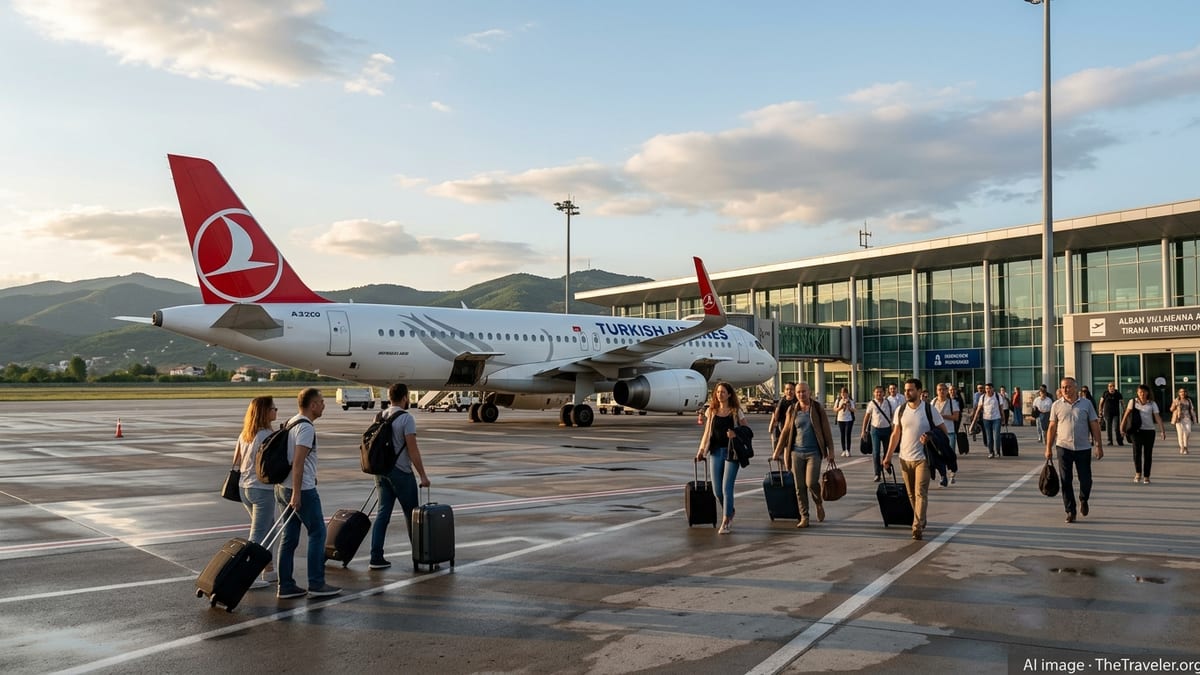
Daily Service Reconnects Istanbul and Tirana
Turkish Airlines has relaunched flights between Istanbul Airport and Tirana International Airport with a daily schedule, re-establishing a nonstop link that plugs Albania directly into one of the world’s largest global hubs. Publicly available information from Tirana International Airport indicates that operations began on January 23, 2026, with the national carrier of Turkey joining an increasingly competitive market on the Tirana–Istanbul route.
Coverage in aviation and travel publications describes the service as operating seven times per week, restoring a high-frequency connection that had been interrupted in recent years. The new schedule is designed to support early-morning departures from Istanbul and convenient return timings from Tirana, catering both to point-to-point travelers and those connecting onward to long-haul destinations.
The move follows a broader recovery in European air traffic and a sustained rise in demand for travel through Istanbul, which has emerged as one of Europe’s busiest hubs. The daily Tirana flights are part of Turkish Airlines’ wider strategy to reinforce its presence in the Western Balkans, where growing tourism and diaspora travel have driven steady passenger growth.
Industry reports note that the route is being served with narrow-body aircraft, typically from the Boeing 737 family, a common choice for short- and medium-haul operations. The use of fuel-efficient jets on a high-frequency schedule is expected to support both operational flexibility and competitive pricing for leisure and business passengers.
Albania’s Tourism Boom Meets Istanbul’s Global Hub
The launch of daily Istanbul–Tirana services comes as Albania continues a multi-year tourism surge. Passenger figures released by Tirana International Airport for 2025 show traffic of around 11.6 to 12 million travelers, marking another record year and underscoring the country’s transformation from a niche destination to a mainstream Mediterranean choice.
Industry observers link this growth to a combination of factors: rapid expansion in low-cost and network carrier capacity, liberalized air-service agreements, and Albania’s promotion as a value-oriented alternative to more established European beach and culture destinations. The renewed Turkish Airlines presence adds a full-service, network carrier option that can feed tourists from Asia, the Middle East, and the Americas into Albania via Istanbul.
Istanbul Airport’s role as a mega-hub is central to this dynamic. Recent aviation reports rank it among Europe’s busiest airports by daily flights, supported by Turkish Airlines’ extensive network that reaches more countries than any other airline. This scale allows for one-stop itineraries from Tirana to cities across North and South America, Africa, and Asia, often with coordinated connection times.
Travel analysts note that the combination of rising inbound interest in Albania and Istanbul’s expanding connectivity creates a mutually reinforcing flow. Visitors can combine stays in Istanbul with side trips to Albania’s Adriatic and Ionian coasts or its historic cities, while Albanian travelers gain easier access to global destinations for business, education, and family visits.
Business, Trade, and Diaspora Ties Set to Deepen
Beyond leisure travel, the new daily flights are expected to support increasing trade and investment between Turkey and Albania. Publicly available economic data shows that Turkey ranks among Albania’s key trading partners, with Turkish companies active in construction, infrastructure, energy, and retail. A reliable, high-frequency air link improves the ease of executive travel, project oversight, and cross-border business development.
Business travel specialists highlight that daily services provide critical flexibility, allowing travelers to schedule short-notice trips, attend meetings, and return within tight time frames. The ability to connect through Istanbul to other regional centers in the Middle East, Central Asia, and Africa also enhances Tirana’s role as a stepping stone for Albanian firms looking beyond Europe.
The sizeable Albanian diaspora in Turkey and across Western Europe is another driver of demand. With Turkish Airlines integrating Tirana into a global network, passengers can use Istanbul as a convenient transfer point on itineraries that link family and community ties spread over multiple continents. Seasonal peaks around holidays and summer months are likely to benefit in particular from the added capacity.
Observers also point to the route’s potential impact on conference and event travel. As Tirana invests in new hotels and meeting facilities, direct links to Istanbul, and onward to major global cities, may help the Albanian capital attract more regional business events and incentives, a segment that often depends on seamless air connectivity.
Competitive Balkan Corridor and Network Expansion
The Istanbul–Tirana market has become notably more competitive with the arrival of Turkish Airlines’ daily flights. AJet, a Turkish Airlines group carrier, and Pegasus Airlines also serve the route, and reports from Albanian media indicate that AJet plans up to fourteen flights per week during the summer season. This multi-carrier presence increases frequencies and scheduling options, supporting both price competition and network resilience.
Aviation analysts describe the renewed Turkish Airlines service as part of a broader pattern in which the carrier fine-tunes its Balkan footprint in response to shifting demand and airline exits. The effective collapse of Air Albania in late 2025, following the withdrawal of Turkish Airlines as a shareholder, left space for new or expanded services by other operators, including the relaunch of direct flights under Turkish Airlines’ own code.
The decision to operate daily rather than a limited weekly service signals confidence in sustained demand on the corridor. It also aligns with Turkish Airlines’ ongoing network adjustments elsewhere, where frequencies on select routes have been increased to daily or beyond to capture connecting traffic and reinforce Istanbul’s position as a transfer hub.
For passengers, the competitive landscape translates into more choice on schedules, fares, and service styles. Travel search data and booking platforms already show a dense timetable between Istanbul and Tirana, particularly in peak seasons, which can make the route one of the most connected international links for Albania.
Regional Outlook: Tourism and Connectivity Across the Western Balkans
The reinstated daily Istanbul–Tirana flights are also significant in a regional context. Western Balkan airports, including those in Albania, North Macedonia, and Kosovo, have registered strong post-pandemic rebounds, supported by diaspora traffic and new point-to-point routes. Industry reports highlight that airlines see the region as an important growth frontier due to rising disposable incomes and relatively low air travel penetration.
Turkish Airlines’ network strategy positions Istanbul as a primary gateway for the Western Balkans to intercontinental travel. Similar moves on routes to other regional capitals and secondary cities indicate a long-term commitment to serving this part of Europe with a mix of full-service and low-cost capacity via group carriers.
Tourism bodies in both Turkey and Albania are expected to leverage the new daily service in their promotional campaigns, emphasizing multi-destination itineraries that combine cultural and coastal attractions. While official forecasts will depend on broader economic conditions, current trends in passenger numbers and airline capacity suggest continued growth potential.
As 2026 progresses, performance on the Istanbul–Tirana route will offer a useful indicator of how quickly Turkey and Albania can translate enhanced connectivity into higher visitor numbers, deeper commercial ties, and stronger roles within the evolving network of European and global air travel.